
Flat feet (pes planus): Symptoms, causes and treatment
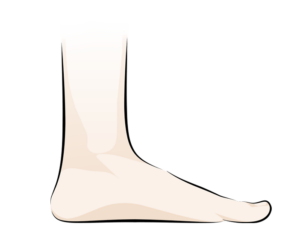
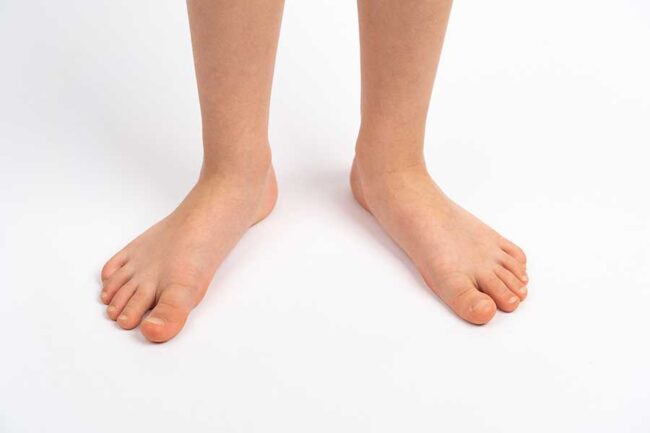
Flat feet, medically known as pes planus, describe a foot structure in which the inner longitudinal arch is reduced or absent when standing. As a result, a larger portion of the underside of the foot comes into contact with the ground.
Flat feet are a common variation in human foot structure. Many people have naturally low arches throughout their lives without experiencing pain, discomfort or limitations in physical activity. Others may develop fallen arches later in life, sometimes accompanied by foot pain, ankle instability or changes in walking patterns.
Understanding the difference between normal variations in arch height and potentially problematic changes in foot structure is important when determining whether treatment is necessary.
This guide explains the different types of flat feet, their causes, common symptoms, diagnosis and available treatment options for both children and adults.
What are flat feet?
Flat feet occur when the medial longitudinal arch, which runs along the inner side of the foot between the heel and the forefoot, is relatively low or absent during weight-bearing.
The medical term for this foot structure is pes planus. When a low arch is accompanied by an outward tilt of the heel, healthcare professionals may also use the term pes planovalgus.
Flat feet can affect one or both feet and may be present from childhood or develop during adulthood.
Having flat feet does not automatically mean that something is wrong with your feet. Arch height varies considerably between individuals, and many people with low arches have perfectly healthy, functional feet.
Clinical concerns generally arise when flat feet are associated with pain, reduced mobility, progressive changes in foot shape or difficulty performing everyday activities.
Understanding the arches of the foot
The human foot is a complex structure consisting of 26 bones, numerous joints, muscles, tendons and ligaments. These structures work together to provide stability, flexibility and adaptability during standing, walking and running.
The foot contains three principal arches:
-
Medial longitudinal arch: The prominent arch running along the inner side of the foot.
-
Lateral longitudinal arch: The lower arch running along the outer side of the foot.
-
Transverse arch: The arch extending across the width of the foot.
When discussing flat feet, healthcare professionals are primarily referring to the medial longitudinal arch.
This arch is supported by several anatomical structures, including the plantar fascia, the posterior tibial tendon, the spring ligament and the intrinsic muscles of the foot.
During walking, the arches change shape in response to mechanical loading. This movement allows the foot to adapt to the ground, distribute forces and provide a relatively stable platform for propulsion.
A lower arch does not necessarily indicate poor foot function. The flexibility, strength and overall coordination of the foot are also important.
Flexible versus rigid flat feet
Flat feet are generally classified into two broad categories: flexible and rigid.
Flexible flat feet
Flexible flat feet are the most common form of pes planus.
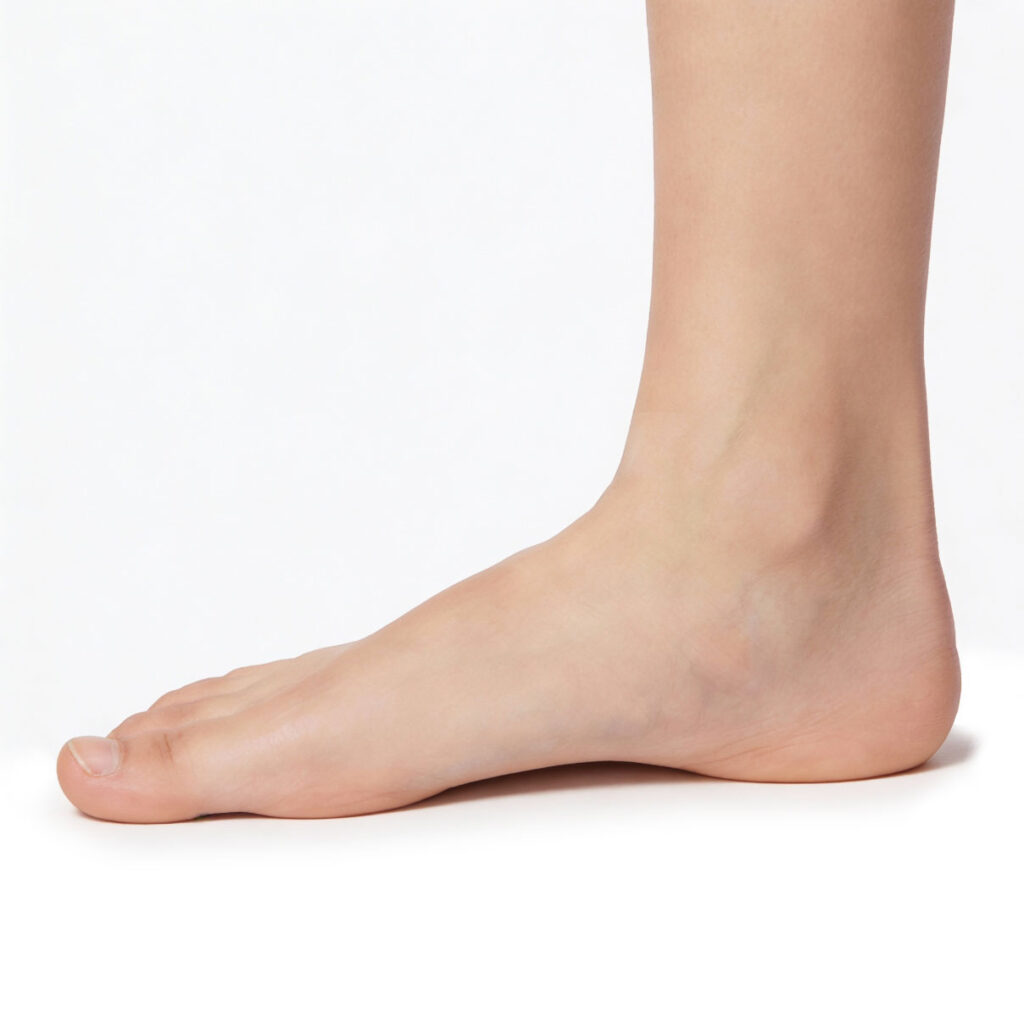
In a flexible flat foot, the arch becomes lower or disappears when standing but reappears when the foot is unloaded, such as when sitting or, in many cases, standing on tiptoe.
The joints of the foot retain a degree of mobility, allowing the arch to change shape in response to weight-bearing.
Flexible flat feet are frequently seen in children and adults and may be associated with inherited foot structure, ligament flexibility and other anatomical characteristics.
Many individuals with flexible flat feet experience no symptoms and do not require treatment.
Rigid flat feet
Rigid flat feet are characterized by a persistently low or absent arch, even when the foot is not bearing weight.
The joints of the foot may have restricted movement, and the foot may be less adaptable to different surfaces.
Rigid flat feet can be associated with structural abnormalities, arthritis, previous injuries or conditions such as tarsal coalition, in which two or more bones of the foot are abnormally connected.
Rigid flat feet are less common than flexible flat feet and are more likely to require professional assessment, particularly when accompanied by pain or restricted movement.
Flexible and rigid flat feet compared
| Feature | Flexible flat feet | Rigid flat feet |
|---|---|---|
| Arch when standing | Reduced or absent | Reduced or absent |
| Arch when sitting | Often reappears | Remains low or absent |
| Joint mobility | Generally preserved | Frequently restricted |
| Common in children | Yes | Less common |
| Pain | May be absent | More likely, depending on the cause |
| Treatment required | Usually only when symptomatic | Depends on the underlying condition |
| Professional assessment | Recommended if symptomatic | Particularly important if painful or newly developed |
Flat feet, fallen arches and overpronation: What’s the difference?
The terms flat feet, fallen arches and overpronation are frequently used interchangeably. However, they describe different aspects of foot structure and movement.
Flat feet
Flat feet describe the physical shape of the foot, specifically a reduced or absent medial longitudinal arch during standing.
This foot structure may be present from childhood and remain relatively unchanged throughout life.
Fallen arches
Fallen arches commonly describe a reduction in arch height that develops over time.
Someone who previously had a noticeable arch may experience a gradual flattening of the foot due to changes in tendons, ligaments, joints or other supporting structures.
Although the term is not always used consistently, fallen arches often refer to an acquired change rather than a naturally low arch.
Overpronation
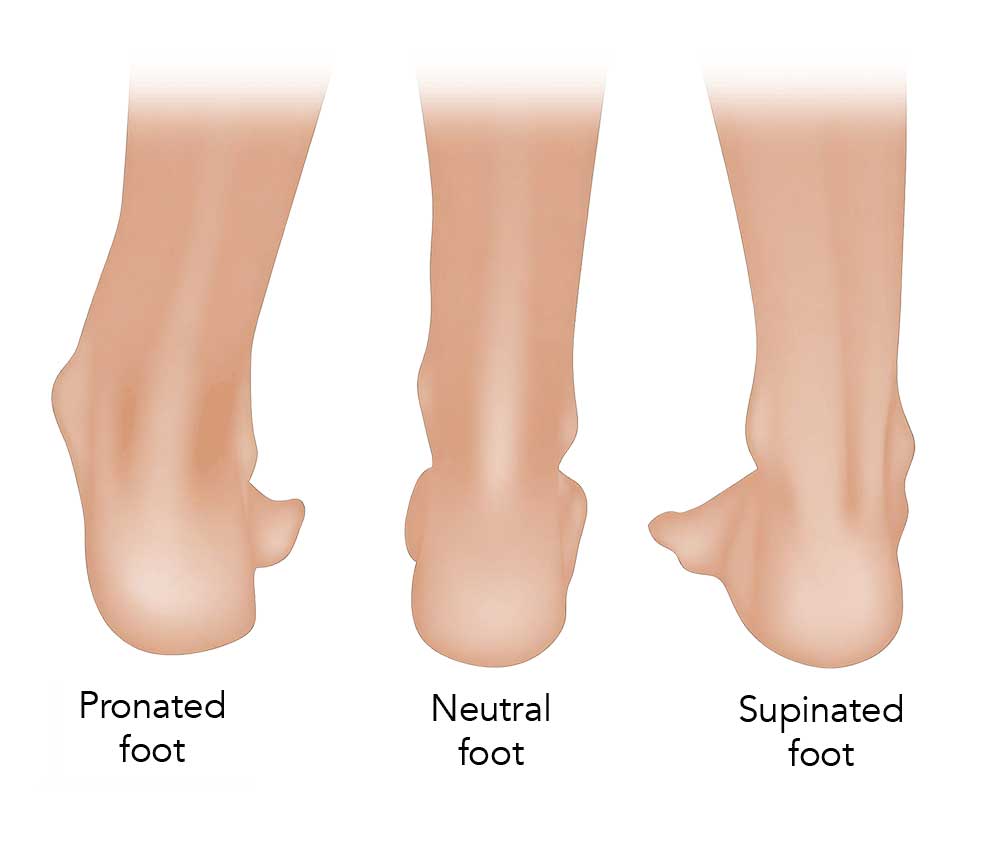
Pronation is a normal, coordinated movement of the foot that occurs during weight-bearing activities.
It involves movement across several joints and helps the foot adapt to the ground and accommodate mechanical forces.
Overpronation is a commonly used term describing pronation considered excessive or prolonged in a particular functional context.
Although people with flat feet may demonstrate increased pronation, not everyone with flat feet overpronates. Similarly, people with a normal standing arch may exhibit considerable pronation during walking or running.
Key differences at a glance
| Term | What it describes |
|---|---|
| Flat feet (pes planus) | A low or absent foot arch |
| Fallen arches | An acquired reduction in arch height |
| Pronation | Normal movement of the foot during loading |
| Overpronation | Pronation considered excessive or prolonged in a particular context |
| Pes planovalgus | A low arch accompanied by outward heel alignment |
| Progressive collapsing foot deformity | An acquired condition involving progressive changes in foot alignment |
Understanding these differences is important because foot shape alone does not determine whether treatment is necessary.
What causes flat feet?
Flat feet can develop for several reasons. In some individuals, low arches are an inherited anatomical characteristic. In others, the arches gradually change as a result of injury, aging or medical conditions.
Genetics and inherited foot structure
Arch height and foot shape are influenced by inherited anatomical characteristics.
People with a family history of flat feet may be more likely to develop a similar foot structure. Inherited differences in bone alignment, joint mobility and ligament flexibility may all contribute.
Naturally low arches are not necessarily abnormal and frequently remain symptom-free throughout life.
Ligament flexibility and joint hypermobility
Ligaments help maintain stability between the bones of the foot.
Individuals with greater ligament flexibility or generalized joint hypermobility may experience more noticeable flattening of the arches during standing.
This does not automatically indicate a medical problem, although some individuals may experience fatigue, discomfort or reduced joint stability.
Age-related changes
The tendons, ligaments and muscles supporting the foot can change over time.
Age-related changes in tissue strength, flexibility and joint function may contribute to a gradual reduction in arch height in some adults.
However, significant or progressive flattening of the foot should not simply be attributed to normal aging without considering other possible causes.
Increased mechanical loading
Increased body weight, occupational demands and repetitive weight-bearing activities can increase the mechanical forces acting on the foot.
These factors may contribute to symptoms or place additional demands on supporting structures, particularly when other risk factors are present.
Prolonged standing alone does not necessarily cause permanent arch collapse.
Pregnancy
Some women experience changes in foot length, width and arch height during or following pregnancy.
Hormonal changes, increased body weight and changes in mechanical loading may contribute.
In some cases, these changes persist after pregnancy.
Foot and ankle injuries
Injuries involving tendons, ligaments, joints or bones can alter the structural support and alignment of the foot.
Previous fractures, significant ankle injuries and damage to the posterior tibial tendon or supporting ligaments may contribute to acquired flat feet.
Arthritis and other medical conditions
Inflammatory arthritis, degenerative joint disease, certain neurological conditions and connective tissue disorders may affect foot alignment and function.
Diabetes-related complications can also produce significant changes in foot structure in some individuals.
A newly developed, painful or progressively changing flat foot should be professionally assessed to establish the underlying cause.
What are the symptoms of flat feet?
Many people with flat feet experience no symptoms.
When symptoms do occur, they may vary depending on the flexibility of the foot, the underlying cause and the mechanical demands placed on it.
Common complaints may include:
-
Aching or fatigue along the inner arch.
-
Discomfort around the inside of the ankle.
-
Foot pain following prolonged standing or walking.
-
Tired or aching feet during everyday activities.
-
Reduced tolerance for exercise.
-
Difficulty standing on tiptoe.
-
Swelling along the inside of the ankle.
-
Changes in foot shape or shoe fit.
-
Pain along the outer ankle in more advanced acquired deformities.
Some people also notice that their shoes wear unevenly. However, shoe wear patterns alone are not a reliable method of diagnosing flat feet or overpronation.
Pain and swelling around the inner ankle, particularly when accompanied by a recent reduction in arch height, may indicate a problem involving the posterior tibial tendon or other supporting structures.
Can flat feet cause ankle, knee, hip or back pain?
The foot forms part of a connected musculoskeletal system involving the ankles, knees, hips and lower back.
Changes in foot movement can influence the way forces are transmitted through the lower limbs. In some individuals, this may contribute to symptoms elsewhere in the body.
Ankle pain
People with symptomatic flat feet may experience discomfort around the inner ankle, where the posterior tibial tendon passes behind the ankle bone.
In more advanced acquired flat foot conditions, changes in alignment may also contribute to discomfort around the outer ankle.
Knee pain
Foot movement can influence lower-leg rotation and knee mechanics during walking and running.
Some studies have identified associations between certain foot postures and knee symptoms. However, these relationships are complex, and flat feet are not necessarily the primary cause of knee pain.
Hip and lower back pain
Changes in lower-limb mechanics may influence movement patterns further up the body.
Nevertheless, evidence linking flat feet directly to hip or lower back pain is less consistent. These conditions can have numerous contributing factors.
It is therefore important to avoid assuming that correcting foot posture will automatically resolve symptoms elsewhere in the body.
A comprehensive assessment may be appropriate when foot symptoms occur alongside persistent knee, hip or back pain.
Flat feet in children
Flat feet are particularly common in infants and young children.
During early childhood, the arches of the feet are still developing. A combination of ligament flexibility, developing muscle function and the natural fat pad beneath the foot can give children’s feet a relatively flat appearance.
As children grow, their arches frequently become more noticeable. However, the timing and extent of arch development vary considerably between individuals.
Some children continue to have flexible flat feet into adulthood without experiencing any problems.
Do children with flat feet need treatment?
Most children with painless, flexible flat feet do not require treatment.
There is no strong evidence that routinely treating asymptomatic flexible flat feet with corrective shoes or orthotic devices permanently changes the natural development of the arch.
Treatment may be considered when a child experiences persistent pain, fatigue, difficulty participating in physical activities or other functional limitations.
When should a child’s flat feet be assessed?
Professional assessment is advisable when:
-
The child experiences persistent foot or ankle pain.
-
One foot is noticeably different from the other.
-
The feet appear unusually stiff.
-
The child has difficulty walking, running or participating in activities.
-
Foot shape changes progressively.
-
There are concerns about neurological or developmental conditions.
A pediatric healthcare professional or podiatrist can determine whether the child’s foot structure represents a normal developmental variation or requires further investigation and possibly the use of children’s orthotics.
Adult-acquired flat feet
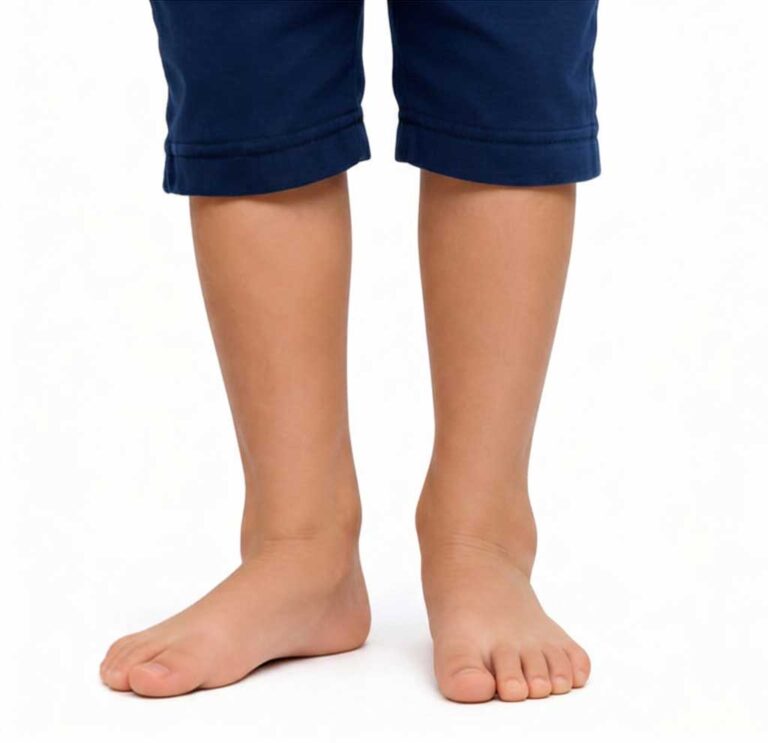
Adult-acquired flat feet describe a reduction in arch height that develops during adulthood.
Unlike naturally occurring flexible flat feet, acquired changes may involve deterioration or injury to structures responsible for maintaining foot alignment.
Symptoms may initially include discomfort or swelling along the inside of the ankle, followed by gradual changes in arch height and foot shape.
In some cases, the heel tilts outward and the forefoot begins to move outward relative to the rearfoot.
These changes can become progressively more pronounced if the underlying condition advances.
For more information about strengthening the muscles that support the foot arch, including practical exercises and their potential benefits, read our dedicated guide to flat feet exercises: Can you strengthen a fallen arch?.
Posterior tibial tendon dysfunction (PTTD)
The posterior tibial tendon connects the tibialis posterior muscle in the lower leg to several bones of the foot.
It plays an important role in supporting the medial longitudinal arch, controlling foot movement and assisting with propulsion during walking.
Posterior tibial tendon dysfunction occurs when this tendon becomes painful, damaged or unable to perform its normal function effectively.
Common symptoms may include:
-
Pain behind or below the inner ankle bone.
-
Swelling along the course of the tendon.
-
Discomfort during prolonged walking.
-
Difficulty performing a single-leg heel raise.
-
Progressive changes in arch height.
-
Reduced strength or stability during weight-bearing.
Posterior tibial tendon dysfunction is an important potential cause of adult-acquired flat feet, although other supporting structures may also be involved.
Progressive collapsing foot deformity (PCFD)
Progressive collapsing foot deformity is a more comprehensive medical term used to describe an acquired, three-dimensional change in foot alignment.
Previously, many of these cases were described primarily as adult-acquired flatfoot deformity or posterior tibial tendon dysfunction.
The newer terminology recognizes that the condition may involve multiple tendons, ligaments and joints rather than a single damaged tendon.
Depending on its severity, PCFD may involve:
-
Reduction in medial arch height.
-
Outward heel alignment.
-
Outward displacement of the forefoot.
-
Instability or changes in joint alignment.
-
Increasing stiffness in more advanced cases.
Early professional assessment is important when a person develops a progressively flattening foot, particularly if the changes affect only one side.
The American Academy of Orthopaedic Surgeons provides further information about progressive collapsing foot deformity, including its causes, diagnosis and treatment.
How can you tell if you have flat feet?
Several simple observations may help identify whether you have relatively low arches.
However, these observations cannot establish the underlying cause or determine whether treatment is necessary.
Standing arch observation
Stand barefoot on a level surface and observe the inner side of each foot.
A foot with a relatively low arch may have a larger area of contact with the ground along its inner border.
Compare both feet and note whether there is a significant difference in arch height or heel alignment.
The wet footprint test
The wet footprint test is a simple way to observe the approximate contact area beneath your feet.
-
Lightly wet the soles of your feet.
-
Stand on a piece of cardboard or another suitable surface.
-
Step away and examine the footprints.
A footprint showing a broad connection between the heel and forefoot may indicate a relatively low arch.
However, the result can also be influenced by body weight, soft tissue thickness and standing position. It should not be used as a definitive diagnostic test.
Arch appearance when sitting
Observe whether the arch becomes more noticeable when sitting with the foot unloaded.
If the arch reappears, this may suggest a flexible flat foot. If it remains absent, further assessment may be appropriate, particularly if the foot is painful or stiff.
How are flat feet diagnosed?
A podiatrist, orthopedic specialist or another appropriately qualified healthcare professional can assess foot structure and function.
Diagnosis generally involves a combination of medical history and physical examination.
Medical history
The healthcare professional may ask whether the flat foot structure has been present since childhood or developed more recently.
Other relevant information includes previous injuries, pain location, activity levels, medical conditions and changes in walking ability.
Physical examination
A clinical examination may include assessment of:
-
Arch height during standing and sitting.
-
Heel and forefoot alignment.
-
Joint mobility and flexibility.
-
Ankle range of motion.
-
Tendon function and muscle strength.
-
Areas of pain or swelling.
-
Walking patterns.
-
Ability to perform a heel raise.
A single-leg heel raise can provide useful information about posterior tibial tendon function, although the results must be interpreted alongside other clinical findings.
Medical imaging
Imaging is not routinely required for painless, flexible flat feet.
However, it may be appropriate when symptoms are persistent, foot shape is changing or an underlying structural condition is suspected.
Weight-bearing X-rays can help assess bone and joint alignment.
Ultrasound or MRI may be used to evaluate tendons, ligaments and other soft tissues.
CT imaging may occasionally be required to investigate specific bone abnormalities or complex deformities.
Do flat feet always require treatment?
No. Flat feet that do not cause pain, functional difficulties or progressive structural changes generally do not require treatment.
The purpose of treatment is not necessarily to create a higher arch or make the foot appear more anatomically typical.
Instead, treatment should focus on improving comfort, maintaining mobility, addressing underlying conditions and supporting everyday function.
A person with naturally low arches who can walk, exercise and participate in normal activities without discomfort may not need any intervention.
This distinction is particularly important because unnecessary treatment can create the misleading impression that all flat feet are abnormal.
The NHS guidance on flat feet similarly explains that flat feet are common and usually do not cause problems.
Nonsurgical treatment options for flat feet
When flat feet are associated with pain, fatigue or functional difficulties, several conservative treatment options may be considered.
The most appropriate treatment depends on the underlying cause, flexibility of the foot and severity of symptoms.
Activity modification
Temporarily reducing activities that aggravate foot or ankle symptoms may help manage discomfort.
This may involve adjusting walking distances, reducing high-impact exercise or taking regular breaks during prolonged standing.
A gradual return to normal activity is generally preferable to unnecessary long-term inactivity.
Supportive footwear
Comfortable, appropriately fitted footwear may help reduce discomfort during standing and walking.
Depending on individual requirements, useful footwear characteristics may include adequate width, a secure fastening system, sufficient cushioning and appropriate stability.
There is no single shoe design that is suitable for everyone with flat feet.
Orthotic insoles
Orthotic insoles may provide additional support beneath the foot, redistribute pressure and improve comfort during weight-bearing activities.
They may be particularly useful for some individuals with symptomatic flexible flat feet.
However, orthotic insoles do not permanently rebuild the arch of an adult foot, and people with asymptomatic flat feet do not necessarily need them.
The choice between prefabricated orthoses, custom devices and more specialized bracing depends on the individual’s symptoms and clinical requirements.
For further information about available designs, support levels and selecting appropriate orthotics, visit our dedicated guide to insoles for flat feet.
Physical therapy
Physical therapy may help address contributing factors such as reduced ankle mobility, calf muscle tightness, muscle weakness and impaired balance.
An individualized rehabilitation program may include stretching, strengthening, movement retraining and guidance on managing physical activity.
For acquired flat foot conditions involving tendon dysfunction, exercises should be selected carefully according to the stage and severity of the condition.
Ankle braces and specialized orthoses
More substantial support may be required for individuals with significant tendon dysfunction or progressive changes in foot alignment.
An ankle-foot orthosis (AFO) or other specialized brace may help support the foot and ankle during walking.
These devices are generally selected and fitted following professional assessment.
Temporary immobilization
In selected cases involving significant tendon pain or acute aggravation, a healthcare professional may recommend a removable walking boot for a limited period.
Immobilization is not a routine treatment for naturally occurring flat feet and should be used under appropriate clinical guidance.
Can flat feet be corrected with exercises?
Exercises may improve foot muscle strength, ankle mobility, balance and functional control.
Some individuals with flexible flat feet may also experience improvements in certain measures of arch function following targeted exercise programs.
Common exercises include:
-
Short-foot exercises targeting the intrinsic foot muscles.
-
Controlled heel raises.
-
Calf muscle stretching.
-
Resisted foot and ankle exercises.
-
Balance and stability training.
However, exercise cannot reliably produce a permanent structural correction in every type of flat foot.
Rigid flat feet caused by bone abnormalities or advanced joint changes are unlikely to respond in the same way as flexible flat feet.
Similarly, exercises alone may be insufficient for advanced progressive collapsing foot deformity.
The primary goal of rehabilitation should be improved comfort, strength and function rather than achieving a particular arch height.
When is surgery necessary for flat feet?
Surgery is rarely necessary for naturally occurring, painless flexible flat feet.
However, surgical treatment may be considered when an underlying structural condition causes significant pain, progressive deformity or functional limitations that have not responded adequately to conservative management.
Depending on the condition, surgical procedures may involve:
-
Repair or reconstruction of damaged tendons.
-
Tendon transfers.
-
Reconstruction of supporting ligaments.
-
Realignment of bones through osteotomy.
-
Lengthening of tight calf structures.
-
Fusion of selected joints in more advanced or rigid deformities.
The choice of procedure depends on the underlying diagnosis, severity of deformity, joint flexibility and the patient’s overall health and functional requirements.
Surgery carries potential risks, including infection, nerve injury, persistent pain, stiffness and prolonged recovery.
A foot and ankle orthopedic specialist can explain whether surgery is appropriate and discuss the expected benefits, risks and alternatives.
When should you see a podiatrist for flat feet?
Professional assessment is recommended if you experience persistent foot or ankle pain, increasing fatigue or difficulty participating in normal activities.
It is particularly important to seek advice if:
-
Your arches have recently started to flatten.
-
One foot is becoming noticeably flatter than the other.
-
You experience swelling or pain along the inside of the ankle.
-
Your foot is becoming increasingly stiff.
-
You have difficulty standing on tiptoe.
-
Your walking pattern or balance has changed.
-
Symptoms are becoming progressively worse.
Seek prompt medical attention if a foot suddenly changes shape following an injury or if you experience severe pain, inability to bear weight or significant swelling.
People with diabetes or reduced foot sensation should seek urgent medical assessment if a foot becomes unusually warm, red or swollen, even if there is little pain.
Early identification of an acquired foot deformity can help determine the most appropriate management strategy.
Frequently asked questions about flat feet
What is the medical name for flat feet?
The medical term for flat feet is pes planus. It describes a foot structure in which the medial longitudinal arch is reduced or absent during weight-bearing. When a low arch is accompanied by outward heel alignment, the term pes planovalgus may also be used.
Are flat feet normal?
Yes. Flat feet are a common variation in human foot structure. Many people have naturally low arches without experiencing pain or functional limitations. Painless, flexible flat feet generally do not require treatment.
Are flat feet hereditary?
Inherited anatomical characteristics can influence arch height, joint mobility and ligament flexibility. As a result, flat feet may occur more frequently within certain families. However, flat feet can also develop later in life due to injuries, medical conditions or changes in supporting structures.
Can you develop flat feet as an adult?
Yes. Adults can experience a gradual reduction in arch height due to changes in tendons, ligaments, joints or other supporting structures. Newly developed or progressively worsening flat feet should be professionally assessed, particularly when accompanied by pain or swelling.
What is the difference between flat feet and fallen arches?
Flat feet describe a low or absent arch, which may have been present since childhood. Fallen arches commonly describe an acquired reduction in arch height in someone who previously had a more noticeable arch. The terms are sometimes used interchangeably, although their underlying causes may differ.
Do all people with flat feet overpronate?
No. Flat feet describe foot structure, whereas pronation describes movement. Although people with flat feet may demonstrate increased pronation during walking or running, arch height alone does not reliably determine how the foot moves during activity.
Why do my flat feet hurt after standing all day?
Prolonged standing places repeated or sustained mechanical demands on the muscles, tendons, ligaments and joints of the foot. In some individuals with flat feet, this may contribute to fatigue or discomfort. Persistent symptoms should be assessed to identify the structures involved and determine appropriate management.
Can flat feet cause knee pain?
Foot movement can influence lower-leg rotation and knee mechanics. Some individuals with flat feet may experience associated knee symptoms, but the relationship is not straightforward. Knee pain has many potential causes, and flat feet should not automatically be considered responsible.
Can flat feet become worse with age?
Naturally occurring flexible flat feet may remain relatively unchanged throughout adulthood. However, age-related tissue changes, arthritis, tendon dysfunction and other conditions can contribute to progressive flattening in some individuals. A noticeable change in foot shape warrants professional assessment.
Can flat feet be permanently corrected?
The possibility of structural correction depends on the underlying cause and flexibility of the foot. Conservative treatments may improve comfort and function but do not reliably produce permanent changes in adult foot structure. Surgical correction may be considered for selected symptomatic structural deformities.
Can children grow out of flat feet?
Many children develop more noticeable arches as their feet mature. Others retain flexible flat feet into adulthood without experiencing problems. Painless, flexible flat feet in children are generally considered a normal developmental variation and usually do not require treatment.
Why is one of my feet flatter than the other?
Minor differences between the feet are common. However, a significant or newly developed difference in arch height may indicate an underlying tendon, ligament, joint or bone condition. Progressive flattening affecting only one foot should be professionally assessed.
What is posterior tibial tendon dysfunction?
Posterior tibial tendon dysfunction is a condition in which the tendon that helps support the medial arch becomes painful, damaged or functionally impaired. It can contribute to adult-acquired flat feet and may cause pain or swelling around the inner ankle, weakness and progressive changes in foot alignment.
Is walking barefoot good or bad for flat feet?
Walking barefoot is not inherently harmful for people with flat feet. Individuals with painless, flexible flat feet may tolerate barefoot activities without difficulty. However, people with symptomatic flat feet or tendon dysfunction may find prolonged barefoot walking uncomfortable. The appropriate approach depends on individual symptoms and the underlying condition.
Do flat feet always need orthotics?
No. People with painless, functional flat feet generally do not require orthotics. Orthotic devices may be helpful when flat feet are associated with discomfort, fatigue or specific mechanical problems. Their suitability depends on the individual’s symptoms, foot structure and functional requirements.
Conclusion
Flat feet are a common variation in foot structure and do not necessarily represent a medical problem.
Understanding the distinction between naturally occurring flexible flat feet, rigid flat feet and acquired changes in arch height is important when determining whether treatment is necessary.
While many individuals with flat feet require no intervention, those experiencing pain, progressive changes in foot alignment or functional difficulties may benefit from professional assessment.
Treatment should focus on addressing symptoms, maintaining mobility and improving everyday function rather than simply attempting to increase arch height.
Clinical references and further reading
-
American Academy of Orthopaedic Surgeons (AAOS). Progressive collapsing foot deformity.
-
American Academy of Orthopaedic Surgeons (AAOS). Flexible flatfoot in children.
-
Mayo Clinic. Flatfeet: Symptoms and causes.
-
Mayo Clinic. Flatfeet: Diagnosis and treatment.
-
National Health Service (NHS). Flat feet.
-
National Library of Medicine. StatPearls. Pes planus.
-
National Library of Medicine. StatPearls. Posterior tibial tendon dysfunction.
-
Evans AM, Rome K, Carroll M, Hawke F. Foot orthoses for treating paediatric flat feet. Cochrane Database of Systematic Reviews. 2022.
Medical disclaimer: This article is intended for general educational purposes and does not replace individual medical advice, diagnosis or treatment. Consult a qualified healthcare professional if you experience persistent foot pain or changes in foot structure.
