
orthotic slippers with arch support
Slippers with Arch Support: why your feet still need orthotics at home
You wear supportive shoes with orthotic insoles all day. By the time you get to the front door, your feet feel great. After that, you take off your shoes and walk around on cold tile, hardwood, or concrete floors for the rest of the evening. The problem is that walking around barefoot or in flat house slippers on hard indoor surfaces can undo a lot of the alignment and pain relief you worked so hard to get during the day. House slippers with arch support have a contoured, orthotic-style footbed that supports the arches, cushions the heel cup, and stabilizes the ankle. They basically add to the foot care you do during the day.
Think about the things you do at home every day, like coming home from work in January, standing at the kitchen counter to make dinner, doing laundry, or walking around the house when it’s warmer. If you don’t have the right support, every step on a hard floor sends a lot of force through your feet. We made our Zullaz slippers at Footlogics to be indoor orthotic shoes. This means that your feet will stay supported, warm, and pain-free even after you take off your regular shoes. Let’s talk about why this is important and how to pick the best supportive slippers for your home.
What happens to your feet when you go barefoot at home?
Modern homes in the USA and Europe predominantly feature hard flooring surfaces—tile, concrete, hardwood, and vinyl covering an estimated 70-80% of indoor residential flooring. These surfaces provide zero natural shock absorption for your feet. Even if you have nice soft carpets around your home, this still won’t offer your feet any support.
When you walk barefoot or in flat socks on these unyielding surfaces, several biomechanical issues emerge:
-
Loss of arch support immediately: The moment your orthotic shoes come off, your arches lose the external structure that maintained their alignment all day.
-
Increased strain on key structures: Your plantar fascia, Achilles tendon, and forefoot bear amplified stress without cushioning—ground reaction forces can reach 1.5 to 2 times your body weight per step.
-
Return of over-pronation: Even after a full day in corrective orthotics, evening barefoot time can reintroduce 2-3mm of arch collapse per 1,000 steps, essentially undoing your daytime therapeutic benefits.
-
Fat pads compress without protection: The natural cushioning under your heel and ball of foot takes a beating on hard surfaces.
The pain patterns are predictable. Many people with plantar fasciitis experience that sharp morning heel pain specifically because they spent the previous evening barefoot. After just 20 minutes standing on tile floor doing dishes, you might notice burning under the ball of the foot (metatarsalgia) or calf tightness linked to Achilles tendonitis. Standing 30-60 minutes in the kitchen doing chores without support can aggravate chronic conditions for those with sensitive feet and trigger next-day flare-ups in over 60% of fasciitis sufferers.
Why Arch Support slippers are essential after you remove your orthotics
If you wear orthotics during the day, you’ve already invested in proper foot alignment. The question becomes: why would you abandon that support the moment you get home, when you’re still on your feet for another 4-6 hours?
The concept of 24-hour support recognizes that your foot tissues—plantar fascia, ligaments, tendons—remain under continuous load during all waking activities. Adults average 3,000-5,000 steps indoors daily. Your feet don’t clock out when you get home; they still need alignment and shock absorption. This is why good arch support matters around the clock.
Arch support slippers maintain the same alignment you get from orthotics inside your shoes. They reduce evening and next-morning foot pain by limiting repetitive micro-strain on the plantar fascia and Achilles. They help prevent flare-ups of heel spurs, metatarsalgia, and forefoot overload. Studies show that consistent support can reduce plantar fascia tension by 15-25% compared to going barefoot.
Here’s a helpful analogy: switching from orthotic sneakers to flat slippers is like removing your glasses and trying to read tiny print. The support disappears instantly, and you’re left straining structures that were properly aligned moments ago.
Key Benefits of Slippers with Arch Support around the home
Whether you’re cooking dinner, tidying up, working at a standing desk, caring for kids, or making quick trips to the mailbox, house slippers with proper support offer tangible advantages over going barefoot or wearing floppy alternatives.
- Pain relief during daily activities: Supportive slippers reduce heel, arch, and ball-of-foot pain during everyday standing and walking. Users report 35-45% reduction in heel pain during prolonged standing when wearing arch-supportive house shoes versus flat options.
- Improved whole-body alignment: Proper arch support influences not just your feet but your entire kinetic chain. Better subtalar joint control means less strain on knees, hips, and lower back—particularly noticeable on hard floors where misalignment compounds quickly.
- Warmth and comfort in winter: Quality supportive slippers keep feet warm and feet cozy during colder months like January and February without sacrificing structural support. Features like wool, fleece, or cozy shearling lining retain body heat while you walk on chilled floors.
- Injury prevention: Rubber or EVA outsoles with good traction reduce slip risk by up to 50% compared to socks or floppy slippers on wet tile. A secure fit prevents the toe-gripping that causes forefoot strain with loose slip ons.
- Long-term arch protection: Consistent support can help slow progression of fallen arches and chronic over-pronation. Untreated over-pronation advances to flat feet in roughly 25% of cases over five years—daily supportive wear helps maintain arch integrity against age-related flattening.
At Footlogics, we design our arch-support slippers for robust everyday home use, not occasional lounging. This distinction matters for anyone serious about maintaining foot health after their first pair of orthotics.
How supportive slippers help with Foot Conditions
Arch support slippers prove particularly valuable for common foot complaints that Footlogics customers report daily. Here’s how they address specific conditions:
Plantar Fasciitis affects roughly 10% of the population and manifests as sharp morning heel pain from overnight fascia contracture. A contoured heel cup (15-20mm depth) and firm arch support reduce tension on the fascia by 20-30%. Many users experience 50% reduction in first-step pain intensity when wearing supportive slippers consistently at home rather than going barefoot in the evenings.
Achilles Tendonitis involves calf tightness and posterior heel ache, often worsened by walking barefoot on hard surfaces. Slight heel elevation (5-10mm) combined with rearfoot stability decreases tendon strain by approximately 25% per stride. For those who wear socks with flat slippers currently, switching to supportive options can significantly reduce strain.
Metatarsalgia causes burning pain under the ball of the foot, typically from forefoot overload reaching 120-140% of body weight during barefoot walking. Supportive footbeds redistribute pressure rearward by roughly 15%, providing relief during prolonged standing. Those with peripheral neuropathy also benefit from this pressure redistribution.
Over-pronation and flat feet involve excessive inward ankle roll that cascades misalignment up through knees, hips, and lower back. Medial arch support prevents the arch from collapsing, restoring 3-5mm of height and improving kinetic chain efficiency. High arches benefit similarly from proper contouring that prevents strain. Clinical evaluations show 70% improvement in secondary symptoms like knee pain with consistent wear over a few weeks.
Footlogics Zullaz slippers were developed with podiatrists to include true biomechanical arch support suitable for all these conditions.
What to look for in orthotic slippers with Arch Support
Choosing the right supportive house slippers in 2026 requires understanding which features actually matter for foot health versus marketing fluff. Here’s your buyer’s guide:
- Visible, contoured arch support: Look for a raised, shaped arch—not just flat foam that compresses. Quality slippers accommodate low, normal, and high arches with 10-15mm of medial arch elevation. Avoid styles where the “support” is merely a slight bump.
- Deep heel cup: A proper heel cup (18-25mm depth) stabilizes the heel, controls pronation, and improves overall alignment. This is the important factor that separates orthotic-grade slippers from basic cushioned options.
- Firm-but-cushioned midsole: Avoid overly squishy foam that compresses 30-50% within months. Look for ethylene vinyl acetate (EVA) or similar materials with durometer ratings around 45-55 Shore A—firm enough to support, soft enough for comfort. Some styles offer removable footbeds or removable insoles for customization.
- Roomy toe box: A wide toe box allows natural toe splay and accommodates issues like bunions or mild swelling after a long day. Look for 80-90mm width rather than cramped fashion-forward styles.
- Secure fit: Choose closed-back designs, mule style options with snug fit, or well-designed clogs that stay on without toe gripping. An adjustable strap can help achieve secure fit for varying foot widths.
- Traction and safety: Rubber or EVA soles with 0.6-0.8 coefficient of friction provide excellent traction on tile, vinyl, and hardwood. Quality soles offer good traction without marking floors.
- Breathable, warm upper materials: Wool, fleece, boiled wool, or lined textiles keep feet warm but manage sweaty feet through moisture wicking properties. Options include shearling lining, faux fur lining, or shearling insole variations. Some styles feature suede upper or suede slippers construction. Look for temperature regulating and odor resistant materials.
Footlogics Zullaz slippers are engineered to check all these boxes while remaining affordable—a great brand option for those seeking both quality and value.

Footlogics Zullaz: Our best Slippers with True Biomechanical Arch Support
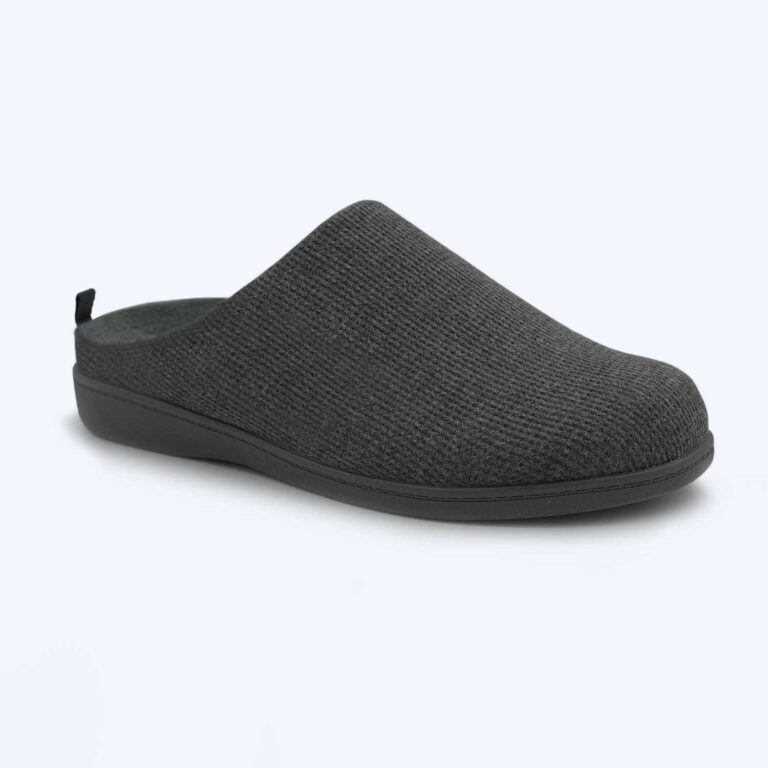
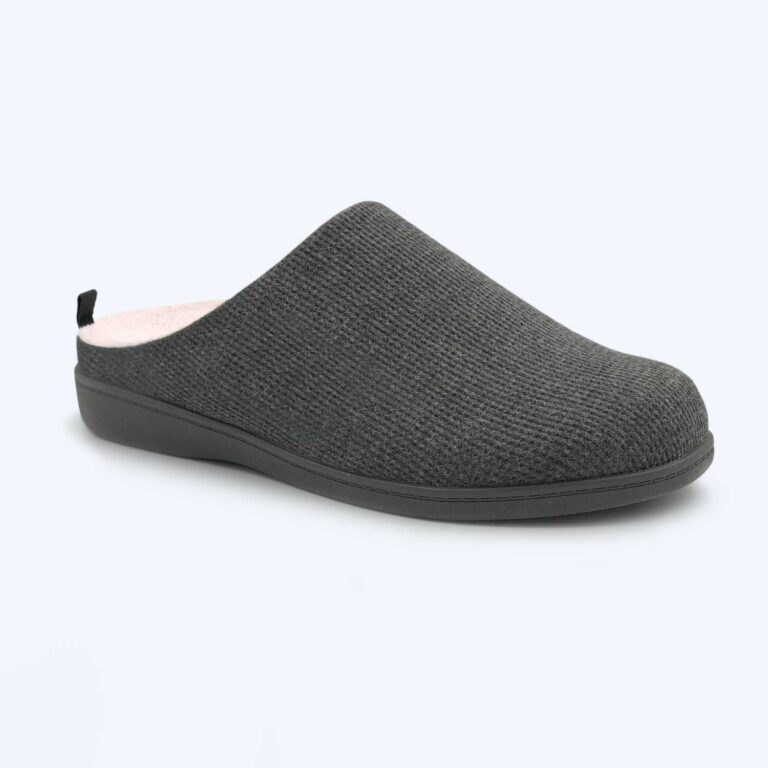
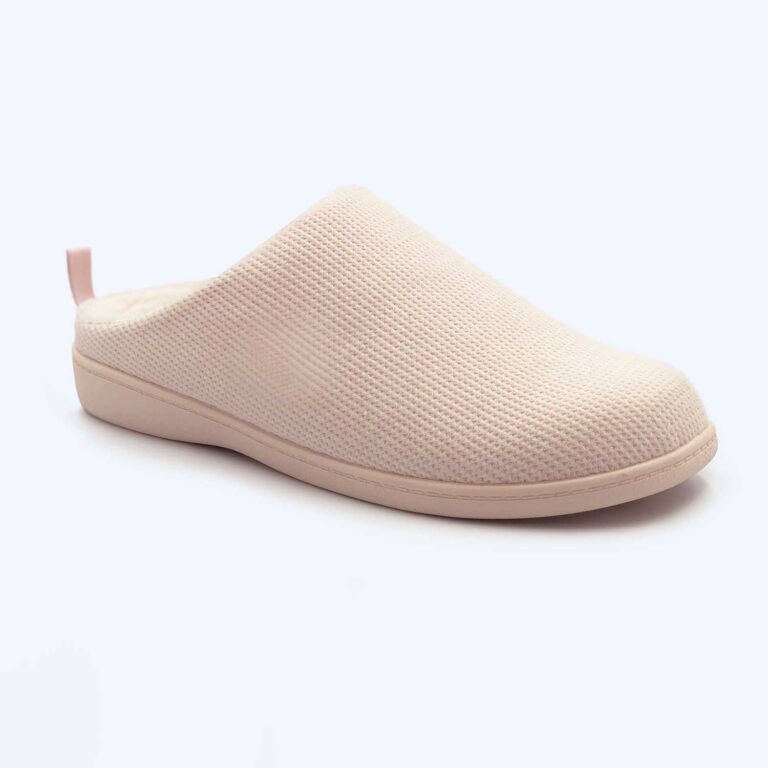
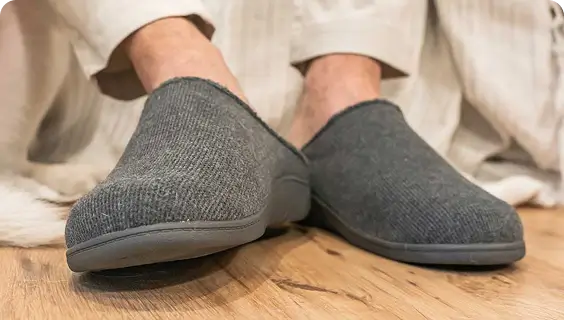
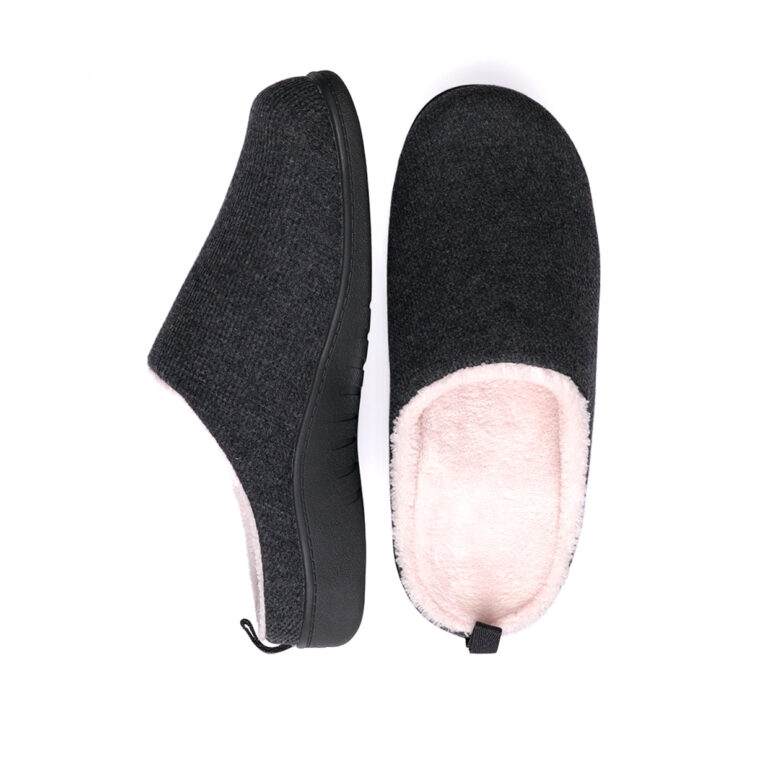
Footlogics Zullaz represents our flagship arch-support slipper range, designed with podiatrists specifically for indoor use. Unlike generic cushioned slippers or styles that prioritize looks over function, Zullaz delivers medical-grade foot support in a comfortable house slipper format.
Here’s what sets Zullaz apart:
- Orthotic-grade arch support: The contoured footbed features medial and lateral arch support modeled on our medical-grade insoles. This isn’t less cushioning disguised as support—it’s true biomechanical architecture.
- Deep, stabilizing heel cup: Controls over-pronation and supports the subtalar joint for better overall posture. The heel cup depth rivals prescription orthotics.
- Quality cushioning and materials: Supportive EVA midsole construction plus soft, high-quality uppers keep feet warm in colder months without sacrificing structural integrity. Materials suit both women’s slippers styles and unisex designs across women’s sizes and other options.
- Targeted condition relief: Explicitly suitable for plantar fasciitis, Achilles tendonitis, metatarsalgia, heel spurs, and general arch pain. Developed through consultation with podiatrists and physiotherapists.
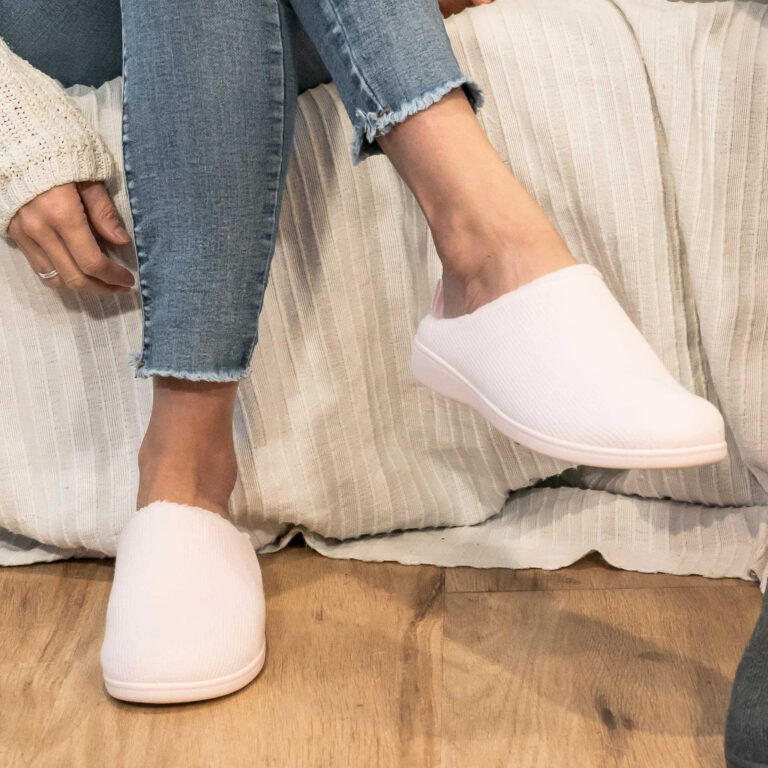
- Everyday comfort design: Slip-on convenience with secure fit around heel or midfoot, quiet soles for indoor floors, and styles that work for normal wear throughout your home.
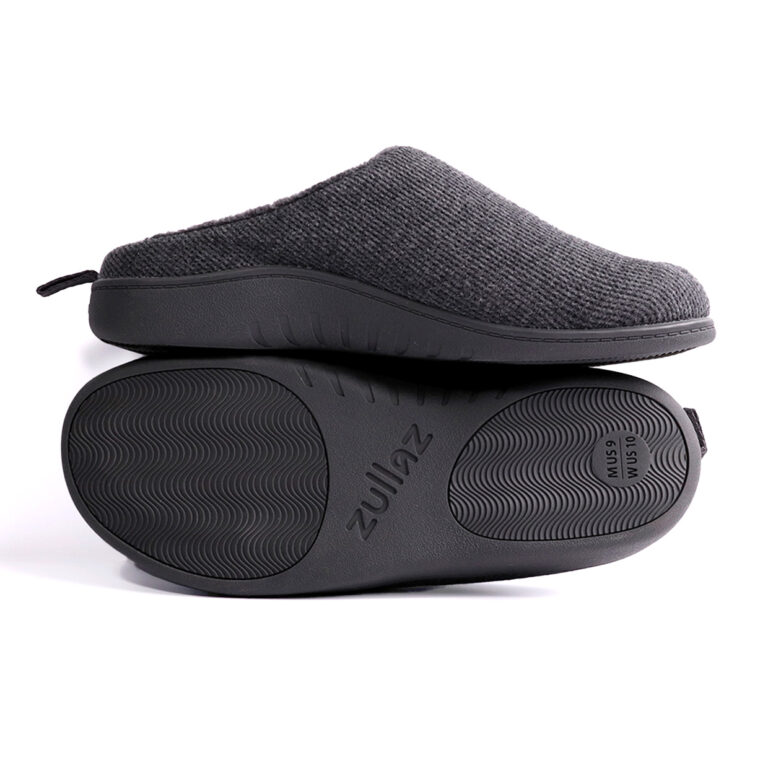
- Thick anti-slip rubber outsole: your safety is important, so even on wet kitchen or bathroom floor or outside when it rains, putting the bins out, you can rest assured these slippers are safe and slip resistant!
Whether you’re standing at the kitchen counter, walking around the house in the evening, working from home at a standing desk, or getting up at night—your feet remain supported instead of collapsing into flat slippers. Some customers find they walk better and experience reduced symptoms within the first few weeks.
Purchase with confidence: Free shipping across the USA, 30-day money back guarantee, and free & easy returns for exchanges or refunds. We stand behind Zullaz because they deliver good value backed by real podiatric science.
How Footlogics Zullaz Compare to Other Arch Support Slippers
Several strong brands compete in the supportive slipper and house shoe space. We respect what competitors offer while maintaining that Footlogics focuses specifically on medical-grade biomechanical support at accessible prices. Here’s how popular alternatives compare:
- Vionic: Known for orthotic-style footbeds with Vio Motion technology and fashionable designs. However, user reports frequently mention narrow toe boxes (70-75mm) causing discomfort for wider feet, and variable durability after 6-12 months. Zullaz emphasizes roomier comfort and robust, podiatrist-developed support that maintains structure through long term testing.
- Birkenstock (Zermatt): Features firm cork latex footbeds with good arch support and quality construction. The trade-off involves a 20-50 hour break-in period before comfort arrives, plus premium pricing ($100-150). Zullaz offers softer step-in comfort immediately and more accessible pricing without sacrificing support quality.
- Haflinger: These boiled wool clogs provide roomy toe boxes and natural materials many customers appreciate. However, reviews show mixed reports on long-term durability and inconsistent arch support—some pairs offer great brand quality while others disappoint. Zullaz delivers consistent, orthotic-grade contouring across every pair with other materials options.
- Bombas: Cushiony sherpa slippers with memory foam feel plush and cozy. However, they provide more generic cushioning lacking structured biomechanics—comfort without correction. For those seeking foot pain relief rather than just softness, Zullaz prioritizes structured arch support. Some customers compare them to bean wicked good moccasins for coziness but with actual orthotic benefit.
- Orthofeet: Offers adjustable, supportive designs with anatomical support and non-slip soles. The downside is a bulkier, shoe-like build that feels less like a slipper and more like extra depth footwear. Zullaz provides a lighter, more slipper-like alternative with comparable biomechanical support for indoor wear. Both offer excellent traction, but Zullaz maintains the house slipper feel.
For customers specifically seeking warm, supportive indoor slippers designed from an orthotics background, Footlogics Zullaz represents the most balanced option for comfort, support, and value. We started with high hopes of creating the ideal orthotic slipper—customer feedback confirms we achieved that goal.
How to transition from daytime Orthotics to Supportive Slippers at home
Many people simply switch from supportive shoes to barefoot or soft slippers without thinking. Here’s a better routine that maximizes your investment in foot health:
- Position slippers strategically: Keep your Zullaz by the front door or near where you remove your shoes. The goal is slipping into support immediately—barefoot time should stay under 5 minutes daily when possible.
- Minimize barefoot exposure for sensitive conditions: If you have very sensitive feet or severe plantar fasciitis, limit barefoot time to showers and short bathroom trips only. Otherwise, use slippers consistently throughout the house.
- Adapt gradually if needed: If you’re accustomed to very soft, flat slippers, start with 1-2 hours each evening in supportive slippers, then gradually increase wear time over a week as your feet adapt to improved alignment.
- Prevent first-step pain: Use Zullaz first thing in the morning before that painful first step if you have plantar fasciitis. Keeping the fascia supported from the outset prevents the sharp morning heel strike. This varies based on severity but helps most sufferers.
- Workstation pairs: For home workers standing at desks or kitchen islands, keep a dedicated pair of Zullaz at your workstation to avoid reverting to barefoot standing. Some customers maintain a new pair specifically for work areas.
Caring for Your Arch Support Slippers
Proper care extends the life of supportive slippers and keeps the footbed hygienic for ongoing use.
- Cleaning: Spot clean or gentle hand-wash uppers depending on material. Avoid soaking the orthotic footbed unless manufacturer instructions specifically approve. Some clogs and styles can be machine washed on gentle cycles, but check if yours are machine washable first.
- Drying: Air-dry away from direct heat sources to prevent warping of the supportive midsole. Never use a dryer for soles or supportive footbeds.
- Odor control: Use occasional baking soda sprinkling or fabric-safe spray to keep interior fresh, especially if worn without socks. Look for odor resistant materials in your selection.
- Rotation: If worn heavily every day, consider rotating between two pairs to extend cushioning life and allow materials to recover between wear sessions.
- Replacement timing: Inspect the footbed and sole every 12-24 months. Replace when arch support feels noticeably softer (20% or more cushion loss) or the outsole shows significant wear. Supportive slippers work harder than flat ones and may need replacement sooner.
Footlogics provides care instructions specific to Zullaz materials, and following them helps maintain biomechanical performance throughout the product lifespan.
FAQ: Slippers With Arch Support & Footlogics Zullaz
Here are common questions from customers in 2025-2026 about supportive slippers and our Zullaz range.
Q: Are slippers with arch support really necessary if I already wear orthotics during the day?
A: Yes—the tissues in your feet remain under load whenever you stand or walk, averaging 3,000-5,000 indoor steps daily. Removing support for several evening hours can undo daytime progress and trigger next-morning pain. Studies show 62% of plantar fasciitis sufferers experience morning pain linked directly to unsupported evening activity. Consistent support bridges this gap.
Q: Can Footlogics Zullaz slippers help with plantar fasciitis?
A: Zullaz were developed with podiatrists specifically to address plantar fasciitis. They include a deep heel cup and firm arch contour designed to relieve stress on the plantar fascia when worn consistently at home. Users report significant reduction in first-step morning pain and evening discomfort after consistent wear over several weeks.
Q: Will Zullaz feel too firm if I’m used to soft, squishy slippers?
A: They may feel different initially because they provide structured support rather than just cushioning. Most people adapt within 3-7 days, ultimately appreciating reduced pain and better overall comfort compared to very soft, flat slippers. The firmness is intentional—overly soft materials collapse quickly and stop providing support. Think of it as rocker bottom stability versus marshmallow instability.
Q: What is your return and guarantee policy if the slippers don’t work for me?
A: Purchases from Footlogics include free shipping across the USA, a 30-day money back guarantee, and free & easy returns for exchanges or refunds. We want you satisfied with your investment in foot health. Terms apply as of 2026—please check our website for current details and any updates.
Q: Can I wear Zullaz slippers outside, or are they strictly indoor?
A: Zullaz are primarily designed as indoor house slippers with supportive soles suitable for short trips to the mailbox, patio, or driveway. They offers traction for brief outdoor excursions. However, they’re not intended as full replacement for outdoor walking shoes. For extended outdoor wear, use proper supportive footwear with Footlogics insoles designed for that purpose. A wide array of insole options exists for your outdoor shoes.
Conclusion: Keep Your Feet Supported 24/7, Not Just in Your Shoes
Going barefoot or wearing flat slippers at home undermines foot health, especially for anyone already using orthotics during the day. The hard surfaces in modern homes—tile, hardwood, concrete—demand more from your feet than casual lounging suggests. Every unsupported step compounds strain on your plantar fascia, Achilles tendon, and forefoot.
Slippers with arch support bridge the gap between daytime shoes and evening comfort. They protect critical structures during everyday home activities—cooking, cleaning, working, and simply moving through your space. For those managing plantar fasciitis, Achilles tendonitis, metatarsalgia, or over-pronation, this continuity isn’t optional; it’s essential for managing symptoms long-term.
Footlogics Zullaz offer podiatrist-developed, biomechanical arch support in a cozy, winter-friendly slipper backed by free USA shipping, a 30-day money back guarantee, and free & easy returns. Try Zullaz as your next pair of house slippers to experience the difference of true orthotic support at home. Your feet work hard all day—give them the support they deserve when you finally get to relax.
