
Achilles Tendonitis Treatment:
An Evidence-Based Guide
Achilles tendonitis can make everyday activities surprisingly difficult. Walking upstairs, taking your first steps in the morning, or returning to your favorite running route may cause pain and stiffness at the back of your ankle.
The good news is that most people with Achilles tendonitis improve without surgery. However, successful treatment usually involves more than simply resting until the pain disappears.
Modern rehabilitation focuses on managing tendon stress, gradually rebuilding calf strength, and allowing the Achilles tendon to adapt to physical activity.
In this guide, we’ll explain which Achilles tendonitis treatments are supported by medical research, what you can do at home, how long recovery typically takes, and when to seek professional help.
What Is Achilles Tendonitis?:
The Achilles tendon is the strong band of connective tissue connecting your calf muscles to your heel bone. It helps you walk, run, climb stairs, jump, and push off the ground.
Achilles tendonitis is a commonly used term for pain and irritation affecting this tendon.
However, healthcare professionals increasingly use the term Achilles tendinopathy, particularly for persistent symptoms. This reflects the fact that long-standing tendon pain is not necessarily caused by ongoing inflammation.
Repeated loading, sudden increases in physical activity, and inadequate recovery can contribute to tendon pain and changes in tendon structure.
There are two main types:
Midportion Achilles Tendinopathy
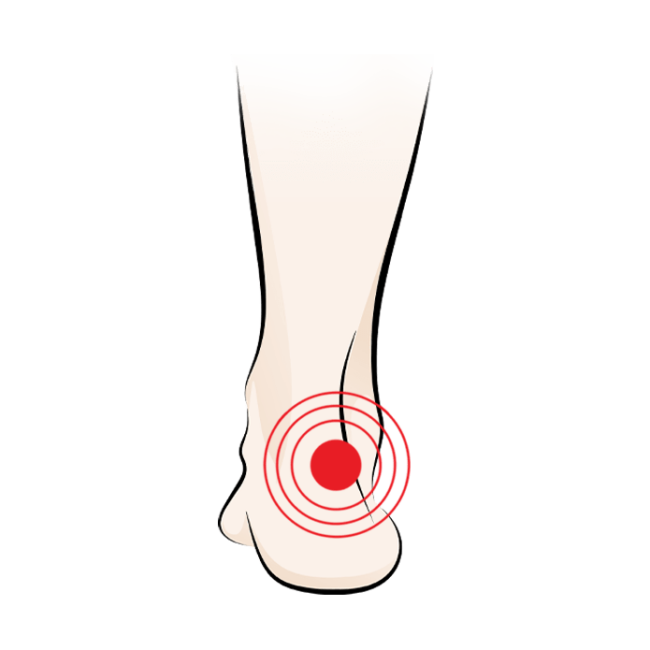
Pain typically develops approximately 2–6 cm above the heel bone, in the middle section of the tendon.
This is common among runners and physically active adults, although it can affect anyone.
Insertional Achilles Tendinopathy
Pain occurs where the Achilles tendon attaches directly to the back of the heel bone.
This type can be aggravated by compression of the tendon against the heel bone, particularly when the ankle bends upward excessively.
Why does the distinction matter?
Certain exercises that are suitable for midportion Achilles tendinopathy may aggravate insertional symptoms. Correctly identifying the painful area helps guide rehabilitation.
For additional anatomical explanations, see the American Academy of Orthopaedic Surgeons’ Achilles tendinitis guide.

What Is the Best Treatment for Achilles Tendonitis?
For most people with midportion Achilles tendinopathy, the treatment with the strongest supporting evidence is progressive tendon-loading exercise.
This involves gradually increasing the amount of work performed by the calf muscles and Achilles tendon, allowing them to regain strength and improve their tolerance for activity.
The 2024 clinical practice guideline published in the Journal of Orthopaedic & Sports Physical Therapy recommends tendon-loading exercise as a first-line treatment for midportion Achilles tendinopathy, provided there is no suspected serious structural weakness or tear.
The guideline also recommends continuing appropriate physical activity within pain tolerance rather than relying on complete rest.
Read the 2024 Achilles Tendinopathy Clinical Practice Guideline.
Other treatments can help manage symptoms, but they generally work best alongside an individualized rehabilitation program.
1. Modify Activities Without Completely Stopping Exercise
When Achilles pain first develops, it is tempting to stop walking, exercising, and participating in sports altogether.
Although temporarily reducing painful activities is often necessary, prolonged inactivity can weaken the calf muscles and reduce the tendon’s ability to tolerate normal loads.
A better approach is relative rest.
This means reducing activities that significantly aggravate symptoms while continuing movement that is reasonably comfortable.
For example:
-
Reduce running distance, speed, or hill training.
-
Temporarily avoid sprinting, jumping, and explosive movements.
-
Consider swimming or cycling if these activities do not aggravate symptoms.
-
Avoid sudden increases in training intensity.
-
Allow adequate recovery between demanding activities.
Some discomfort during rehabilitation may be acceptable, but pain should remain manageable and should not progressively worsen.
A useful way to monitor activity is to observe how the tendon feels the following morning. A substantial increase in morning stiffness or pain may indicate that the previous day’s activity was excessive.
Your physical therapist can help establish an appropriate level of activity based on your symptoms.
2. Progressive Calf Strengthening and Tendon-Loading Exercises
Exercise is the foundation of most successful Achilles tendinopathy rehabilitation programs.
The goal is not simply to stretch the tendon. It is to gradually improve the strength and loading capacity of the calf muscles and Achilles tendon.
Common Rehabilitation Exercises
Isometric calf holds
These involve contracting the calf muscles while maintaining a relatively fixed ankle position. They may be useful when movement is initially uncomfortable.
Standing heel raises
Rising onto your toes strengthens the calf muscles and progressively loads the Achilles tendon.
Exercises may begin with both feet and progress to single-leg movements as strength improves.
Seated calf raises
These emphasize the soleus muscle, an important calf muscle that contributes to Achilles tendon loading.
Slow, controlled heel raises and lowering exercises
Both the lifting and lowering phases can be used to progressively strengthen the tendon.
Advanced strengthening and return-to-sport exercises
As symptoms improve, rehabilitation may include heavier resistance, faster movements, hopping, and sport-specific activities.
The appropriate exercises depend on the location of the problem, symptom severity, strength, and individual goals.
Important Warning for Insertional Achilles Tendinopathy
People with insertional Achilles tendinopathy should generally avoid aggressive heel drops below the level of a step during early rehabilitation.
This position increases ankle dorsiflexion and may increase compression at the tendon attachment.
Heel raises performed on a flat surface are often a better starting point.
The AAOS specifically cautions against using traditional step-based eccentric heel drops for insertional Achilles tendinitis.
3. Can Heel Lifts Help Achilles Tendonitis?
Heel lifts are small inserts placed beneath the heel inside a shoe.
By slightly raising the heel, they can reduce the amount of upward ankle bending required during certain activities.
This may temporarily reduce stress on the Achilles tendon and make walking more comfortable for some people.
The 2024 clinical practice guideline states that clinicians may use heel lifts to temporarily reduce ankle dorsiflexion during activity in people with midportion Achilles tendinopathy.
However, heel lifts are not a replacement for strengthening exercises.
They should generally be considered a short-term symptom-management tool, with their use reviewed as rehabilitation progresses.
The appropriate height and duration of use depend on individual circumstances.
4. Ice and Pain Relief
Ice may help relieve discomfort, particularly after activities that aggravate symptoms.
A cold pack wrapped in a towel can be applied to the painful area for approximately 15–20 minutes.
Avoid placing ice directly against the skin.
Nonsteroidal anti-inflammatory drugs (NSAIDs), such as ibuprofen or naproxen, may provide temporary pain relief for some people.
However, persistent Achilles tendinopathy is not simply an inflammatory problem, and these medications do not reliably restore tendon strength or resolve the underlying condition.
NSAIDs can also cause side effects, including gastrointestinal bleeding, kidney problems, and interactions with other medications.
Speak with a healthcare professional before using them if you have relevant medical conditions or take other medicines.
Pain relief may make rehabilitation more comfortable, but it should not be used to mask symptoms while continuing excessive tendon loading.
5. Physical Therapy for Achilles Tendonitis
A physical therapist can help identify factors contributing to Achilles pain and develop a progressive rehabilitation program.
An assessment may include:
-
Calf muscle strength and endurance.
-
Ankle mobility.
-
Walking or running mechanics.
-
Training history and recent changes in activity.
-
Location and severity of tendon pain.
-
Footwear and occupational demands.
Treatment generally emphasizes progressive exercise, education, and activity modification.
A physical therapist can also help determine when it is appropriate to return to running, jumping, or other demanding activities.
This individualized approach is particularly valuable when symptoms have persisted for several months or repeatedly return after periods of improvement.
6. Does Stretching Help Achilles Tendonitis?
Calf stretching may help some people with limited ankle mobility, but stretching alone is not considered the primary treatment for Achilles tendinopathy.
Aggressive stretching can sometimes aggravate symptoms, particularly when pain occurs at the tendon attachment.
For insertional Achilles tendinopathy, deep ankle dorsiflexion may increase compression at the back of the heel.
Stretching should therefore be selected according to the type of tendinopathy and individual tolerance.
If stretching causes increased tendon pain, reduce the intensity or seek advice from a physical therapist.
7. Shockwave Therapy for Persistent Achilles Pain
Extracorporeal shockwave therapy (ESWT) uses externally applied acoustic pressure waves to stimulate the affected area.
It is sometimes considered when Achilles symptoms persist despite an appropriate rehabilitation program.
Some studies suggest shockwave therapy may improve pain and function in selected patients, particularly when combined with exercise.
However, findings are inconsistent, and it is not established as a universally effective treatment.
Shockwave therapy should be considered an additional treatment rather than a replacement for progressive tendon loading.
The AAOS Achilles tendinitis guide discusses its potential role and the limitations of the evidence.
8. Are Cortisone or PRP Injections Effective?
Injections are sometimes discussed when Achilles tendon pain persists.
However, their benefits and risks vary considerably.
Corticosteroid Injections
Corticosteroids can reduce inflammation and pain in certain conditions.
Nevertheless, corticosteroid injections directly into the Achilles tendon are generally discouraged because they may weaken the tendon and increase the risk of rupture.
Injections around the tendon require careful specialist assessment and should not be regarded as routine first-line treatment.
Platelet-Rich Plasma (PRP)
PRP treatment involves preparing a concentrated portion of a patient’s blood and injecting it into the affected area.
Although PRP has attracted considerable interest, high-quality research has not demonstrated consistent additional benefit for Achilles tendinopathy.
It is not currently established as a routine treatment that reliably improves outcomes beyond appropriate rehabilitation.
Patients considering injections should discuss the evidence, costs, risks, and alternatives with a qualified clinician.
9. When Is Surgery Necessary?
Most people with Achilles tendinopathy do not require surgery.
Surgical treatment may be considered when symptoms remain significantly disabling despite a sustained, appropriately supervised nonsurgical treatment program.
The AAOS advises that surgery is generally considered only after approximately six months of unsuccessful nonsurgical treatment.
The procedure depends on the location and nature of the tendon problem.
Possible approaches include removing damaged tendon tissue, addressing problematic bone spurs, or repairing affected structures.
Surgery carries risks, including infection, wound complications, nerve injury, persistent pain, and prolonged rehabilitation.
The decision should be made with a foot and ankle orthopedic specialist after reviewing the expected benefits and risks.
How Long Does Achilles Tendonitis Take to Heal?
Recovery depends on the severity and duration of symptoms, the type of tendinopathy, and how consistently rehabilitation is followed.
Some people with relatively recent symptoms improve within several weeks or a few months.
Persistent Achilles tendinopathy often requires considerably longer.
The NHS advises that many patients need approximately six to nine months of rehabilitation before returning to full activity without pain.
This does not mean everyone will experience severe pain throughout that period. Improvement is often gradual, and many people can continue modified activities while recovering.
Temporary flare-ups are common.
The most important goal is a sustained improvement in tendon function and activity tolerance, rather than simply achieving a few pain-free days.
Read NHS guidance on Achilles tendinopathy and recovery.
Can You Walk or Run With Achilles Tendonitis?
Walking is often possible when symptoms are mild and remain manageable.
However, long walks, steep hills, and fast walking may increase tendon loading.
Running requires more caution because the Achilles tendon experiences substantial forces during each stride.
A return-to-running program should consider:
-
Pain during and after activity.
-
Morning stiffness.
-
Calf strength and endurance.
-
Ability to tolerate progressively heavier exercises.
-
Response to previous training sessions.
For some people, temporarily reducing running volume is sufficient. Others may need to stop running for a period while rebuilding strength.
A physical therapist can help determine an appropriate progression.
When Should You See a Doctor?
Seek medical advice if Achilles pain is persistent, worsening, or interfering with everyday activities.
A professional assessment is particularly important when symptoms do not improve with sensible activity modification or when the diagnosis is uncertain.
Seek urgent medical assessment if you experience:
-
A sudden popping or snapping sensation behind the ankle.
-
Sudden severe pain in the calf or heel.
-
Difficulty pushing off the affected foot.
-
Inability to rise onto your toes after an injury.
-
Sudden loss of normal walking ability.
These symptoms may indicate an Achilles tendon rupture rather than ordinary tendinopathy.
Prompt assessment is important because a rupture requires a different treatment approach.
Frequently Asked Questions About Achilles Tendonitis Treatment
What is the fastest way to heal Achilles tendonitis?
There is no proven overnight cure. The most effective approach for many patients involves reducing aggravating activities and following a progressive strengthening program. Recovery time varies, and attempting to return to demanding exercise too quickly can cause setbacks.
Should I rest or exercise with Achilles tendonitis?
Complete rest is generally not recommended for uncomplicated midportion Achilles tendinopathy. Relative rest combined with carefully progressed exercise is usually more appropriate. Suspected tendon rupture or another serious injury requires immediate assessment.
Is walking good for Achilles tendonitis?
Walking can help maintain activity, provided symptoms remain tolerable and do not worsen significantly afterward. Reduce walking distance, speed, or hills if symptoms increase.
Do heel lifts help Achilles tendonitis?
Heel lifts may temporarily reduce ankle dorsiflexion and improve comfort in some patients. They are an adjunct to treatment rather than a substitute for progressive strengthening.
Is massage effective for Achilles tendonitis?
Massage may temporarily relieve calf muscle discomfort, but evidence that massage alone improves Achilles tendon healing is limited. It should not replace a structured rehabilitation program.
Can Achilles tendonitis heal without surgery?
Yes. Most cases improve with nonsurgical treatment, including progressive tendon-loading exercises, activity modification, and appropriate rehabilitation.
Does Achilles tendonitis ever become permanent?
Symptoms can persist for months and sometimes become chronic. However, long-standing tendinopathy does not necessarily mean permanent disability. Many patients improve with appropriately managed rehabilitation.
Are Achilles tendonitis and Achilles tendinopathy the same thing?
The terms are often used interchangeably. Tendonitis traditionally refers to inflammation, whereas tendinopathy is a broader term for tendon pain and dysfunction, including persistent symptoms not primarily driven by inflammation.
The Bottom Line: What Really Works?
Achilles tendonitis treatment has evolved considerably as researchers have learned more about how tendons respond to physical stress.
For most people with midportion Achilles tendinopathy, progressive tendon-loading exercise is the cornerstone of effective treatment.
Activity modification, appropriate footwear, temporary heel lifts orthotic insoles with a heel elevation and professional rehabilitation may help manage symptoms while the tendon gradually regains its ability to tolerate everyday movement and exercise.
Other treatments, including shockwave therapy and surgery, may be considered in selected cases, but they are not usually the first step.
Recovery takes patience. A gradual, structured approach generally offers a better foundation for long-term improvement than relying on rest or short-term pain relief alone.
Medical References and Further Reading
-
Chimenti RL, et al. (2024). Achilles Pain, Stiffness, and Muscle Power Deficits: Midportion Achilles Tendinopathy Revision — 2024. Journal of Orthopaedic & Sports Physical Therapy. Read the clinical practice guideline.
-
American Academy of Orthopaedic Surgeons (AAOS). Achilles Tendinitis. Read the AAOS patient guide.
-
Guy’s and St Thomas’ NHS Foundation Trust. Achilles Tendinopathy. Read NHS guidance.
-
MedlinePlus, U.S. National Library of Medicine. Achilles Tendinitis. Read the MedlinePlus overview.
Medical disclaimer: This article provides general educational information and does not replace individualized medical advice, diagnosis, or treatment. Consult a qualified healthcare professional about persistent symptoms or before beginning rehabilitation when a significant injury is suspected.
