
Orthotic Insoles for Plantar Fasciitis: The 2026 Podiatrist-Led Guide to Relief
That sharp, stabbing sensation in your heel during your first steps of the day isn’t just a sign of inflammation. It’s a mechanical failure of your foot’s structural support. You’ve likely tried the soft, cushioned inserts from the local chemist only to find they flatten out within weeks while your aching arches remain. It’s frustrating to feel like your mobility is limited by gear that simply isn’t up to the task. If you’re tired of temporary fixes, it’s time to look at the biomechanics of your stride. High-quality orthotic insoles for plantar fasciitis offer a professional-grade solution by targeting the root cause of your discomfort.
We understand how debilitating heel pain can be when you’re just trying to get through a workday or enjoy a morning run. You deserve a solution that provides an immediate reduction in heel strike pain without losing its shape over time. This 2026 podiatrist-led guide will show you how medical-grade support restores your mobility. We’ll explore the difference between simple cushioning and true structural realignment, ensuring you can walk or run without subsequent inflammation. Discover how the right support can transform your daily movement from a painful chore into a joy.
Key Takeaways
- Identify why ligament tightening causes morning heel pain and how targeted arch support stops the cycle of strain.
- Contrast the temporary feel of retail cushioning with the long-lasting structural integrity of orthotic insoles for plantar fasciitis.
- Use the “wet foot” test to accurately determine your arch type and select the correct volume for your specific footwear.
- Learn the essential steps for a successful break-in period to ensure your feet adjust comfortably to their new, corrected alignment.
- Gain access to professional-grade biomechanical solutions developed by podiatrists to restore your mobility without the need for custom-molded prices.
What is Plantar Fasciitis and Why Does Your Arch Need Support?
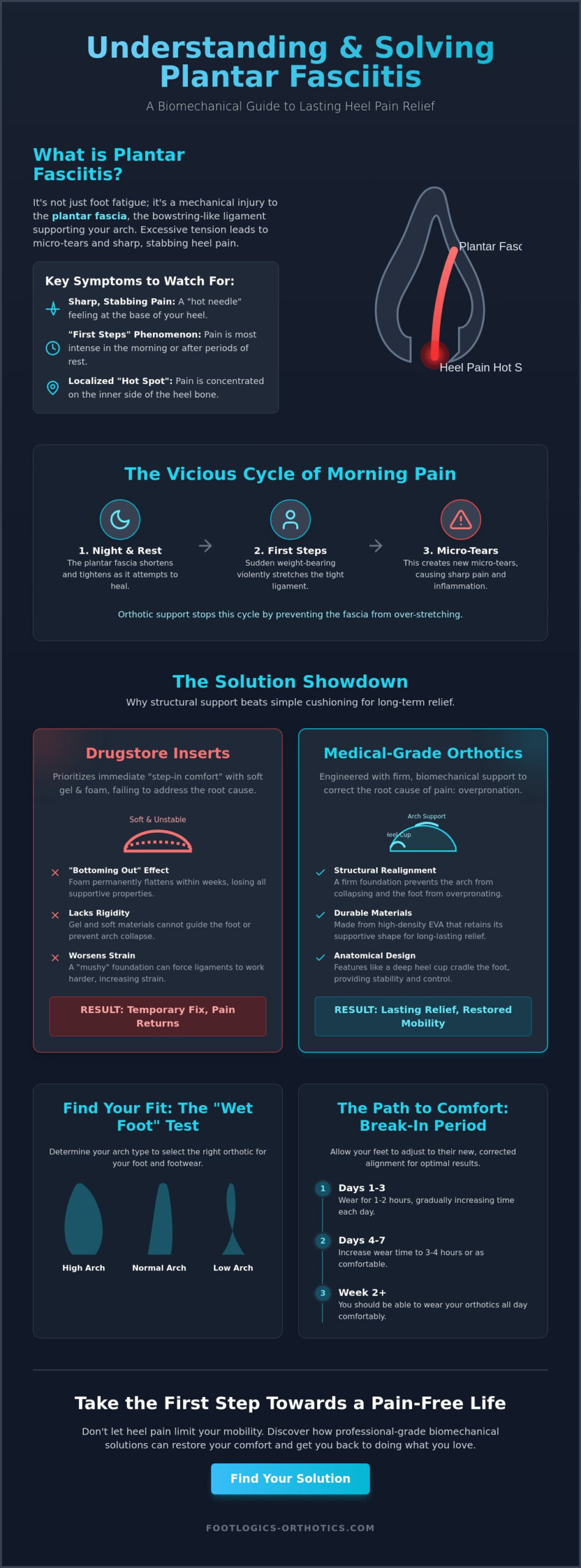
Plantar fasciitis isn’t just a fancy name for sore feet. It’s a specific mechanical injury to the plantar fascia, which is the thick band of connective tissue running along the bottom of your foot. Think of it like a bowstring. It connects your heel bone to your toes and creates the arch of your foot. When this “string” is under constant, excessive tension, it develops micro-tears and painful inflammation. This is why Plantar Fasciitis causes that distinct, sharp pain right at the base of the heel.
You know the feeling well. You swing your legs out of bed, take your first step, and it feels like a hot needle in your heel. During the night, your foot naturally rests in a pointed position, allowing the fascia to shorten and tighten as it attempts to heal. Your first weight-bearing step of the day suddenly and violently stretches that tight, inflamed tissue. This creates the “first steps” phenomenon that characterizes the condition. While the pain might dull as you move, the underlying damage remains.
Resting might calm the inflammation temporarily, but it rarely provides a long-term cure. As soon as you return to your normal routine, the mechanical strain resumes. Without structural intervention like orthotic insoles for plantar fasciitis, you’re simply waiting for the next flare-up. You need to address the structural failure to find lasting relief.
The Role of Biomechanics in Heel Pain
Your foot is a complex machine designed for shock absorption. However, many people suffer from overpronation, where the foot rolls inward too far during a stride. This causes the arch to collapse. As the arch drops, it pulls violently on its attachment point at the calcaneus (heel bone). This constant tugging is the primary driver of chronic pain. Medical-grade orthotic insoles for plantar fasciitis act as a functional bridge. They support the arch, prevent the inward roll, and stop the fascia from overstretching with every step you take.
Symptoms That Require Professional Orthotic Support
Differentiating between general foot fatigue and clinical plantar fasciitis is vital. General fatigue usually feels like a dull ache across the whole foot after a long day. Clinical pain is localized. You’ll often find a “hot spot” specifically on the inner side of your heel bone. If the pain is sharpest in the morning or after sitting for long periods, it’s a clear diagnostic sign. At this stage, generic foam inserts won’t help. They offer soft cushion but zero stability. You need professional support that maintains its shape under pressure to keep your foot in a neutral, healthy alignment.
Medical-Grade Orthotics vs. Drugstore Inserts: Solving the Root Cause
Most people reach for the softest thing they can find when heel pain strikes. It’s a natural instinct. If your feet hurt, you want a pillow. However, memory foam and soft gel are often the worst choices for chronic heel pain. These retail inserts prioritize immediate “step-in comfort” over long-term biomechanical correction. They feel great for five minutes in the shop, but they fail to address the underlying structural collapse that causes your pain.
True relief requires stability, not just squish. According to Johns Hopkins Medicine on Plantar Fasciitis, the condition often stems from repetitive strain on the ligament. When you use a generic insert that is too soft, your foot still overpronates and your arch still collapses. Excessive cushioning can actually worsen the strain because it provides a “mushy” foundation, forcing your ligaments to work harder to find balance. You need a firm foundation to stop the cycle of inflammation.
The Problem with Generic Gel and Foam
Retail foam suffers from a “bottoming out” effect. Within weeks, the cellular structure of the foam compresses permanently under your body weight. Once it flattens, the support vanishes entirely. Gel inserts are equally problematic because they lack the torsional rigidity needed to guide your foot through a healthy gait. Medical-grade EVA is a high-density, closed-cell material engineered to retain its supportive shape under constant pressure, ensuring your orthotics provide consistent relief for months of daily use.
Anatomy of a Professional Orthotic Insole
High-quality orthotic insoles for plantar fasciitis are engineered with specific anatomical features to manage foot mechanics. A deep heel cup is the first line of defense. It cradles the calcaneus, preventing it from rolling inward and keeping the natural fatty pad of the heel directly under the bone. Next is the firm arch bridge. This component prevents the ligament from elongating and tearing further during your stride.
Professional designs also include a built-in metatarsal raise. This subtle lift redistributes pressure away from the sensitive heel area and across the midfoot. Combined with dedicated shock-absorbing heel pads, these features work together to dampen the impact of every step. If you’re ready to move beyond temporary foam fixes, investing in professional orthotic insoles for plantar fasciitis is the most effective way to restore your natural alignment and regain your mobility.
Choosing the Best Insoles Based on Your Arch Type and Footwear
Finding the right fit starts with understanding your unique foot shape. A simple “wet foot” test identifies if you have flat, neutral, or high arches. Wet your sole, step on a piece of cardboard, and look at the imprint. A full footprint suggests flat feet, while a thin line indicates high arches. This matters because different arch types put different stresses on the ligament. According to the Mayo Clinic, certain foot mechanics like high arches or flat feet are key risk factors for developing chronic heel pain.
Once you know your arch type, you must match the insole to your footwear. Not all shoes are created equal. A high-volume work boot has plenty of room for a thick, cushioned orthotic. A low-profile dress shoe or a slim sneaker requires a thinner, more specialized design. If you try to force a thick sport insole into a narrow loafer, you’ll end up with heel slippage and discomfort. Choosing the correct orthotic insoles for plantar fasciitis means balancing support with the available space in your shoe.
Selecting the perfect pair doesn’t have to be a guessing game. Our online finder tool simplifies the process by matching your activity level, shoe type, and pain points to the ideal product. It takes the complexity out of biomechanics, moving you closer to pain-free movement. You’ll find that having the right tool for the right shoe makes all the difference in your recovery.
Support for Sports and High-Impact Activities
Runners place immense stress on their feet. Every heel strike sends a shockwave through the fascia. Sports-specific orthotic insoles for plantar fasciitis provide a blend of flexibility and rigid support. This combination prevents “runner’s heel” by stabilizing the foot during repetitive high-impact cycles. Look for designs with moisture-wicking top covers. They manage heat and friction, ensuring your orthotics last as long as your training season.
Orthotics for Work Boots and Standing All Day
Standing on concrete floors for eight hours is a recipe for ligament strain. Warehouse workers, nurses, and tradespeople often experience aching arches that lead to lower back and knee fatigue. Full-length support is essential for industrial or safety footwear. Using Footlogics work orthotics helps redistribute your body weight across the entire foot. This reduces the concentrated pressure on your heel, allowing you to finish your shift without the familiar throbbing pain.
How to Use Orthotic Insoles for Long-Term Pain Management
Purchasing high-quality orthotic insoles for plantar fasciitis is only the first step toward lasting recovery. To achieve the best results, you must integrate them into your daily life with a structured approach. Start by removing the existing factory insoles from your shoes. Many people make the mistake of layering their new orthotics on top of old foam. This crowds the shoe, reduces stability, and prevents the orthotic from sitting flush against the sole. Your medical-grade support requires a flat, firm surface to function as intended.
Your feet have likely spent years overpronating or adapting to a collapsed arch. When you introduce corrected alignment, the muscles and tendons in your feet, ankles, and even your knees need time to adjust. It’s normal to feel a sensation of “arch pressure” during the first few days. This isn’t a sign of a poor fit. Instead, it’s the feeling of your foot being guided back into a neutral, healthy position. Consistency is vital, but rushing into full-day wear can lead to temporary muscle fatigue.
The 7-Day Transition Schedule
Following a gradual break-in period ensures your body adapts without unnecessary discomfort. Use this schedule to transition safely:
- Day 1-2: Limit wear to 2 hours. This allows your muscles to adjust to the new support without overworking them.
- Day 3-5: Increase wear to 4-6 hours. You’ll likely notice the support feels less “foreign” as your arch adapts.
- Day 6-7: Move to full-day wear once the alignment feels natural and comfortable.
Pairing Orthotics with Proper Footwear
Even the best insole cannot fix a worn-out or flimsy shoe. If the midsole of your footwear is compressed or the heel counter has lost its stiffness, the orthotic won’t have the foundation it needs to stabilize your heel. You can perform the “twist test” to check your shoes. Hold the shoe at the heel and the toe, then try to wring it like a towel. A supportive shoe should resist this twisting motion. For times when closed shoes aren’t an option, such as during the summer, switching to arch support sandals ensures you don’t lose the progress you’ve made.
Keep your inserts clean by wiping them with a damp cloth and mild soap. Avoid submerging them in water or using high heat, as this can damage the high-density EVA material. Most users report a significant reduction in sharp heel pain after the first week of consistent use. If you’re ready to stop the cycle of morning foot pain, find the right orthotic insoles for plantar fasciitis for your lifestyle and start your transition today.
Why Footlogics is the Trusted Choice for Plantar Fasciitis Relief
Footlogics didn’t happen by accident. It’s the result of deep clinical expertise and a mission to make professional relief accessible. We’ve helped over 2 million people regain their mobility. When you choose our orthotic insoles for plantar fasciitis, you’re selecting a product developed by podiatrists who truly understand the mechanics of your pain. We bridge the gap between expensive custom-molded options and ineffective retail pads. You get medical-grade support without the clinical price tag.
Medical-grade biomechanics shouldn’t be a luxury. We’ve engineered our products to provide clinical-level support at an accessible price point. Our global reach is supported by dedicated US fulfillment from our Mississippi warehouse. This ensures your relief arrives quickly. We’re so confident in our design that we offer a full money-back guarantee. If your feet don’t feel better, we’ll make it right. Your comfort is our only metric for success.
Podiatrist-Designed, Evidence-Based Engineering
Our design philosophy centers on evidence-based shapes. Every contour in our orthotics is the result of rigorous clinical testing. We don’t just mask symptoms with temporary foam. We target the root cause of heel pain through structural realignment. This commitment to “Total Foot Health” ensures your entire lower body benefits from improved posture. Correcting your gait reduces strain on your ankles, knees, and hips. It’s a comprehensive approach to wellness.
Easy Online Selection and Fast Shipping
Finding the right support is simple. Use our Online Finder Tool to receive personalized recommendations based on your footwear and activity level. We provide free worldwide shipping and a hassle-free returns policy because your recovery is our priority. Don’t let heel pain dictate your lifestyle. Find your perfect pair of orthotic insoles today and rediscover the joy of movement. You deserve to walk without limits.
Step Into a Future of Pain-Free Movement
Managing heel pain is about more than just finding comfort. It’s about correcting the underlying biomechanical issues that cause your arch to collapse. We’ve seen how medical-grade stability outperforms drugstore cushions and why a structured transition period is essential for your body to adapt to its new alignment. By choosing the right support for your specific footwear, you’re investing in long-term relief rather than a temporary fix.
Selecting professional-grade orthotic insoles for plantar fasciitis is a significant step toward reclaiming your active lifestyle. Footlogics provides podiatrist-developed support that has helped over 2 million people worldwide walk without discomfort. Our engineering focuses on the root cause of the strain, allowing your fascia to heal while you remain mobile.
You don’t have to accept sharp morning pain as your daily reality. With our 90-day money-back guarantee, you can test the results for yourself with total confidence. Relieve your heel pain now with Footlogics Orthotics and rediscover what it feels like to move with ease. Your journey back to healthy, supported steps begins today.
Frequently Asked Questions
How long do orthotic insoles for plantar fasciitis last?
Most medical-grade inserts last between 12 and 18 months with regular daily use. High-density EVA materials are engineered to resist compression, but they eventually lose their structural integrity. You should replace your orthotic insoles for plantar fasciitis when you notice the arch feels softer or if your heel pain begins to return. Heavy athletic use may shorten this lifespan to approximately 6 to 9 months.
Can I move my orthotics between different pairs of shoes?
You can certainly move them between similar styles of footwear. However, a full-length insole from a work boot might not fit comfortably into a narrow dress shoe. For the best results, many users find it easier to have a dedicated pair for their primary work shoes and another for their athletic footwear. This ensures the support stays properly aligned without constant adjustment.
Do I need to see a podiatrist for a prescription to buy these?
No prescription is required to purchase our professional-grade orthotic insoles for plantar fasciitis. While custom-molded devices require clinical casting and office visits, these medical-grade inserts are available directly to consumers. They provide the necessary biomechanical correction for most common foot complaints. This makes them an accessible first step for effective pain management.
Will orthotic insoles help with my lower back and knee pain too?
Correcting your foot’s alignment often provides relief further up the kinetic chain. When your feet overpronate, it causes your legs to rotate inward, which puts excessive stress on the knees, hips, and lower back. By stabilizing the foundation of your body, you reduce the compensatory strain on your joints. Many users report improved posture and less fatigue in their lower back after consistent use.
What is the difference between full-length and 3/4 length orthotics?
Full-length orthotics replace the entire factory insole and are best for roomy shoes like sneakers, work boots, or hiking shoes. They provide cushioning for the entire foot. 3/4 length models end just before the toes. These are ideal for narrow shoes or footwear where the original insole cannot be removed. They provide the same arch support without crowding the toe box.
Should I buy orthotics if I have high arches?
Yes, high arches require specific support to prevent the foot from rolling outward. People with high arches often experience concentrated pressure on the heel and the ball of the foot. A supportive insole fills the hollow gap under the arch. This redistributes your body weight more evenly and protects the plantar fascia from the excessive stretching that leads to inflammation.
How do I clean my orthotic insoles without damaging them?
Wipe your insoles with a damp cloth and a small amount of mild soap. Never submerge them in water or put them in a washing machine. Allow them to air dry naturally away from direct heat sources like radiators or sunlight. High temperatures can warp the medical-grade materials and ruin the biomechanical shape. Regular cleaning helps maintain the top cover’s longevity.
Can I wear orthotics in flip flops or sandals?
Standard orthotic inserts cannot be worn in open-heeled flip flops because they lack a way to stay secure. For summer relief, you should switch to dedicated arch support sandals or flip flops. These products have the biomechanical correction built directly into the footbed. This allows you to maintain your alignment even when you aren’t wearing closed-toe shoes.
What our Customers say
REAL RELIEF. REAL RESULTS.
Proven support, trusted by millions.
“Instant comfort and support from
the very first wear.”
Adam Smith

