
High arches and supination: Causes, symptoms, treatment and exercises
High arches and supination are often discussed together, but they are not the same condition. High arches describe the structure of the foot, while supination refers to a natural movement of the foot and ankle. When a person has unusually high arches, their feet may also be more inclined to load along the outside edge during walking or running.
For some people, this causes no problems at all. Others experience foot pain, ankle instability, calluses or discomfort during everyday activities.
Understanding the relationship between high arches and supination can help you identify potential causes of discomfort and explore appropriate treatment options.
In this guide, we’ll explain what high arches and supination are, how they affect foot mechanics, their possible causes and symptoms, and the treatments and exercises that may help.
What are high arches (pes cavus)?
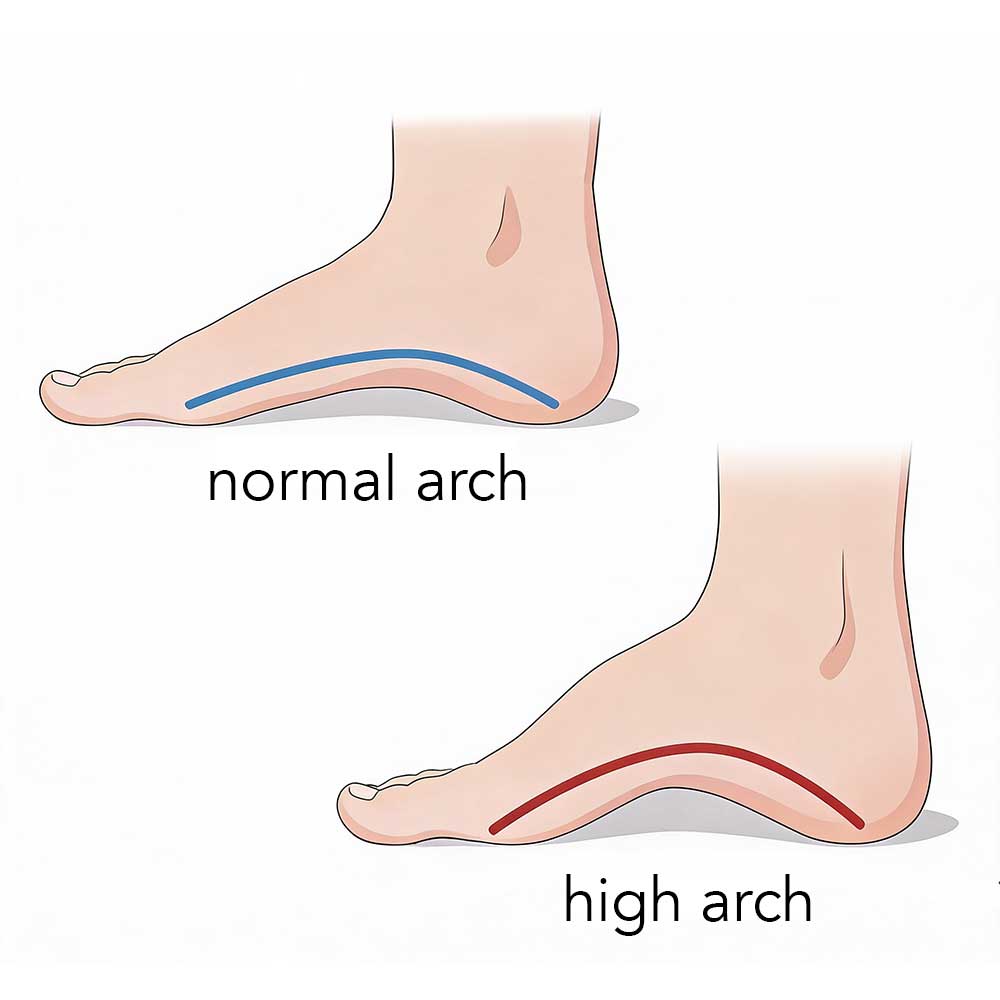
High arches, medically known as pes cavus, describe a foot structure in which the arch along the inside of the foot is higher than usual.
When a person with high arches stands, less of the middle portion of the foot may contact the ground compared with someone who has a lower arch.
This can concentrate pressure beneath the heel and the ball of the foot.
High arches vary considerably. Some feet remain relatively flexible and adapt comfortably to walking surfaces, while others are rigid and less able to distribute pressure.
Not everyone with high arches experiences pain or requires treatment.
Flexible versus rigid high arches
Flexible high arches retain some ability to adapt to different surfaces and movements. They may respond well to conservative treatment when symptoms occur.
Rigid high arches have less available movement and may be associated with more pronounced pressure points, difficulty fitting shoes or structural deformities.
The distinction is important because treatment should reflect the flexibility and underlying cause of the foot structure.
What is supination (underpronation)?
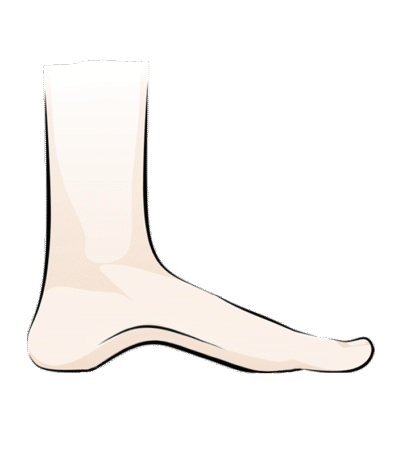
Supination is a normal movement involving the foot and ankle.
During walking, the foot typically moves through a sequence of positions that allow it to absorb impact, adapt to the ground and become relatively stable for push-off.
Supination is part of this normal process.
However, some people maintain a more supinated position during weight-bearing or distribute a greater proportion of their weight along the outside of the foot.
This pattern is sometimes called underpronation.
When excessive lateral loading contributes to discomfort or instability, it may require attention.
Importantly, supination is not automatically abnormal, and the aim of treatment is not to eliminate this natural movement.
How are high arches and supination related?
High arches and supination frequently occur together because foot structure influences how weight is distributed during walking and running.
A high-arched foot may have less contact with the ground through the midfoot. Some high-arched feet also have an inward-tilted heel, known as hindfoot varus.
These characteristics can encourage loading toward the outside of the foot.
However, the relationship is not universal.
A person may have high arches without excessive supination, while another person may demonstrate a supinated walking pattern despite having a relatively normal arch height.
This is why arch height alone cannot reliably determine someone’s walking mechanics.
What causes high arches?
High arches can develop for several reasons, and sometimes no specific cause can be identified.
Inherited foot structure
Some people naturally inherit a higher arch shape from their family.
If the feet are flexible, comfortable and stable, this may simply represent normal anatomical variation.
Neurological and neuromuscular conditions
Certain neurological conditions can affect the balance and function of muscles controlling the feet.
One example is Charcot-Marie-Tooth disease, an inherited neurological condition that may cause progressive muscle weakness and changes in foot shape.
Other neurological or neuromuscular disorders can also contribute to cavus foot deformities.
A newly developing, worsening or markedly asymmetrical high arch deserves medical assessment, particularly when accompanied by weakness, numbness or difficulty walking.
Muscle imbalance
Differences in the strength or function of muscles around the foot and ankle may contribute to changes in foot posture.
Muscle imbalance can occur alongside neurological conditions or other structural problems.
Previous injury or structural changes
Certain injuries, deformities or changes in joint alignment may influence foot shape and contribute to a high-arched position.
The underlying cause should guide treatment.
What causes excessive supination?
A tendency toward excessive supination or lateral foot loading can be influenced by several factors, including:
-
High-arched or cavovarus foot structure.
-
Limited flexibility in certain foot joints.
-
Muscle weakness or imbalance.
-
Previous ankle injuries.
-
Footwear that does not accommodate the individual’s foot shape.
-
Individual differences in walking and running mechanics.
Supination should not be diagnosed from shoe wear alone. Although worn outer edges can provide useful clues, a proper assessment considers foot structure, movement, symptoms and muscle function.
Common symptoms of high arches and excessive supination
Many people with high arches have no symptoms. When problems occur, they may include the following.
Pain beneath the ball of the foot
High-arched feet can concentrate pressure beneath the metatarsal heads.
This may contribute to metatarsalgia, a general term for pain in the ball of the foot.
Heel pain
Concentrated loading beneath the heel can cause discomfort during prolonged standing, walking or running.
Heel pain has several possible causes, so it should not automatically be attributed to high arches.
Pain along the outside of the foot
Some people with cavovarus feet experience discomfort along the lateral border of the foot because of increased loading in this area.
Persistent or localized pain may require assessment for tendon problems or stress injuries.
Repeated ankle sprains
Certain high-arched foot structures are associated with lateral ankle instability.
People may describe their ankles as frequently rolling outward or feeling unstable on uneven surfaces.
Calluses and corns
Concentrated pressure beneath the heel or forefoot can contribute to thickened skin, calluses and corns.
Claw toes or hammertoes
Some people with pronounced cavus deformities develop changes in toe position, including clawing or curling of the toes.
These changes can make footwear uncomfortable.
How are high arches and supination diagnosed?
A podiatrist, physical therapist or other qualified healthcare professional can assess foot structure and movement.
An examination may include:
-
Observing the feet while standing.
-
Assessing whether the arches are flexible or rigid.
-
Evaluating ankle and foot joint movement.
-
Testing muscle strength.
-
Reviewing walking or running mechanics.
-
Checking for pressure points, calluses and ankle instability.
-
Reviewing medical and family history.
In selected cases, weight-bearing X-rays may be recommended.
When a neurological cause is suspected, further investigations such as nerve conduction studies or referral to a neurologist may be appropriate.
How are high arches and supination treated?
Treatment depends on whether the foot structure is causing symptoms, how flexible the foot is and whether an underlying medical condition is present.
Many people with high arches do not need treatment.
When symptoms occur, conservative approaches are often considered first.
1. Choosing appropriate footwear
Shoes should accommodate the shape of the foot and provide adequate room for the toes.
Depending on the individual’s needs, useful features may include:
-
A secure and comfortable heel fit.
-
Adequate cushioning.
-
Sufficient internal depth.
-
A stable sole.
-
A toe box that does not compress the forefoot.
People with recurrent ankle instability may benefit from footwear with additional stability features.
There is no single shoe category that is best for everyone with high arches.
2. Physical therapy
Physical therapy can help address associated muscle weakness, reduced ankle mobility, balance problems and functional limitations.
A physical therapist may develop a program that includes strengthening, stretching, proprioceptive training and gradual return to activity.
Exercises cannot necessarily change a rigid structural high arch, but they may improve strength, movement control and confidence during everyday activities.
3. Strengthening the foot and ankle
Strengthening exercises may target the muscles responsible for ankle stability and movement.
Particular attention may be given to the muscles along the outside of the lower leg, including the peroneal muscles, when weakness or instability is present.
The appropriate exercises depend on the person’s assessment.
4. Balance and proprioception training
People who experience repeated ankle sprains may benefit from balance exercises designed to improve awareness of foot and ankle position.
Training can progress from simple single-leg standing to more demanding balance activities as strength and confidence improve.
5. Orthotic insoles
Orthotic insoles may help improve comfort and redistribute pressure beneath painful high-arched feet.
Some designs also influence foot loading or provide additional stability.
However, not everyone with high arches requires orthotics, and the appropriate design depends on individual foot mechanics.
For a detailed discussion of orthotic features and product selection, read our guide to insoles for high arches and supination.
6. Ankle bracing
When significant ankle instability is present, a clinician may recommend an ankle brace or other supportive device.
Bracing may also be useful for selected individuals with muscle weakness or neurological conditions.
7. Surgery for severe cases
Surgery is generally considered when significant deformity, pain or instability cannot be adequately managed with conservative treatment.
The procedure depends on the underlying problem and may involve correcting bone alignment, balancing tendons or addressing other structural abnormalities.
Surgery is not routinely required for uncomplicated high arches.
Exercises for high arches and supination
The following exercises may be useful for selected people with high arches, ankle stiffness or instability.
They are general examples rather than a personalized rehabilitation program. Exercises should be comfortable and adapted to your individual needs.
People with progressive foot deformity, neurological weakness or significant ankle instability should obtain professional guidance before beginning a new program.
Exercise 1: Plantar fascia stretch
Purpose: To improve comfort and mobility through the tissues beneath the arch.
-
Sit comfortably and cross one leg over the opposite knee.
-
Hold the toes of the raised foot.
-
Gently pull the toes back toward the shin.
-
Feel a comfortable stretch along the sole of the foot.
-
Hold for approximately 15–30 seconds.
-
Repeat two or three times, as tolerated.
Avoid forcing the toes backward or stretching into pain.
Insert your existing plantar fascia stretch illustration here.
Exercise 2: Standing calf stretch
Purpose: To improve calf flexibility when ankle dorsiflexion is limited.
-
Stand facing a wall with both hands supported against it.
-
Place one foot behind the other.
-
Keep the rear heel on the floor.
-
Gently bend the front knee while keeping the rear knee straight.
-
Hold for approximately 20–30 seconds.
-
Repeat two or three times on each side.
For a variation targeting the deeper calf muscles, slightly bend the rear knee while keeping the heel down.
Insert your existing calf stretch illustration here.
Exercise 3: Resistance-band ankle eversion
Purpose: To strengthen muscles that help control outward ankle stability.
-
Sit with your leg supported.
-
Secure a resistance band around the forefoot.
-
Arrange the band so it provides resistance as you turn the foot outward.
-
Slowly move the forefoot outward against the band.
-
Return to the starting position with control.
-
Begin with 10–15 repetitions, as tolerated.
Avoid twisting the entire leg to create the movement.
Insert your existing resistance-band exercise illustration here.
Exercise 4: Single-leg balance
Purpose: To improve balance and ankle control.
-
Stand near a stable countertop or chair.
-
Lift one foot slightly off the floor.
-
Maintain a comfortable upright position.
-
Hold for approximately 15–30 seconds.
-
Repeat two or three times on each leg.
Use hand support whenever needed.
As balance improves, the exercise may be progressed under appropriate guidance.
Insert your existing balance exercise illustration here.
How often should you perform these exercises?
There is no universal exercise schedule for everyone with high arches or supination.
Gentle mobility exercises may be performed regularly when comfortable, while strengthening exercises often benefit from recovery time between more demanding sessions.
If an exercise causes increasing pain, swelling or instability, stop and seek professional advice.
The goal is to improve function and comfort rather than force the foot into a different arch shape.
Can high arches be corrected permanently?
The answer depends on the underlying cause and the flexibility of the foot.
A naturally high arch may not require correction.
Exercises and physical therapy may improve flexibility, strength and stability, but they generally cannot permanently change the bony structure of a rigid cavus foot.
In severe cases, surgery may be considered to correct a significant structural deformity.
The most appropriate goal is often to improve comfort, mobility and function rather than to achieve a particular arch height.
What does research say about high-arch treatment?
Research into pes cavus has examined orthotic treatment, pressure distribution and the management of associated symptoms.
Clinical trial: Orthotic treatment for painful high arches
A randomized controlled trial by Burns and colleagues, published in 2006, investigated 154 people with painful high-arched feet.
After three months, participants using custom foot orthoses experienced greater improvements in pain and foot function than participants using sham insoles.
Research into plantar pressure distribution
A 2014 study by Najafi and colleagues re-examined data from the clinical trial to investigate the mechanisms associated with pain relief.
The findings suggested that redistribution of plantar loading was an important factor in the response to orthotic treatment.
Read the study in the Journal of Foot and Ankle Research.
Cochrane review of pes cavus treatment
A Cochrane systematic review examined available interventions for high-arched feet.
It found evidence supporting custom orthoses for painful pes cavus compared with sham devices, while emphasizing the limited evidence available for many other interventions.
These findings are encouraging, but they do not mean every treatment is effective for every person. Treatment decisions should reflect the underlying cause, symptoms and individual circumstances.
Frequently asked questions about high arches and supination
1. Are high arches and supination the same thing?
No. High arches describe the structure of the foot, while supination is a normal movement or position of the foot and ankle. They often occur together, but they are not interchangeable terms.
2. What causes high arches in adults?
High arches may be inherited, develop because of structural differences or be associated with neurological and neuromuscular conditions. Sometimes no identifiable cause is found. New or progressively worsening high arches should be medically assessed.
3. Can high arches cause ankle instability?
Yes. Certain high-arched foot structures, particularly those associated with an inward-tilted heel, can increase susceptibility to lateral ankle instability and repeated ankle sprains.
4. Is supination bad for your feet?
Not necessarily. Supination is a normal part of walking and running. Problems may arise when excessive lateral loading is associated with pain, instability or repetitive injury.
5. Can physical therapy help high arches?
Physical therapy may help improve strength, flexibility, balance and functional stability. It generally cannot permanently alter the bony structure of a rigid high arch, but it can help manage associated symptoms.
6. Can exercises correct supination?
Exercises may improve muscle strength and movement control, but they do not guarantee that a person’s walking pattern will change. Treatment should focus on symptoms and function rather than attempting to eliminate normal supination.
7. What shoes are best for people with high arches?
Shoes that provide adequate cushioning, a secure fit, sufficient internal depth and appropriate stability may be helpful. The best footwear depends on foot shape, activity level and symptoms.
8. Do high arches get worse with age?
Some high arches remain relatively unchanged, while others progress because of underlying neurological, muscular or structural conditions. Progressive changes warrant medical assessment.
9. Can high arches cause plantar fasciitis?
High-arched foot mechanics may contribute to altered loading beneath the foot and can be associated with plantar heel pain. However, plantar fasciitis has several contributing factors and cannot be attributed to arch height alone.
10. Can high arches cause pain in the ball of the foot?
Yes. Some high-arched feet concentrate pressure beneath the metatarsal heads, contributing to forefoot discomfort or metatarsalgia.
11. When should I see a podiatrist about high arches?
Seek an assessment if you experience persistent pain, recurring ankle sprains, increasing deformity, difficulty finding comfortable shoes or changes in walking ability. New weakness, numbness or progressive one-sided changes deserve prompt medical evaluation.
12. Do all people with high arches need orthotics?
No. Many people with high arches are comfortable and require no treatment. Orthotics may be useful when symptoms, pressure concentration or instability make additional support appropriate.
Learn more about insoles for high arches
Although high arches do not always require treatment, some people benefit from footwear modifications and supportive orthotic insoles to improve everyday comfort.
For information about choosing suitable arch support, cushioning and footwear, visit our dedicated guide:
Best insoles for high arches and supination.
You can also explore our broader Foot Complaints Hub for information about other common foot conditions.
Medical references
- MedlinePlus — High arch
- Cleveland Clinic — High arch feet: Causes, symptoms and treatment
- American College of Foot and Ankle Surgeons — Cavus foot
- Burns et al. (2006) — Effective orthotic therapy for the painful cavus foot
- Najafi et al. (2014) — Mechanism of orthotic therapy for the painful cavus foot deformity
- Cochrane — Interventions for the prevention and treatment of pes cavus
Medical disclaimer: This article provides general educational information and is not a substitute for individual medical assessment. Progressive foot deformity, new muscle weakness, numbness or persistent pain should be evaluated by a qualified healthcare professional.
