Pickleball insoles: support, performance & injury prevention
Pickleball has exploded in popularity, but with those quick dinks at the kitchen line and explosive lateral shuffles comes serious stress on your feet, ankles, knees, and lower back. Whether you’re playing social doubles or grinding through tournament brackets, your feet are absorbing forces that factory shoe liners simply weren’t designed to handle. The right pickleball insoles can enhance endurance by supporting foot strength and overall performance during sustained play, helping you stay comfortable and competitive longer.
Do you need special insoles for Pickleball?
The short answer is yes—especially if you’re playing regularly. Pickleball’s stop-start nature and hard court surfaces create compounding impact forces that generic cushioning can’t adequately manage.
- Dedicated pickleball insoles with firm arch support, heel cupping, and forefoot cushioning are strongly recommended for anyone playing two or more times per week. The combination of lateral movements, quick pivots, and hard acrylic or concrete surfaces demands more than a flat foam liner can provide.
- Footlogics orthotic insoles are designed by podiatrists and physiotherapists to support both medial (inner arch) and lateral (outer edge) foot motion. This dual support helps prevent common conditions like plantar fasciitis, metatarsalgia, and Morton’s neuroma before they sideline you.
- The cost of a quality orthotic insole—typically USD $35–$70 per pair—is minimal compared with months of treatment, physiotherapy sessions, or cortisone injections for chronic foot conditions. Prevention truly is better than cure.
- In the sections below, we’ll cover exactly what to look for in pickleball insoles, how they improve both comfort and performance, and how Footlogics products fit into a complete injury prevention approach.
Why Pickleball is so tough on your feet and joints..
Step onto any pickleball court and you’ll quickly understand why this sport is uniquely demanding on your lower body. A typical game involves quick dashes to the non-volley zone, abrupt stops just before the kitchen line, explosive pivots to reach wide shots, and deep lunges—all on hard acrylic, concrete, or gymnasium surfaces that offer zero give.
- Repetitive lateral movements stress the medial and lateral arches, peroneal tendons, and ankle ligaments in ways that forward-running sports don’t. Every shuffle and crossover step loads these structures from angles they may not be prepared for.
- Constant short sprints and split steps create high impact through the heel and forefoot. Indoor courts laid over concrete are particularly unforgiving, transmitting shock directly into bones and joints with each landing.
- Common pickleball overuse injuries include plantar fasciitis (sharp heel pain from fascia inflammation), Achilles tendonitis (pain at the back of the heel), metatarsalgia (burning under the ball of the foot), Morton’s neuroma (nerve irritation causing toe tingling), patellofemoral knee pain, and lower back strain. Each condition develops gradually from repeated biomechanical stress.
- Poor or worn-out factory insoles in court shoes offer minimal arch control and shock absorption. Most stock insoles are flat foam liners that compress within weeks, accelerating the development of foot problems rather than preventing them.
- Both proper warm-up routines and structured, supportive insoles form the foundation of a long-term injury prevention plan. Neither alone is sufficient—you need the combination to keep feet healthy season after season.
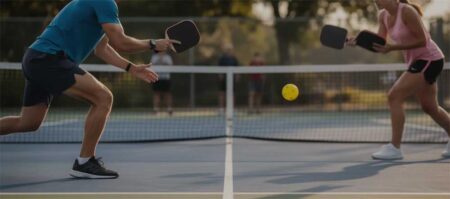
Key Features to look for in a good Pickleball insole
Finding the best pickleball insoles requires looking beyond marketing claims to actual construction. This checklist will help you compare any insole on the market, with particular emphasis on medial and lateral support plus durability for frequent play.
- Structured arch support matters more than soft cushioning alone. Look for a moderate to firm arch profile that supports both low and medium arches while helping control over-pronation. Soft memory foam feels nice initially but compresses quickly and allows the foot to collapse.
- Medial support (inside of foot) reduces inward collapse during push-offs. This is critical for preventing excessive tension on the plantar fascia and reducing stress on knees during the explosive movements pickleball demands.
- Lateral support (outside of foot) resists ankle rolling during shuffles, lunges, and sudden direction changes. Quality insoles feature a supportive lateral wall that works with your shoe upper to create stability during aggressive lateral movement.
- A deep heel cup centers your heel’s natural fat pad beneath the heel bone, increasing stability on landing and improving foot alignment up through the ankle, knee, and hip. This design feature is clinically proven to enhance shock absorption using your body’s own cushioning system.
- Forefoot cushioning and metatarsal support protect the ball of the foot during toe-off. Players prone to metatarsalgia or Morton’s neuroma should prioritize insoles with a metatarsal pad or dome that redistributes pressure away from overloaded metatarsal heads.
- Material quality determines longevity and support retention. A well-constructed insole uses multiple layers, such as a cushioning foam layer above a supportive base layer, to balance comfort and stability. Combination constructions using firm, medical-grade EVA or PU shells for support plus shock-absorbing top layers outperform pure foam designs that flatten within weeks of regular play.
- Insoles with textured surfaces help prevent the foot from sliding inside the shoe.
- The best insoles for pickleball combine rigid arch support and high-impact cushioning to handle the demands of the game.
- Tread Labs insoles feature a two-part system that combines a firm arch support with a replaceable cushion top, making them ideal for high-intensity play.
- Moisture management and ventilation keep feet cooler during extended periods on court. Breathable cover materials, perforations, or airflow channels reduce sweat buildup and blister risk during long matches.
- Trim-to-fit versatility and multiple thickness options ensure insoles fit snug pickleball shoes, tennis shoes, and cross-trainers without cramping toes. A thick insole provides enhanced cushioning and support, but may require a roomier shoe to accommodate its size. Always check that you can match your shoe size before purchasing.
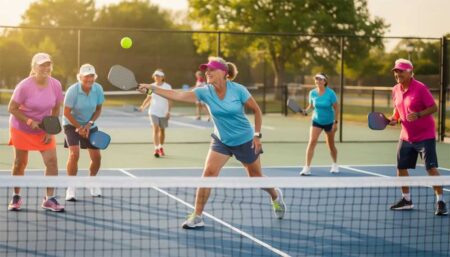
Insole Materials and Construction: what sets quality insoles apart
When it comes to playing pickleball well, the materials and craftsmanship inside your shoes may make a big difference between regular and the finest pickleball insoles. Pickleball players exert a lot of stress on their feet. Quick turns, rapid stops, and long periods of play on hard surfaces all impose more strain on your shoes than regular insoles can handle.
Quality insoles are made with high-tech, breathable materials that actively pull moisture away from the foot. This keeps feet healthy and comfortable even during the hottest games. This is really crucial for court shoes since heat and perspiration can get trapped in them and cause pain, blisters, and even fungal problems. You can keep your feet dry and cool during a long pickleball game by picking insoles with top layers that manage moisture.
Making high-quality insoles is much more than just adding foam cushioning. A deep heel cup is one characteristic to look for. It supports your heel and makes you more stable with every step and turn. This design not only helps your feet stay in line, but it also absorbs shocks better, which lowers the chance of heel pain and helps keep disorders like plantar fasciitis from developing. The greatest insoles also include firm arch support, which gives your feet the structure they need to stay aligned and fight weariness over long periods of play.
Insoles with built-in metatarsal pads give athletes who feel pressure or pain in the front of their feet tailored cushioning and support. These pads assist spread the pressure more evenly across the ball of the foot and toes, which lowers the risk of injury and puts less stress on the metatarsals. The cushioning and support throughout the insole assist absorb shock, give energy back with each stride, and keep your feet, ankles, and knees from getting tired.
More and more high-performance insoles are made using new materials like carbon fiber. These materials are strong yet lightweight, so they don’t add bulk to your shoes. These materials have been tested in a lab and shown to improve stability and durability, so your insoles will keep their shape and work well for many matches. You will notice a big difference in comfort and performance, which will let you focus on your game instead of your feet.
Quality insoles may cost more than regular ones, but they are worth the money since they will keep your feet healthy, minimize discomfort, and lower your risk of injury. These insoles may endure over many seasons of play if they are taken care of properly, so they are a great choice for any dedicated pickleball player. When choosing insoles, think about how thick and layered they are to make sure they fit your shoe size and style. This will make sure they fit snugly and don’t pinch your toes or throw off your balance.
In the end, getting the finest pickleball insoles is about more than simply comfort. It’s also about protecting your feet, improving your game, and having the best time at every match. You will notice the difference from your first game if you have the correct materials and structure beneath. Don’t allow foot discomfort or tiredness stop you from playing pickleball. Get insoles made for the sport that will provide you the support, stability, and energy return you need to keep playing at your best.
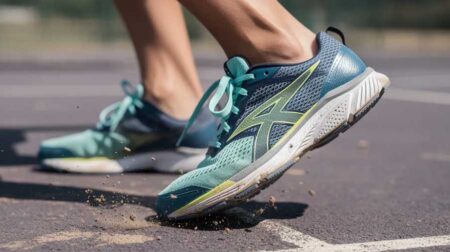
Footlogics Pickleball Insoles: How Our Orthotics help on Court
Footlogics specializes in medical-grade, over-the-counter orthotics used by recreational and competitive players across Australia, the USA, and worldwide. Our approach bridges the gap between expensive custom orthotics and ineffective generic insoles.
- Footlogics insoles feature a podiatrist- and physiotherapist-designed profile with semi-rigid arch support, a deep heel cup, and contoured medial and lateral flanges for side-to-side control. This construction addresses the specific biomechanical demands of court sports.
- Our insoles help reduce plantar fascia strain, heel pain, and arch fatigue during long sessions and tournaments. Research indicates that clinically proven orthotic designs can reduce plantar fascia strain by an average of 34%—a significant reduction that translates to less morning pain and more playing time.
- Specific features address forefoot issues: metatarsal dome positioning and additional forefoot cushioning options offload pressure from the balls of the feet, helping players with metatarsalgia or early-stage Morton’s neuroma continue playing comfortably.
- Footlogics stability and control contrasts sharply with typical flat foam factory liners or purely “cloud-cushion” memory foam inserts that compress quickly and lose effectiveness. Our medical-grade materials maintain their shape and support properties over extended use.
- One pair of Footlogics insoles can move between pickleball shoes, daily trainers, and work shoes, supporting foot alignment all day—not just on court. Consistent support throughout daily activities accelerates recovery between playing sessions.
- Our customer-friendly policies include free USA shipping and a 90-day money-back guarantee, allowing players to test support in real match conditions before committing.
Many customers share that they were hoping for relief from persistent foot pain or improved comfort on the court, and Footlogics insoles delivered exactly what they needed—often exceeding their expectations.
In real life, players with chronic heel pain who have had trouble with shorter sessions often say that after converting to the right orthotic support, they can finish entire two-hour playing blocks. The arch support that reduces tension in the fascia and the deep heel cupping that absorbs shock work together to alleviate both of the things that are making them uncomfortable.
Medial vs Lateral Support: Why both matter in Pickleball
Pickleball isn’t just forward running—it’s constant side-to-side and diagonal movement. Unlike jogging or walking where force travels primarily in one plane, pickleball requires your feet to stabilize against forces in multiple directions simultaneously. This means support must work in all directions to be effective.
- Medial support controls inward roll (over-pronation) and prevents excessive strain on the plantar fascia, tibialis posterior tendon, and inner knee structures. When your arch collapses inward during a push-off, it creates a chain reaction of stress up through your lower leg and into your knees and hips.
- Lateral support from a supportive lateral wall in the insole works with your shoe upper to resist rolling the ankle outward during aggressive lateral shuffles. This becomes critical when you’re moving quickly toward the sideline to retrieve a wide shot.
- Balanced medial and lateral support keeps the subtalar joint in a more neutral position, improving power transfer and reducing energy leaks. Quality pickleball insoles help you maintain agility and comfort point after point, supporting consistent performance throughout even the most intense matches. Think of it like this: every degree of foot collapse is wasted energy that could be propelling you toward the ball.
- Purely soft, flat insoles may feel cushioned initially but allow the foot to collapse under load. This is particularly risky on worn or slippery courts where your footing is already compromised.
- Imagine your heel sitting in a stable “bowl” rather than on a flat pad. The deep heel cup cradles your heel’s natural fatty tissue, centering it beneath the heel bone where it provides maximum cushioning. This simple design principle dramatically improves stability and shock absorption.
Common Pickleball foot problems and how insoles help
Many players ignore early warning signs—morning heel pain, burning in the ball of the foot, tingling toes—until they’re forced off the court entirely. Understanding these conditions helps you recognize when prevention has shifted to treatment territory.
- Plantar fasciitis presents as sharp heel pain with first steps in the morning that may ease during activity but returns after rest. Risk factors include flat feet, high arches, tight calves, and sudden increases in playing frequency. Arch support plus heel cushioning reduces traction and impact on the fascia, with studies showing up to 34% strain reduction from proper orthotic support.
- Metatarsalgia causes burning or aching under the ball of the foot during push-off and toe-off phases of movement. Metatarsal support or forefoot cushioning redistributes pressure away from overloaded metatarsal heads, spreading the load across a larger area and reducing localized stress.
- Morton’s neuroma produces tingling or electric shock-like pain between the third and fourth toes. Insoles with a metatarsal dome can open the toe bones slightly to relieve nerve compression. This conservative approach often eliminates the need for cortisone injections or surgical consultation.
- Achilles tendonitis and calf strain link directly to tight calves, poor heel support, and repeated short sprints. A deep, stable heel cup combined with proper alignment reduces tendon tension by keeping the foot in a more neutral position during the loading phase of each step.
- Knock-on effects to knees and lower back develop when over-pronation causes internal tibial rotation and pelvic tilt. This cascading biomechanical dysfunction means foot problems rarely stay isolated—they create joint pain and stress throughout the body. Quality orthotics help bring the entire kinetic chain closer to neutral alignment.
Each of these conditions responds to a combination of proper insole support, consistent warm-up and stretching routines, and appropriate rest when symptoms appear.
Warm-Up, Foot Strength & Technique: Insoles are one part of the system
Even the best orthotic won’t help fully if players arrive cold, skip warm-ups, or always play in worn shoes. Think of injury prevention as a system where each component supports the others.
- A simple 5–10 minute pre-game warm-up routine prepares tissues for the demands ahead: start with a brisk walk or light jog around the court, progress to dynamic calf raises, ankle circles in both directions, gentle walking lunges, and short lateral shuffles. This increases blood flow and prepares muscles for explosive movement.
- Regular calf and plantar fascia stretching before and after play reduces morning pain risk significantly. Wall calf stretches (both straight-leg and bent-knee versions) and towel stretches under the toes target the tissues most stressed during pickleball.
- Basic foot-strength exercises performed 2–3 times per week build intrinsic muscle support: towel curls with your toes, marble pickups, and single-leg balance drills (eyes open, then closed) improve proprioception and reduce injury risk from unexpected court surface variations.
- Check your pickleball shoes every 6–12 months for wear in the outsole and upper. Broken-down shoes compromise insole effectiveness regardless of how new or supportive your orthotics are. Look for visible wear patterns, collapsed heel counters, and loss of tread on pivot points.
- Good technique protects your feet as much as good equipment. Bending at knees and hips rather than from the waist, staying light on your feet, and absorbing impact through controlled movement reduces shock and over-strain on arches and heels.
- The combination of insoles, warm-up routines, strength work, and appropriate footwear provides the best long-term protection and performance. Each element reinforces the others to create a comprehensive injury prevention system.
Cost of Orthotic Insoles vs Cost of Injury: Prevention is better than cure
A quality pair of orthotic insoles costs USD $35–$70—roughly the price of a single physical therapy session or one month of club membership. Compare that to the financial and time costs of treating chronic foot issues, and the investment case becomes clear.
| Prevention |
Treatment |
| Quality orthotic insoles: $35–$70 |
Podiatry visits (3–6 sessions): $150–$400 |
| One-time purchase, 9–12 month lifespan |
Physical therapy (8–12 sessions): $400–$1,200 |
| No downtime from play |
Custom orthotics: $300–$600 |
| Use across multiple shoes |
Cortisone injections: $100–$300 per injection |
|
Imaging (X-ray, MRI): $200–$1,000 |
|
Surgical consultation: $200–$500 |
|
Lost playing time: weeks to months |
- Typical plantar fasciitis treatment involves multiple podiatry or physical therapy visits over several months, potentially custom orthotics or immobilization boots, and significant time away from activity. Total costs easily reach hundreds of dollars before resolution.
- Metatarsalgia or Morton’s neuroma management often requires imaging studies to rule out stress fractures, cortisone injections for pain management, and possible surgical consultation if conservative treatment fails. The downtime away from the court adds frustration to financial burden.
- Indirect costs compound the problem: missed tournaments, wasted club fees, reduced ability to stay active for general health, and the psychological toll of being sidelined from a sport you love.
- Footlogics represents an affordable, medical-grade alternative to expensive custom orthotics for many common biomechanical issues. Our products deliver professional-level support at over-the-counter prices.
- With Footlogics’ 90-day money-back guarantee and long product life when rotated between shoes, the per-game cost becomes negligible. A single pair lasting 12 months of twice-weekly play costs less than $1 per session.
- The core message remains simple: prevention is better than cure. Acting before foot pain becomes chronic saves money, preserves playing time, and protects long-term joint health.
Care, maintenance & when to replace your pickleball insoles
Well-maintained orthotics last longer and stay supportive, but all insoles eventually compress and require replacement. Proper care extends lifespan while ensuring you get maximum benefit from your investment.
- Air-dry insoles after sweaty sessions by removing them from shoes and placing them in a well-ventilated area. Avoid direct heat sources like radiators or hair dryers, which can warp supportive layers and degrade materials.
- Clean gently with mild soap and water on the top cover only when needed. Allow complete air-dry before reinserting into shoes. Avoid soaking the entire insole or using harsh chemicals that can break down adhesives and foam layers.
- Signs an insole needs replacement:
- Visible compression marks where your arch sits
- Loss of spring or rebound in the arch support
- Worn or peeling fabric on the top cover
- Noticeable return of foot or knee pain that had previously resolved
- The insole no longer sits flat and has developed permanent curves
- Typical replacement timeframes for regularly used pickleball insoles run approximately 9–12 months for players on court 2–4 times weekly. Daily players or those with higher body weight may need replacement sooner, while occasional players can extend use further.
- Own at least two pairs of Footlogics insoles to rotate between pickleball shoes and everyday footwear. This provides consistent support throughout your day and allows each pair to fully dry between uses, extending overall lifespan.
Summary: Play Longer, Move Better, Hurt Less
Three pillars support long-term pickleball enjoyment: proper warm-up and stretching routines, supportive medial and lateral control from quality orthotic insoles, and consistent shoe maintenance. Skip any one, and the system weakens.
- Footlogics insoles represent an easy, affordable step to improve comfort, stability, and performance for pickleball players of all ages and skill levels. Our podiatrist-designed products deliver the support serious players need without the price of custom orthotics.
- Don’t wait for serious pain to force action. Starting with prevention now protects against plantar fasciitis, metatarsalgia, Morton’s neuroma, and the cascade of knee, hip, and back issues that follow when feet lack proper support.
- Ready to protect your feet and improve your game? Browse the Footlogics range to find the sport or comfort insole that matches your arch type and shoe fit. With free USA shipping and our 90-day money-back guarantee, you can test them through real match conditions risk-free. Your feet—and your future pickleball game—will thank you.
 Free Shipping
  Medical Grade Orthotics
  TGA Approved Products
 90 Day Money Back