
Orthotic INSOLES
for FLAT FEET
Footlogics offers a range of medical-grade insoles for flat feet, fallen arches and over-pronation, including orthotics for sports, running or every-day use. Plus, insoles for women’s fashion footwear and men’s slip-on shoes.
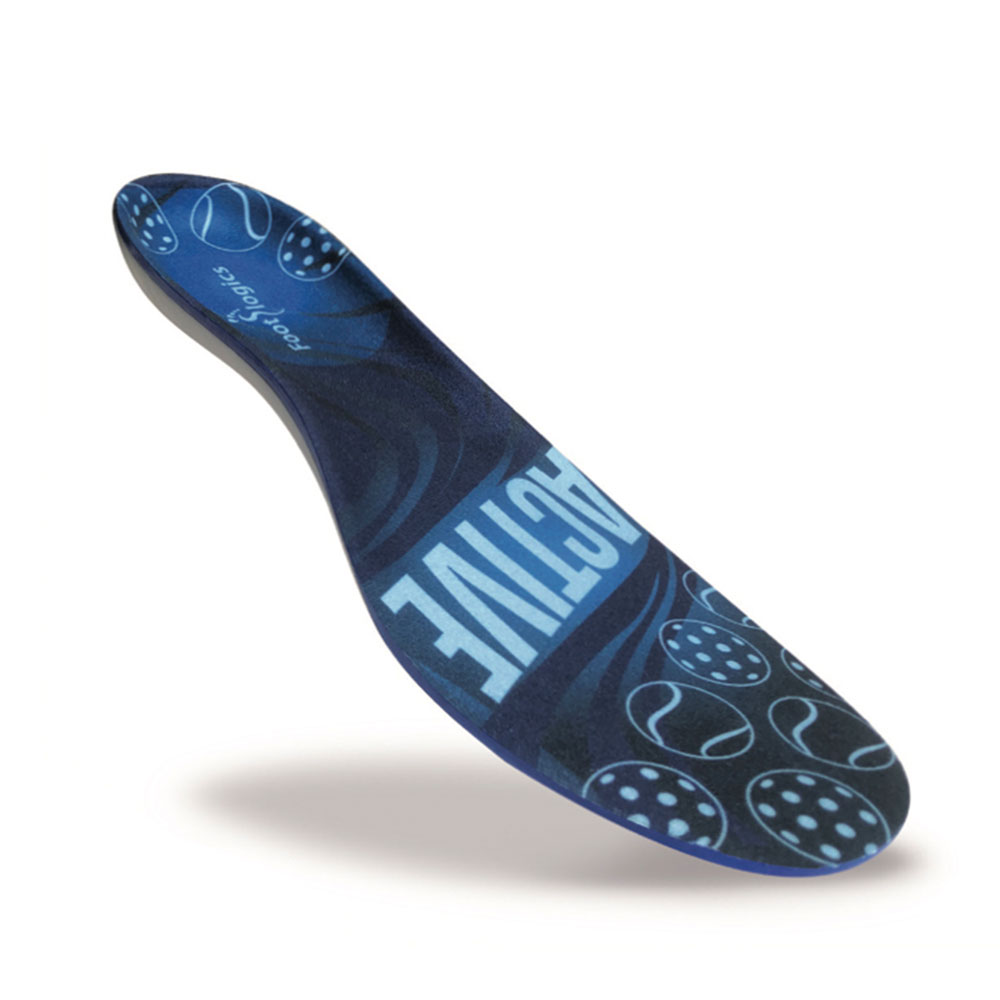
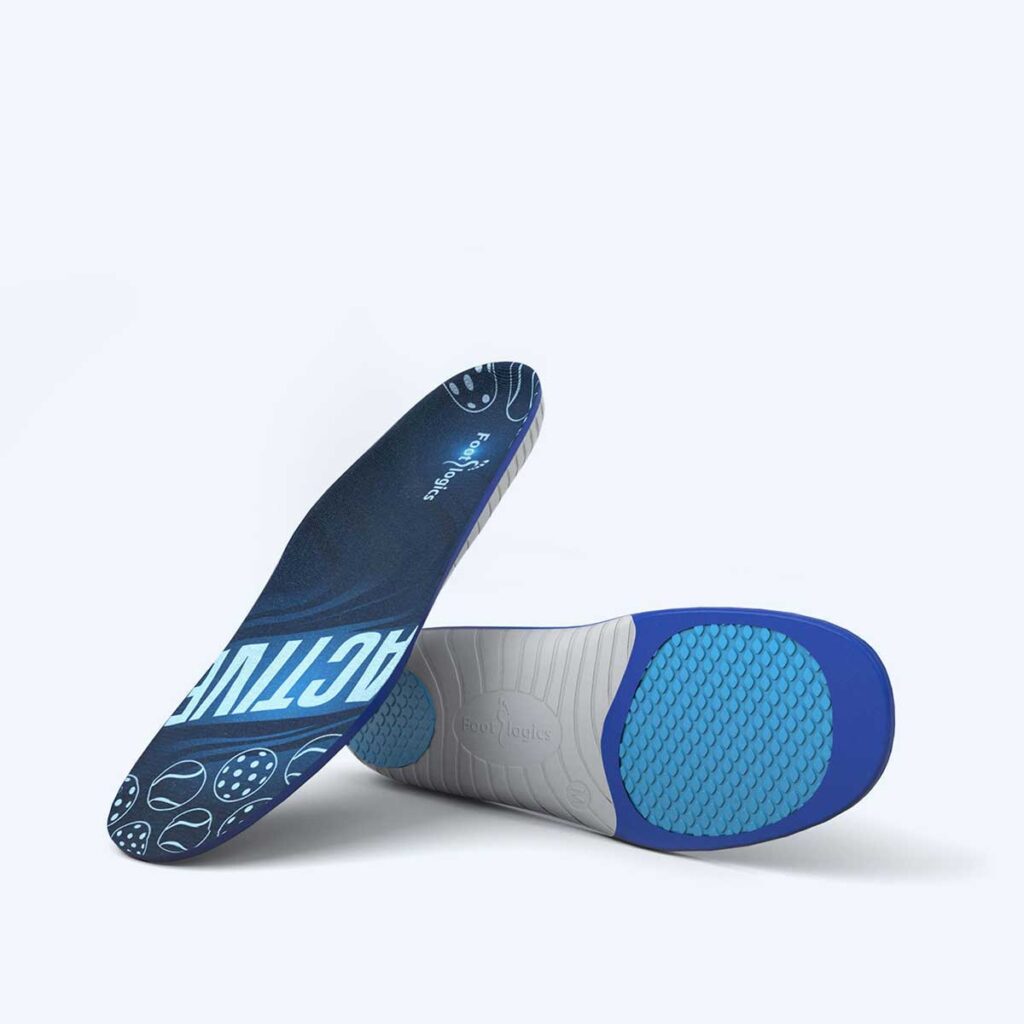
Footlogics ACTIVE
$39.95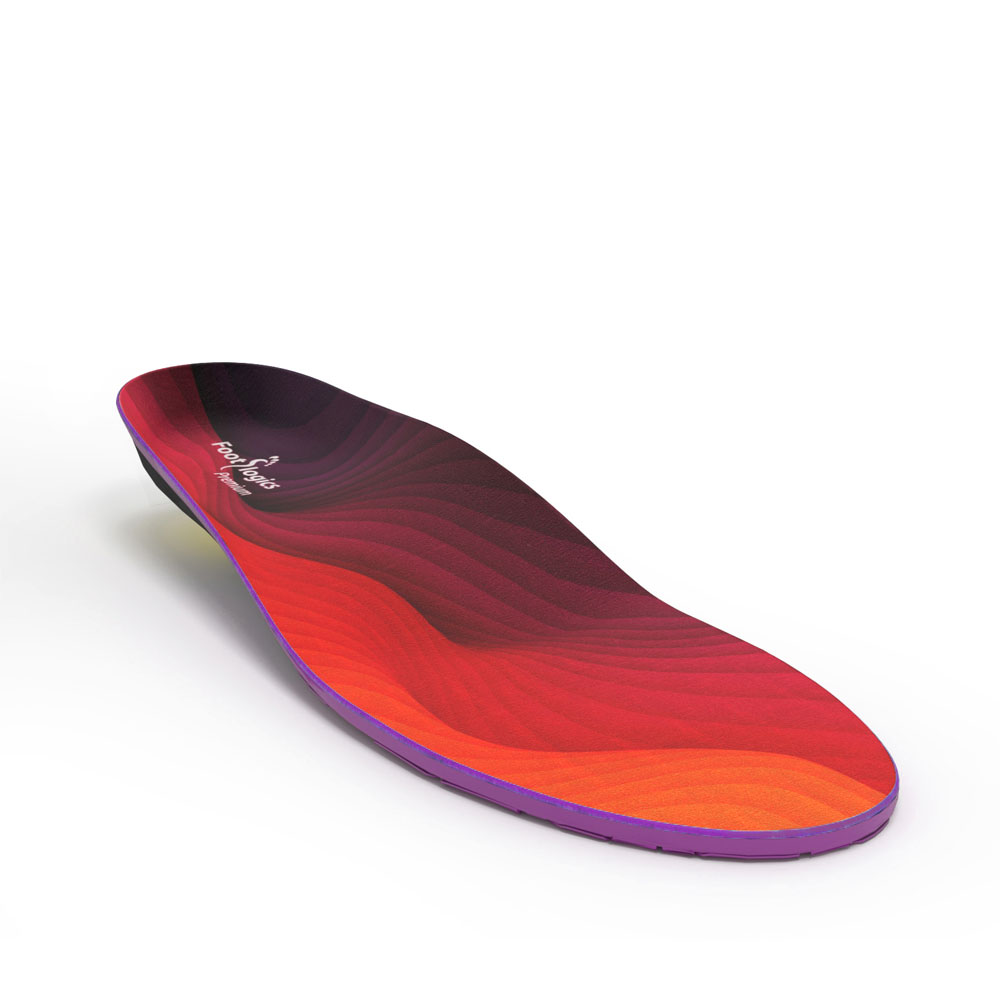
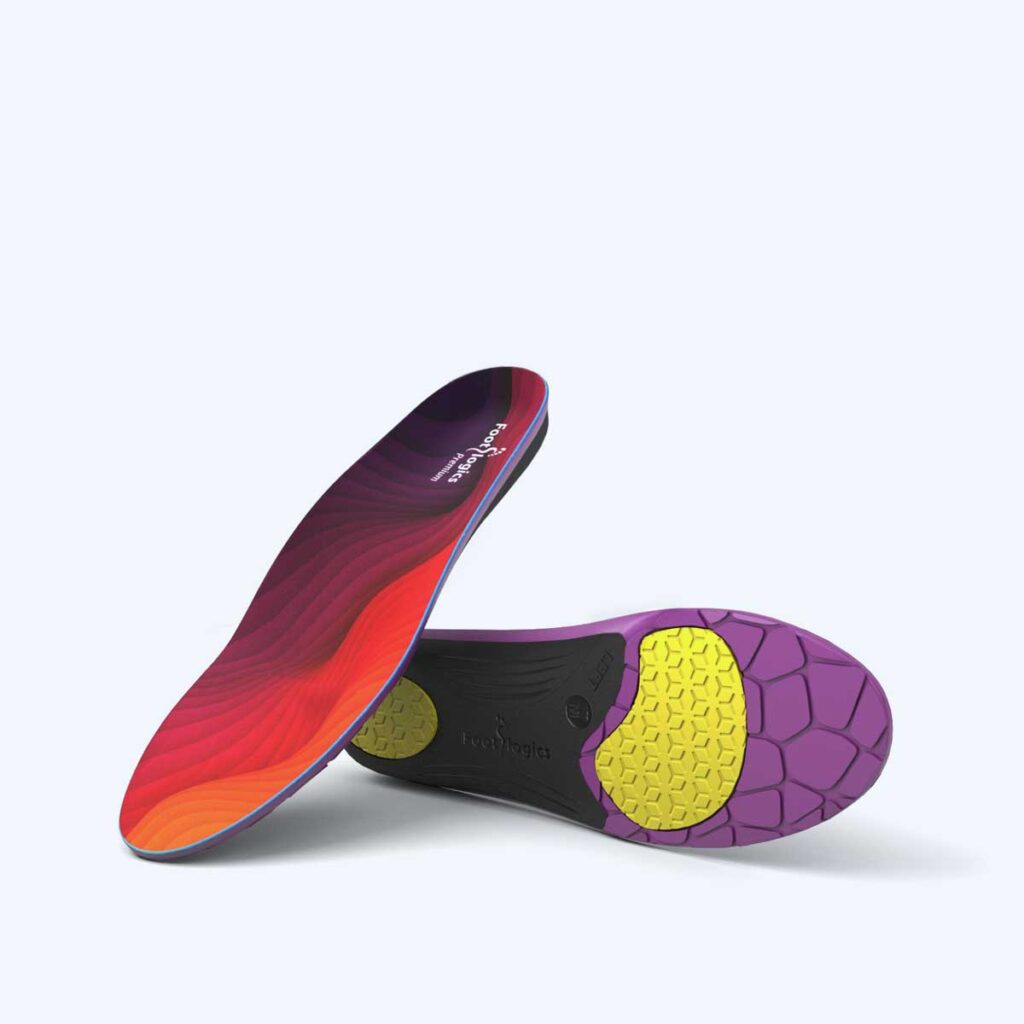
Footlogics PREMIUM
$44.95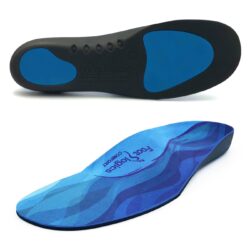
Footlogics COMFORT
$36.95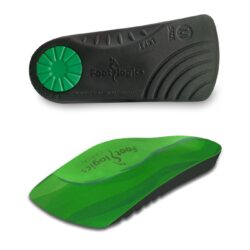
Footlogics CASUAL
$32.95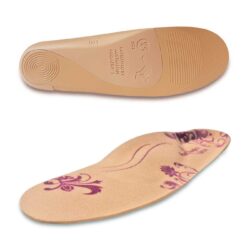
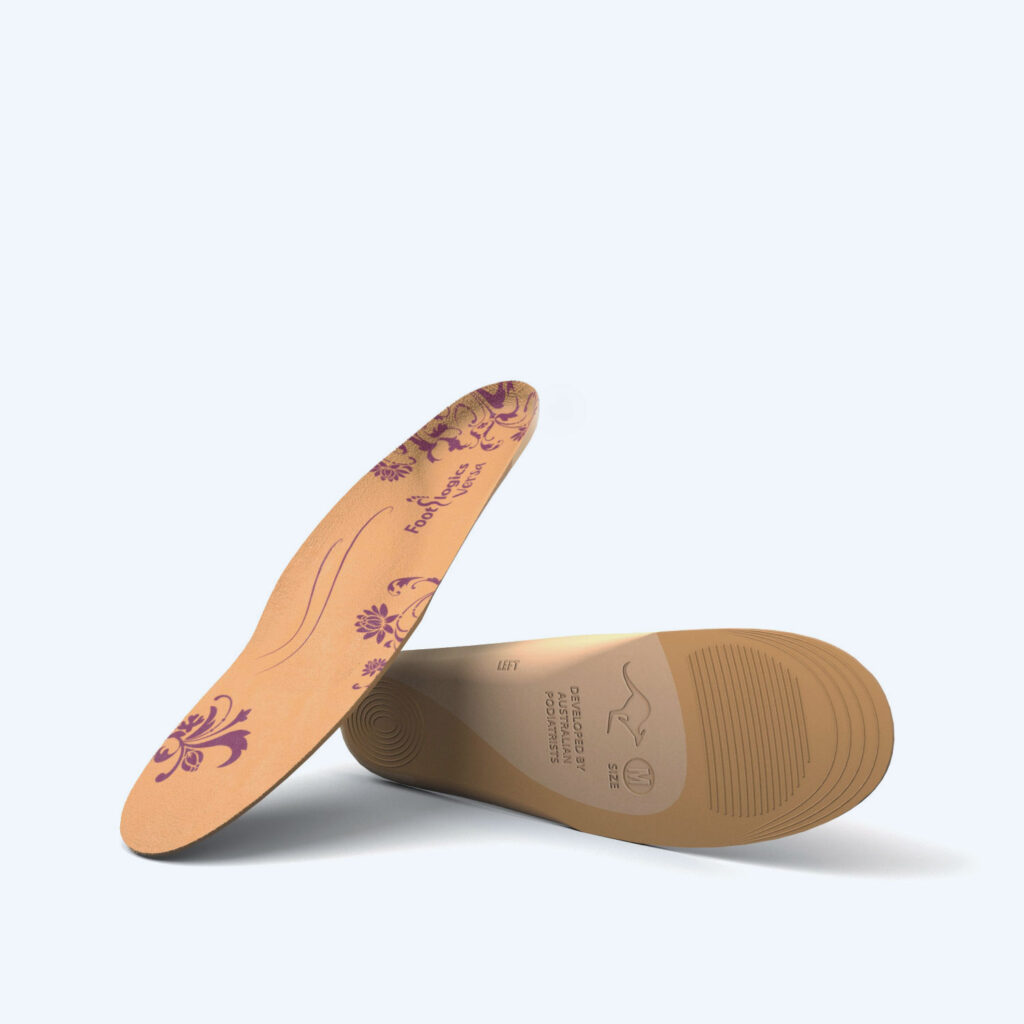
Footlogics VERSA
$34.95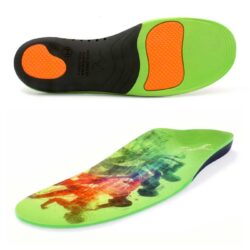
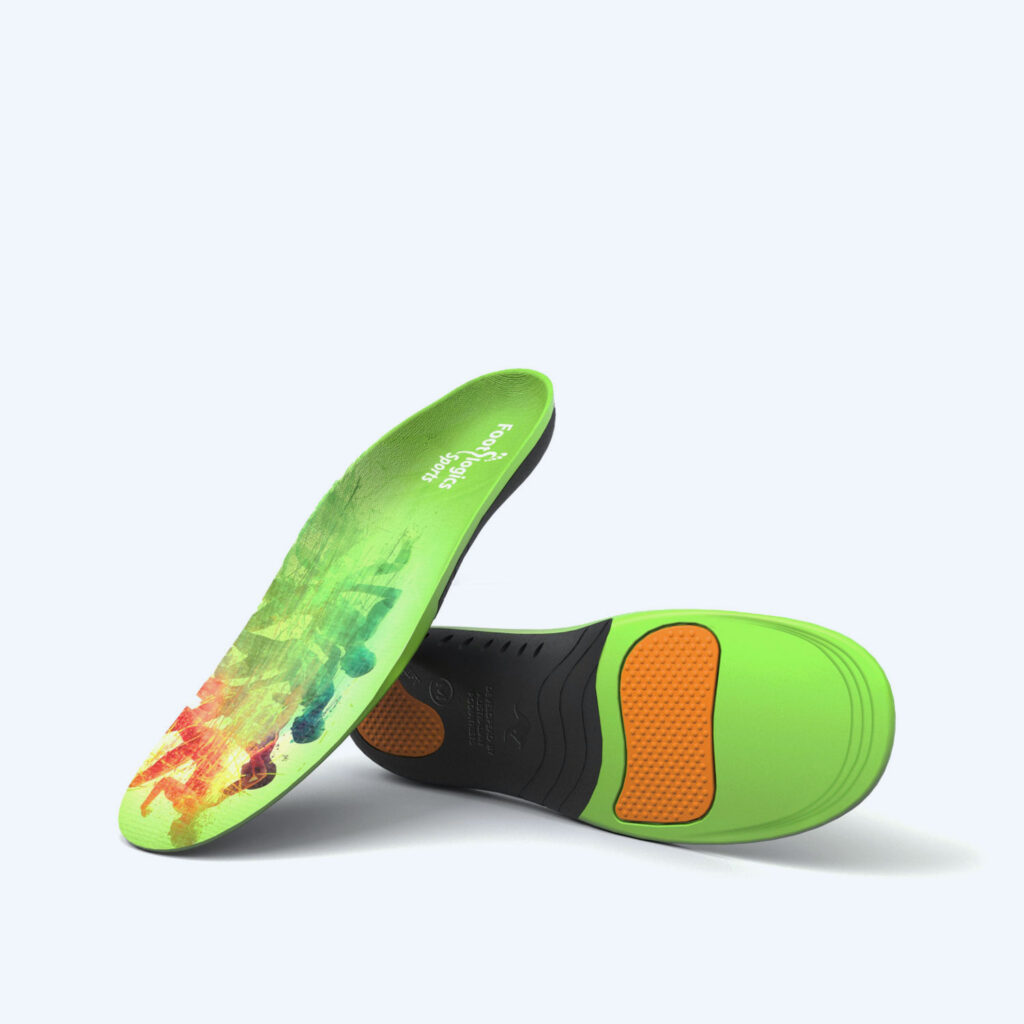
Footlogics SPORTS
$39.95
Insoles for Flat Feet: How Orthotics Relieve Pain and Improve Posture
Flat feet, medically known as pes planus, affect millions of adults and children. People with flat feet have very low arches or no visible arch at all when standing. While some people experience no symptoms, others deal with chronic pain, poor posture, fatigue, and discomfort that extends well beyond the feet.
Supportive insoles have become one of the most widely recommended non-surgical approaches for managing flat feet symptoms and improving mobility. This guide covers what flat feet actually are, how they affect the rest of the body, and how the right insole can help, along with how Footlogics compares to other popular options on the market.
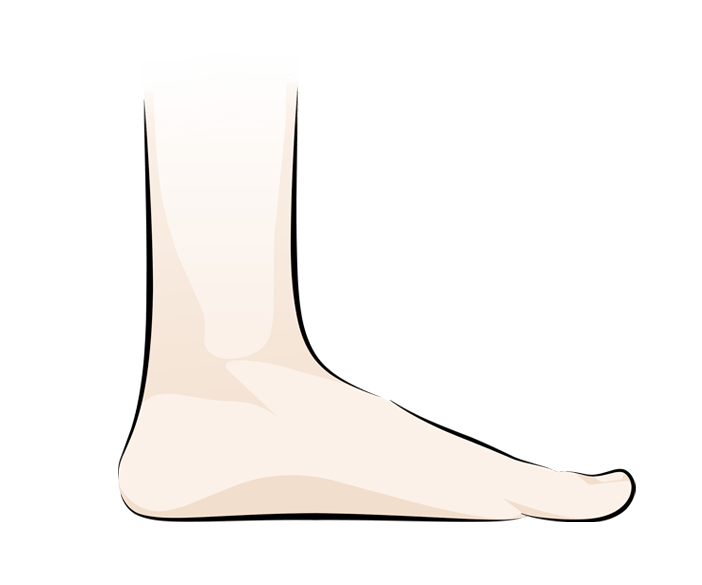
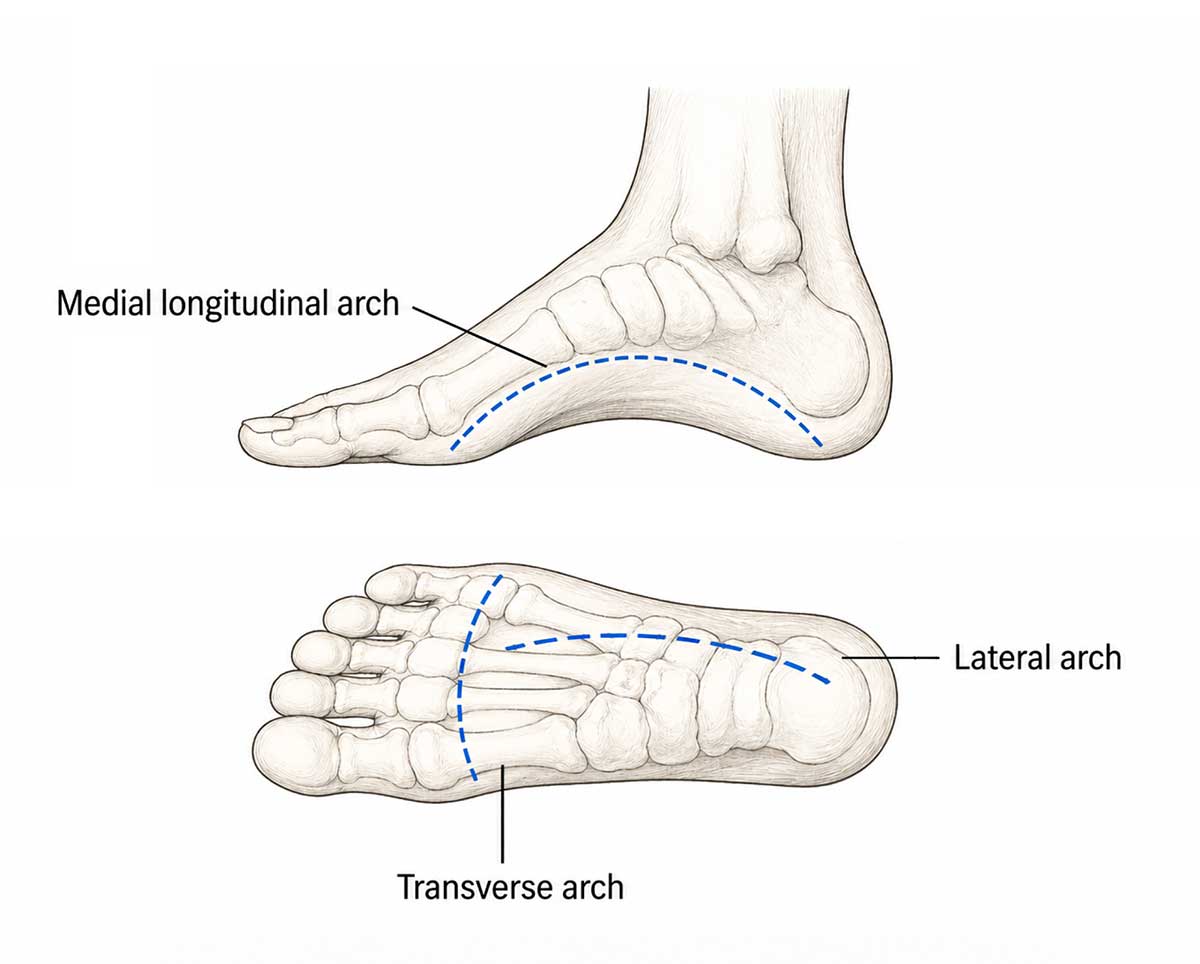
What does having ‘flat feet’ mean?
Flat feet occur when the medial longitudinal arch of the foot collapses or never fully develops, causing most or all of the sole to make contact with the ground.
There are two main types:
- Flexible flat feet — the arch appears when sitting or standing on tiptoes but flattens under weight-bearing load
- Rigid flat feet — the arch stays absent even when not standing, often causing more significant discomfort
According to a study published in the Journal of Foot and Ankle Research, flexible pes planus may affect between 2% and 23% of adults, depending on the population studied and how it’s measured. NCBI’s overview of pes planus similarly notes that flexible flat feet typically show an arch when the foot isn’t bearing weight, with the arch collapsing once load is applied.
Flat feet can develop from genetics, injury, aging, obesity, pregnancy, arthritis, or weakened tendons. Some people are simply born with naturally low arches; others develop arch collapse later in life.
How Flat Feet Affect the Rest of the Body
The feet are the foundation for the entire body’s alignment. When the arches collapse, the biomechanics of standing and walking shift, and that change tends to cascade upward through the ankles, knees, hips, and lower back.
People with flat feet commonly experience:
- Heel pain
- Arch pain
- Shin splints
- Knee discomfort
- Hip pain
- Lower back pain
- Over-pronation (the foot rolling excessively inward)
- Fatigue during walking or standing
The mechanism behind several of these is well documented:
- Shin splints can develop as excess tibial rotation increases traction on the muscles attached to the shin
- Knee pain (including patellofemoral pain) can occur when altered foot motion changes kneecap tracking during movement. A 2022 meta-analysis found that foot orthoses improved knee function in people with patellofemoral pain, particularly in the short term, as part of broader treatment
- Hip discomfort can follow when collapsing arches encourage internal hip rotation and pelvic tilt
- Low back pain may follow as pelvic alignment and shock absorption change; the Framingham Foot Study found that pronated foot function was associated with higher odds of low back pain in women
How Insoles Help Flat Feet
Insoles, also called orthotics, support the arch, improve foot alignment, and distribute pressure more evenly across the foot.
Arch support. Flat feet lack proper structural support underneath. Insoles help restore arch shape and reduce excessive inward rolling.
Improved alignment. Orthotics help bring the ankles, knees, and hips into more natural alignment, reducing downstream stress on joints and muscles.
Pain reduction. Many people experience reduced heel pain, plantar fasciitis symptoms, and lower back discomfort after switching to supportive insoles.
Better shock absorption. Supportive inserts cushion the foot and absorb impact during walking or running, especially on hard surfaces.
Enhanced stability. Flat feet can affect balance and walking efficiency; orthotics may improve stability and reduce fatigue over the course of a day.
A systematic review found moderate evidence that foot orthoses improve physical function and reduce the energy cost of walking in people with flexible pes planus, supporting insoles as a genuinely useful conservative approach rather than just a comfort measure.
Custom Orthotics vs. Over-the-Counter Insoles for Flat Feet
Over-the-counter insoles are typically sufficient for mild to moderate flat feet symptoms and are far more affordable and accessible than custom devices, available online or in stores rather than requiring a podiatrist appointment.
Custom orthotics, prescribed and molded by a podiatrist specifically to an individual’s foot structure, are usually reserved for severe over-pronation, chronic pain that hasn’t responded to OTC options, tendon dysfunction, or rigid flat feet. They cost significantly more, but some patients find them worthwhile for long-term management of more complex cases.
Popular Insoles for Flat Feet: How They Compare
| Brand | Best For | Arch Support Style | Price Range | Key Consideration |
|---|---|---|---|---|
| Superfeet (Premium/Green) | Daily support, hikers and runners wanting maximum control | High-arch-focused, rigid support with a deep heel cup | Premium | Can feel too firm for sensitive feet or first-time orthotic users |
| Dr. Scholl’s Custom Fit | General comfort, testing whether insoles help before investing more | Foam-based cushioning with heel cups | Budget (typically under $20) | Less durable and less structured than higher-end orthotics |
| PowerStep Pinnacle | Moderate overpronation in sneakers, work shoes, or casual footwear | Relatively firm arch support with a pronounced heel cradle | Mid-range | Limited arch height options compared to some competitors |
| Custom Orthotics | Severe flat feet, rigid pes planus, or complex biomechanical issues | Personalized, molded specifically to the individual foot | High (often $300+) | Requires a podiatrist visit and fitting; not necessary for most mild-to-moderate cases |
| Footlogics Range | Feet that don’t fit the “average” mold, or anyone needing support across multiple shoe types | Medical-grade orthotic insoles across multiple models, not a single one-size product; options for different arch heights, shoe types, and activities | Mid-range across the full range | TGA-approved, podiatrist-designed; backed by a 30-day money-back guarantee |
Which Footlogics Insole Fits Your Flat Feet?
- Low to normal arches, everyday wear: Footlogics Premium or Comfort, built for all-day support in standard footwear
- Running, hiking, or sports: Footlogics Sports, with additional shock-absorbing cushioning for repeated impact
- Court sports like pickleball or tennis: Footlogics Active, built for lateral movement and stability
- Dress shoes or low-volume footwear: Footlogics Versa, designed to fit where a full-length insole won’t
- Slip-on shoes without laces: Footlogics Casual, a 3/4-length design that stays secure without laces
How flat feet insoles, orthotics and shoe inserts help
Insoles, orthotics and shoe inserts are removable supports that you put in your shoes. While proper insoles do not cure flat feet, they do improve biomechanical alignment, redistribute pressure and relieve pain.
The aim is not to force an arch high. It is to offer support via a supportive arch, reducing over-pronation and spreading pressure more evenly. By stabilizing the heel, controlling overpronation and distributing weight evenly, insoles can correct biomechanics to relieve strain on the entire lower body.
Footlogics is the happy medium between basic cushions and pricey custom orthotics. Custom orthotics are designed to fit precisely to the contours of a person’s feet and offer personalized correction and pressure relief, but most people with flat feet can start with good quality over-the-counter support.
Good insoles include firm arch support, deep heel cups and motion control to correct overpronation. Look for flat foot orthotics that offer low arch support, cushioning, and a deep heel cradle to help improve alignment and reduce discomfort. Deep heel cup cradles heel bone, centers fatty pad and increases heel stabilization. The best insoles for flat feet should focus the fatty pad under the heel bone and stabilize the heel to prevent the foot from rolling inward too much. Look for firm support, not the soft, squishy gel inserts. If you’re looking for an insole, stay away from soft, squishy gel inserts – they don’t provide the structural support flat feet need. Good arch support should provide firm support, but not feel like a hard lump.
Cushioning, shock absorption, all-day comfort
Shock absorption is provided in the heel and forefoot of quality insoles. People with low arches often need insoles for overpronation that are designed with shock absorption and stability for exercise. Proper arch support insoles can improve comfort and performance in physical activities by reducing foot fatigue and increasing stride efficiency. They can make work boots that are hard, athletic shoes, sneakers and even some zero drop shoes more comfortable, especially for wide feet with a wide toe box.
Footlogics flat feet solutions: six insole options
Footlogics offers six insoles for flat feet: Premium, Comfort, Casual, Sports, Versa, and Active. Each is designed with podiatrist and physiotherapist input, international shipping, free USA shipping, affordability, and a 30-day guarantee.
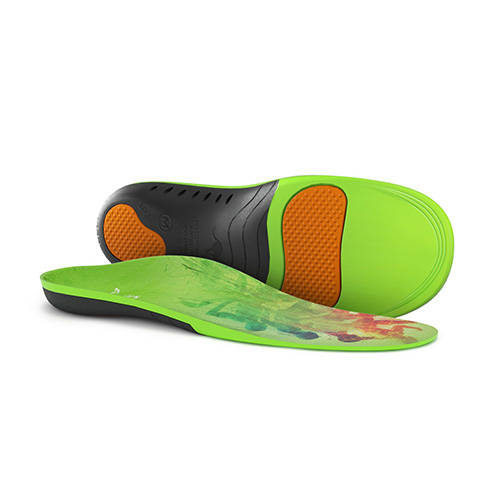
Footlogics Sports
Footlogics Sports is designed for running, gym training, basketball, soccer, netball, and HIIT. It offers strong support, a reinforced heel cup, and extra heel and forefoot cushioning. Rigid or semi-rigid orthotics are designed to correct mechanical alignment and control overpronation, fitting well in structured athletic or walking shoes. Sports is ideal when you need running insoles that support flat feet and reduce impact.
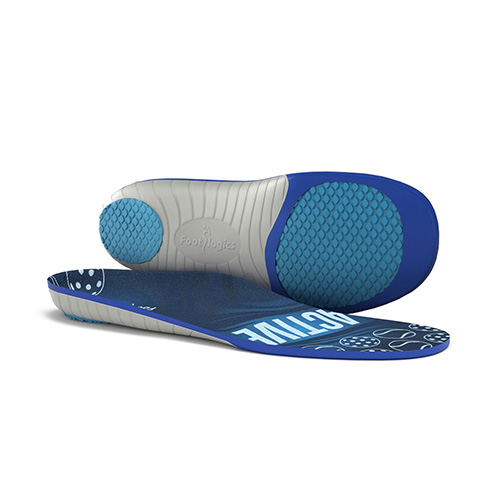
Footlogics Active
‘Active’ is the latest Footlogics insole for pickleball and tennis players with flat feet. It provides strong medial support, a deep heel cradle, side-to-side stability, forefoot cushioning, and metatarsal support for quick stops on hard courts.
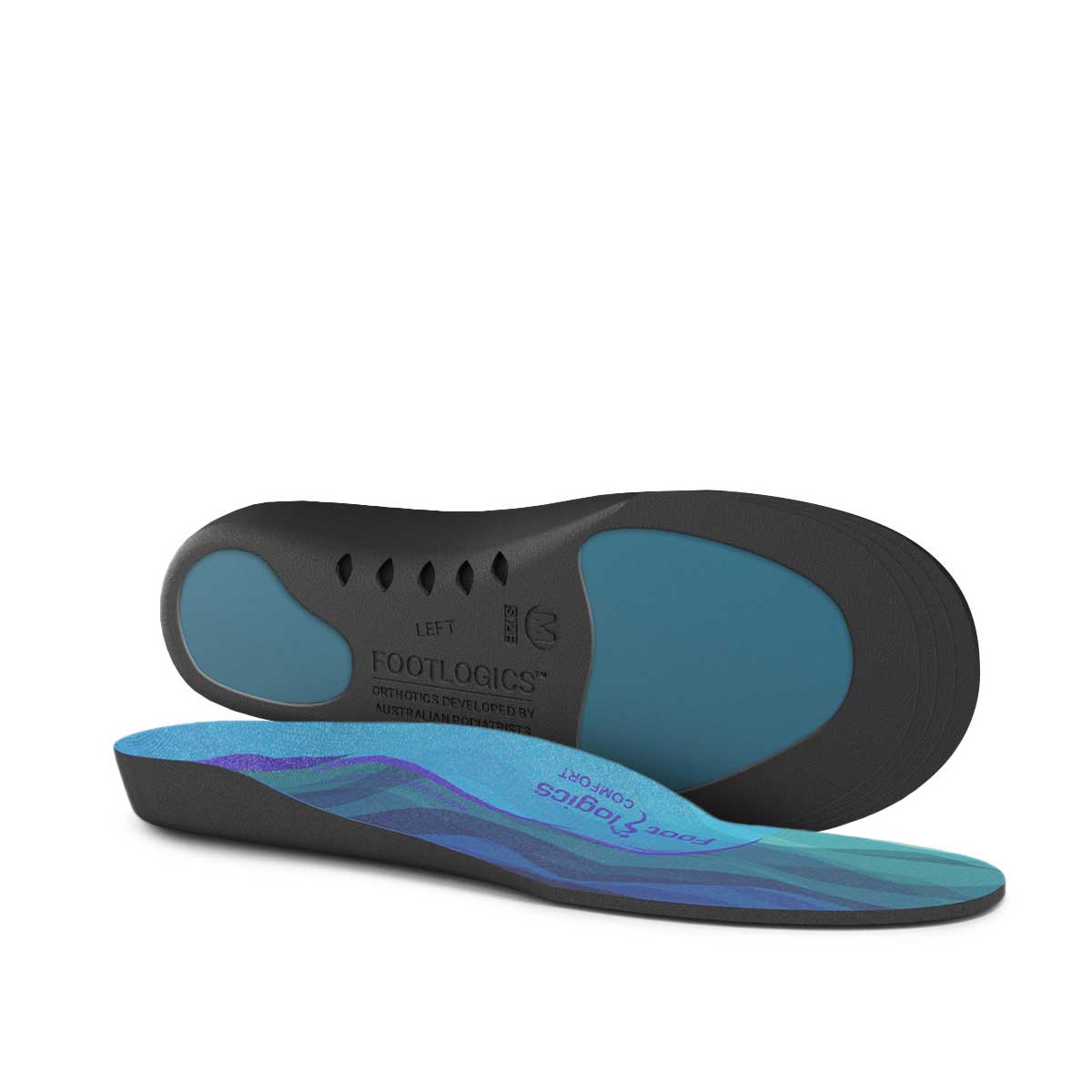
Footlogics Comfort
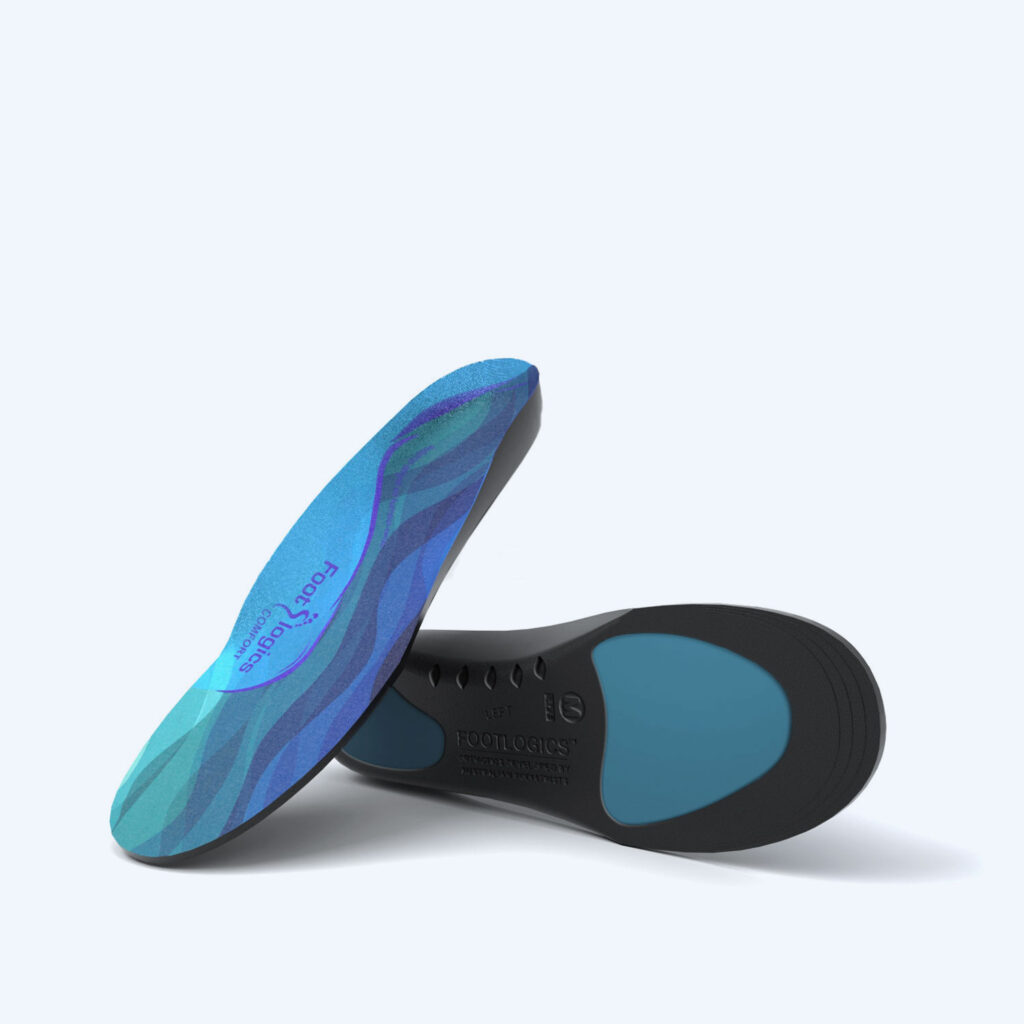
Footlogics Comfort has medium-firm high arch support and a very deep, stabilizing heel cup and mild metatarsal support. It is the orthotic of choice for many podiatrists and physical therapists. Great for flat feet, plantar fasciitis, knee or lower pain back. The insole fits everyday sneakers, casual lace-ups, and many work shoes.
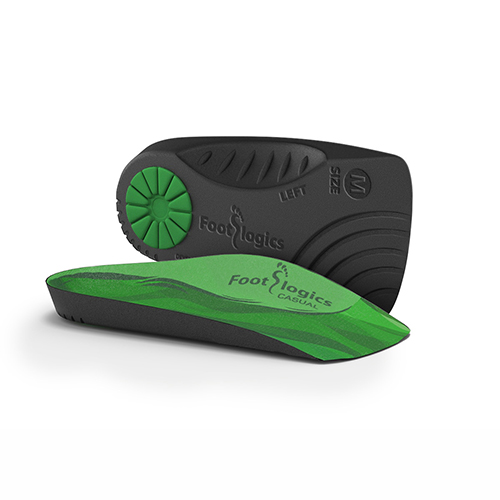
Footlogics Casual
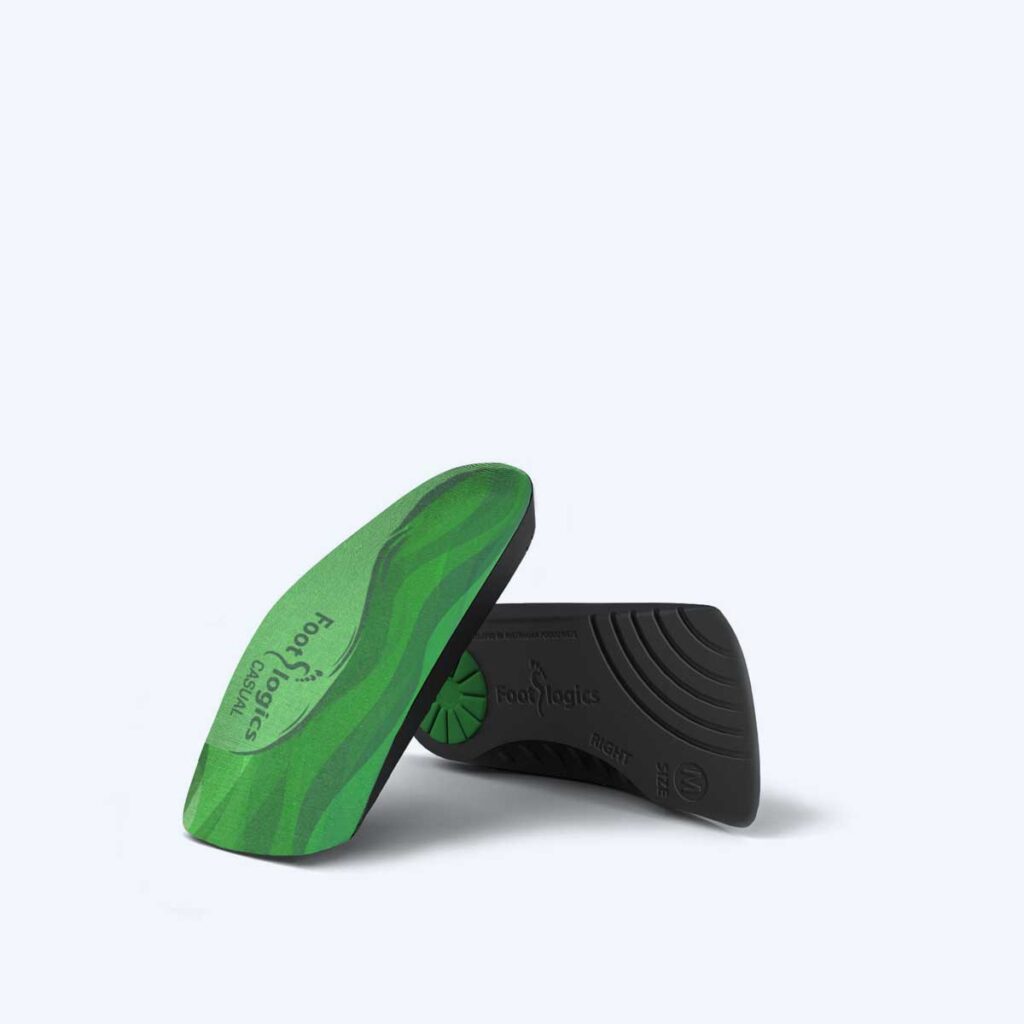
Casual is a 3/4 length insole for dress shoes, loafers, women’s flats, and tighter casual footwear. It gives arch support and over-pronation control without taking up as much forefoot space. For office wear, it can turn the best shoe in your closet from “looks good, hurts later” into something more practical.
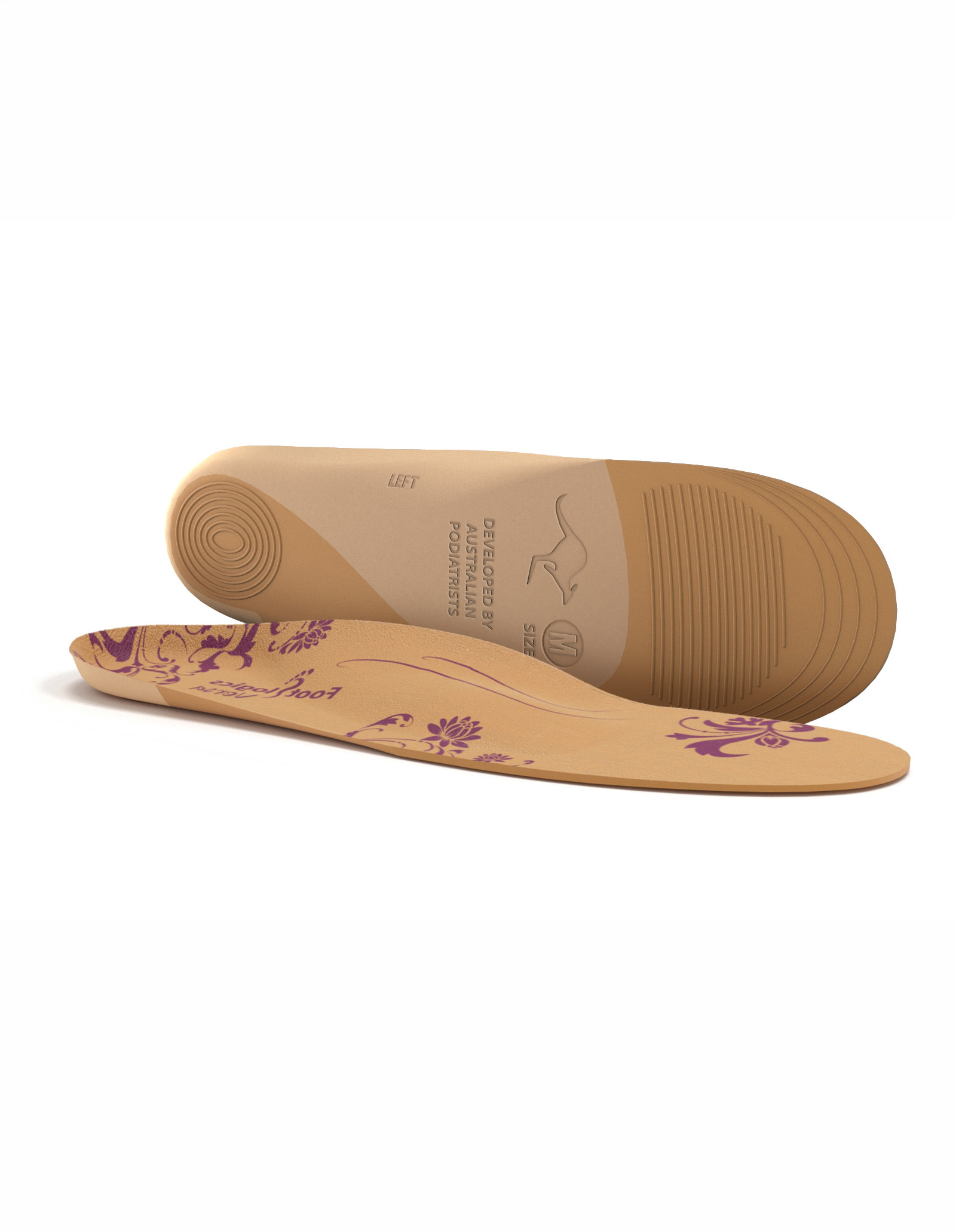
Footlogics Versa
Footlogics Versa bridges full-volume and low-profile models. It works across work shoes, casual sneakers, some dress shoes, and travel footwear, giving firm support for flat feet, with moderate cushioning.
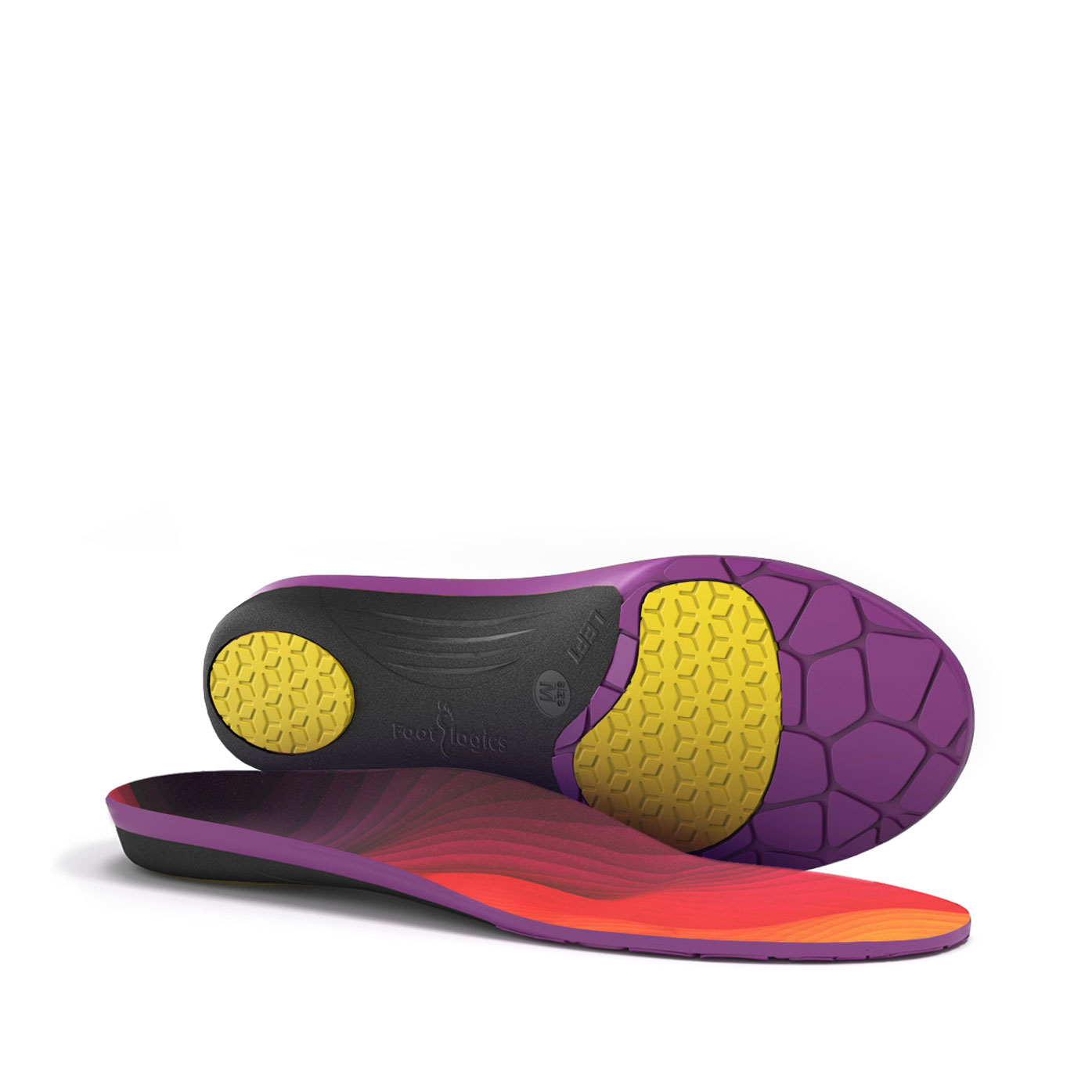
Footlogics Premium
Premium is the flagship full-length option for moderate to severe flat feet and over-pronation. It combines a firm arch support shell, a deep heel cup and cushioning P.U., for everyday walking. Use Premium in walking shoes, running shoes, work shoes, and boots with removable liners. It suits adults with plantar fasciitis, heel spurs, knee pain, or back pain linked to flat feet. Footlogics Premium is a very durable insole, featuring a hard-wearing nylon outer shell.
Frequently asked questions about flat feet insoles
1. Can flat feet be cured, or are flat feet permanent?
In most adults, flat feet are a permanent structural variation, especially when hereditary. Treatment is usually about reducing symptoms, improving alignment, and helping people stay active, not creating a high arch. Children may develop more arch height as they grow. Adults usually do best with supportive footwear, stretching, strengthening, and orthotics before surgery is ever discussed.
2. Do I really need insoles for flat feet if I do not have pain?
Not everyone with flat feet has pain. However, if you stand for long hours, run, play sport, or experience symptoms in the foot, ankle, knees, hips, or back, support can help prevent overpronation from becoming a bigger problem.
Mild to moderate arch support can be preventive during physical activity, while stronger support is better when pain has already started.3. How long do flat feet insoles last?
Most quality flat feet insoles last about 9–18 months with daily wear. Heavy work, high-impact sport, body weight, moisture, and shoe environment can shorten that lifespan.
Replace insoles when cushioning compresses, the shell cracks, the heel cup collapses, or the arch no longer feels supportive.4. Can I use flat feet insoles in dress shoes and work boots?
Yes, but match volume to footwear. Casual suits dress shoes and loafers, while Premium, Comfort, Sports, and Versa work better in sneakers, running shoes, and work boots.
For example, a corporate worker might use Casual in office dress shoes and Premium in weekend walking shoes. Trim-to-fit sizing helps create a cleaner pair fit.5. When should I see a podiatrist or doctor about my flat feet?
Seek advice for sudden flattening in one foot, severe pain, visible deformity, rapid change, diabetes, rheumatoid arthritis, or a major foot or ankle injury history. Persistent pain after several weeks of supportive insoles and better shoes also deserves assessment.
6. Can I use the same insoles in all my shoes?
Not always. One pair typically transfers well between similar shoe types, like everyday sneakers and walking shoes, but narrow dress shoes or certain sports boots often need a thinner or differently shaped insole to fit properly without crowding the toes or loosening the heel fit. Many people keep a couple of pairs for different categories of footwear.
7. Are insoles for flat feet uncomfortable at first?
Some people feel mild pressure beneath the arch during the first couple of days as the foot adjusts to added support. Start with 1–2 hours a day and increase gradually over 1–2 weeks. A well-fitted insole should feel supportive, not painful, ongoing discomfort is a sign to check sizing or arch height rather than push through it.
8. Can insoles really help with knee, hip, or low back pain?
Yes, when that pain is linked to over-pronation or poor foot alignment. Foot orthoses have been shown to help reduce abnormal stress patterns reaching the knees, hips, and lower back. The best results typically come from combining supportive insoles with stretching, strengthening, and reasonable adjustments to activity load, rather than relying on insoles alone.
The bottom line
Flat feet can seem like a minor issue, but left unsupported, they can affect alignment and movement patterns throughout the body, particularly for people who are active or spend long periods on their feet. Supportive insoles remain one of the most effective conservative treatments available, whether you choose an over-the-counter option or a custom-molded device, proper arch support can meaningfully improve posture, reduce pain, and restore comfort during everyday activity.
If you’re dealing with persistent or worsening symptoms, it’s worth having a podiatrist or orthopedic specialist assess your feet directly before deciding between an over-the-counter and custom solution.
Sources:
