
Metatarsalgia: Causes, symptoms & treatment
Metatarsalgia is a common term for pain in the ball of the foot, the area just behind the toes where the metatarsal bones meet the toe joints. It can cause aching, burning, tenderness or a sensation that something is pressing against the underside of the foot.
For some people, discomfort develops gradually after long periods of walking or standing. Others notice pain during running, sports or activities that place repeated pressure on the forefoot.
Metatarsalgia is not one specific disease. It describes pain in the metatarsal region, which may have several underlying causes.
The good news is that many cases improve with conservative treatment, including footwear modifications, changes in activity, appropriate cushioning, physical therapy and orthotic support.
This guide explains what causes metatarsalgia, how to recognize its symptoms, how it differs from other forefoot conditions and which treatments may help.
What is Metatarsalgia?
The word metatarsalgia means pain in the region of the metatarsal bones.
There are five metatarsal bones in each foot. These long bones extend from the middle of the foot toward the toes. Their rounded ends, known as the metatarsal heads, help support and transfer body weight during walking and running.
When you walk, pressure moves forward across the foot as the heel lifts and the body prepares to push off through the toes.
The metatarsal heads experience substantial loading during this process.
If pressure becomes excessive or concentrated beneath a particular metatarsal head, irritation and discomfort may develop.
Metatarsalgia frequently affects the central forefoot, particularly beneath the second, third or fourth metatarsal heads, although symptoms can occur elsewhere.
Pain in this region can also arise from other conditions, making an accurate diagnosis important.
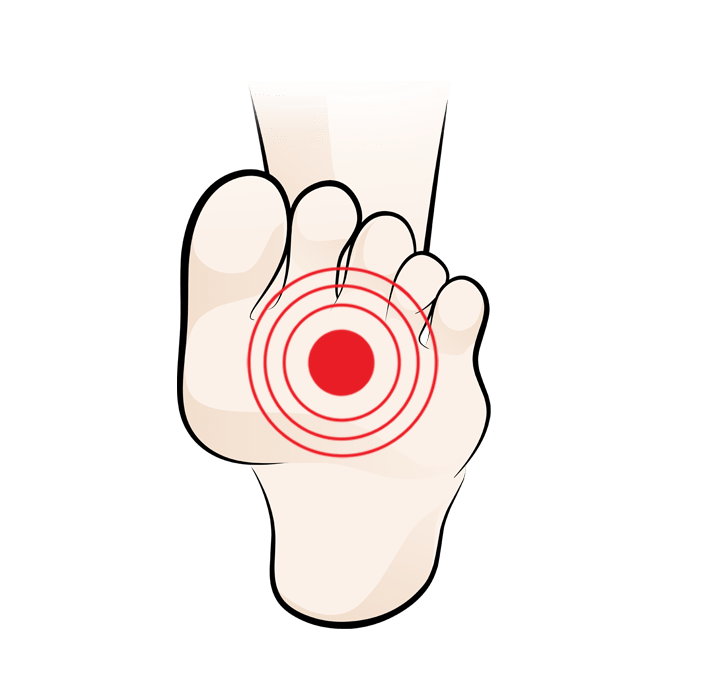
What are the symptoms of metatarsalgia?
Sharp pain or burning sensation under the balls of the feet
Pain intensifies as the person stands, walks or runs
Pain subsides after resting
Frequent feeling of a ‘pebble’ being inside the shoe
Walking barefoot on hard floors is often very painful
Some people also experience tingling or numbness in the toes. These symptoms may indicate nerve irritation, including Morton’s neuroma, rather than simple mechanical forefoot overload.
The Mayo Clinic’s guide to metatarsalgia describes similar symptoms and explains why forefoot pain can worsen during weight-bearing activities.
What causes Metatarsalgia?
Metatarsalgia often develops through a combination of factors rather than one single cause.
1. Excessive pressure beneath the metatarsal heads
The forefoot normally supports substantial forces during walking and running.
When these forces become concentrated beneath one or more metatarsal heads, the surrounding tissues may become irritated.
Changes in walking mechanics, foot structure, activity levels and footwear can influence how pressure is distributed.
2. Tight-fitting shoes and high heels
Shoes with a narrow toe box can compress the forefoot, particularly around the metatarsal heads.
High heels also shift more body weight toward the front of the foot.
This combination can increase pressure and aggravate existing symptoms.
Footwear with adequate width, appropriate cushioning and a lower heel may help improve comfort.
3. Running and high-impact sports
Running, jumping and court sports place repeated loading forces through the forefoot.
Activities such as tennis, basketball, pickleball and long-distance running may aggravate metatarsalgia, especially when training intensity increases too quickly.
Worn-out footwear, inadequate recovery and repeated forefoot loading may contribute.
4. High arches and foot structure
People with high arches, also known as pes cavus, may experience concentrated pressure beneath the heel and metatarsal heads.
A relatively rigid foot can sometimes distribute forces less evenly during walking.
Other structural features, such as differences in metatarsal length, toe deformities and changes in joint mobility, may also affect forefoot loading.
5. Excessive pronation and altered foot mechanics
Pronation is the natural inward rolling movement of the foot during walking.
Some individuals with altered foot mechanics may experience changes in forefoot loading that contribute to metatarsal discomfort.
However, excessive pronation is not the sole or universal cause of metatarsalgia.
It is also inaccurate to assume that everyone with forefoot pain has a collapsed transverse arch.
A podiatrist can assess whether foot mechanics are relevant to a particular person’s symptoms.
6. Reduced cushioning beneath the forefoot
The plantar fat pad beneath the metatarsal heads provides natural cushioning.
With aging, changes in tissue thickness or displacement of the fat pad may reduce protection beneath sensitive areas.
This can make walking on hard surfaces uncomfortable.
7. Excess body weight
Higher body weight can increase the forces transmitted through the feet during daily activities.
However, metatarsalgia can affect people of any body weight, including athletes and otherwise healthy individuals.
8. Other medical conditions
Inflammatory arthritis, joint disorders, bursitis, plantar plate injuries and other conditions can produce pain around the metatarsal heads.
Stress fractures and Morton’s neuroma can also cause symptoms that resemble metatarsalgia.
These conditions may require different treatment approaches.
Metatarsalgia versus Morton's neuroma
Metatarsalgia and Morton’s neuroma can both cause discomfort in the ball of the foot, but they are not identical diagnoses.
Morton’s neuroma involves thickening and irritation of tissue around a nerve, most commonly between the third and fourth metatarsal heads.
It often causes burning, shooting pain, tingling or numbness extending into the toes.
Mechanical metatarsalgia more commonly involves localized discomfort beneath the metatarsal heads during weight-bearing activities.
However, symptoms can overlap significantly, and the two conditions cannot always be distinguished without clinical assessment.
For a detailed explanation, read our Morton’s neuroma guide.
Metatarsalgia versus a metatarsal stress fracture
A stress fracture is a small crack in a bone that can develop from repeated loading.
Stress fractures of the metatarsals may cause pain in the forefoot, particularly after increased running, walking or other weight-bearing activities.
Pain from a stress fracture may become increasingly localized over a specific bone and can be associated with swelling.
However, these features are not reliable enough to confirm or exclude a fracture without assessment.
Early stress fractures may not be visible on standard X-rays, and further imaging is sometimes required.
If a stress fracture is suspected, avoid running, jumping or deliberately testing the foot by hopping on it. Seek medical assessment.
For more information, read Is it metatarsalgia or a stress fracture?.
How is metatarsalgia diagnosed?
Diagnosis usually begins with a medical history and physical examination.
A healthcare professional may ask:
-
Where exactly is the pain located?
-
When did symptoms begin?
-
Does the pain occur during walking, running or standing?
-
Have you recently changed your footwear or exercise routine?
-
Do you experience numbness, tingling or swelling?
-
Is there a history of injury or inflammatory arthritis?
During examination, the clinician may assess foot shape, joint mobility, areas of tenderness, footwear and walking mechanics.
An X-ray may be recommended when a fracture, arthritis or structural abnormality is suspected.
Ultrasound or MRI may be considered for certain soft-tissue conditions or suspected stress injuries.
Not everyone with metatarsalgia requires imaging. The decision depends on the symptoms and clinical findings.
How is Metatarsalgia treated?
Treatment depends on the cause of the pain, how long symptoms have been present and the activities that aggravate them.
For many people, conservative treatment is the first approach.
1. Reduce aggravating activities
Temporarily reducing running, jumping and prolonged standing can help settle irritated tissues.
This doesn’t always mean complete inactivity.
Low-impact activities such as swimming or cycling may be more comfortable while symptoms improve, provided they don’t aggravate the foot.
Return to higher-impact activities gradually as pain and function improve.
2. Apply ice for short-term comfort
A cold pack may help relieve soreness after activity.
Wrap the ice pack in a thin towel and apply it for approximately 15–20 minutes at a time.
Avoid placing ice directly against the skin.
People with impaired circulation or reduced sensation should seek medical advice before using cold therapy.
3. Choose wider, supportive footwear
Footwear changes are among the simplest conservative treatments for metatarsalgia.
Look for shoes with:
-
Adequate width around the forefoot.
-
Sufficient room for the toes.
-
A comfortable, stable sole.
-
Appropriate cushioning beneath the ball of the foot.
-
A low or moderate heel rather than a high heel.
Avoid shoes that compress the toes or place excessive pressure beneath the metatarsal heads.
Some people also benefit from footwear with a suitable rocker sole, which may reduce the amount of bending required at the forefoot during walking.
4. Consider metatarsal pads and orthotic insoles
Metatarsal pads and orthotic insoles may help redistribute pressure beneath the forefoot.
A metatarsal pad is generally positioned behind the metatarsal heads, rather than directly underneath the most painful area.
Some full-length orthotic insoles combine metatarsal support, arch contouring and forefoot cushioning.
Others use a shorter three-quarter-length design.
Research suggests that appropriately designed orthotic interventions can reduce pressure beneath the central metatarsal heads, although individual results vary.
For information about different insole designs, visit our Footlogics insoles for metatarsalgia page.
5. Physical therapy and rehabilitation
Physical therapy may be helpful when muscle weakness, reduced joint mobility or activity-related loading contributes to symptoms.
A physical therapist or podiatrist may assess:
-
Ankle flexibility and calf muscle tightness.
-
Foot and toe mobility.
-
Strength of the intrinsic foot muscles.
-
Walking or running mechanics.
-
Training volume and activity progression.
Exercises are usually selected according to the individual’s symptoms and examination findings.
6. Medication and medical treatment
Some people may benefit from short-term pain-relieving medication, where medically appropriate.
A pharmacist or healthcare professional can advise on suitable options and precautions.
Persistent symptoms may require further investigation or treatment of an underlying condition, such as inflammatory arthritis, a plantar plate injury or Morton’s neuroma.
Surgery is rarely the first treatment for uncomplicated mechanical metatarsalgia and is generally considered only for selected structural problems when appropriate conservative care has failed.
Exercises for Metatarsalgia (ball of foot pain)
This is a full workout program of stretching and strengthening exercises for Metatarsalgia (pain in the ball of the foot). These exercises are meant to make your feet more flexible, strengthen the muscles in your feet, and ease the strain on the front of your foot.
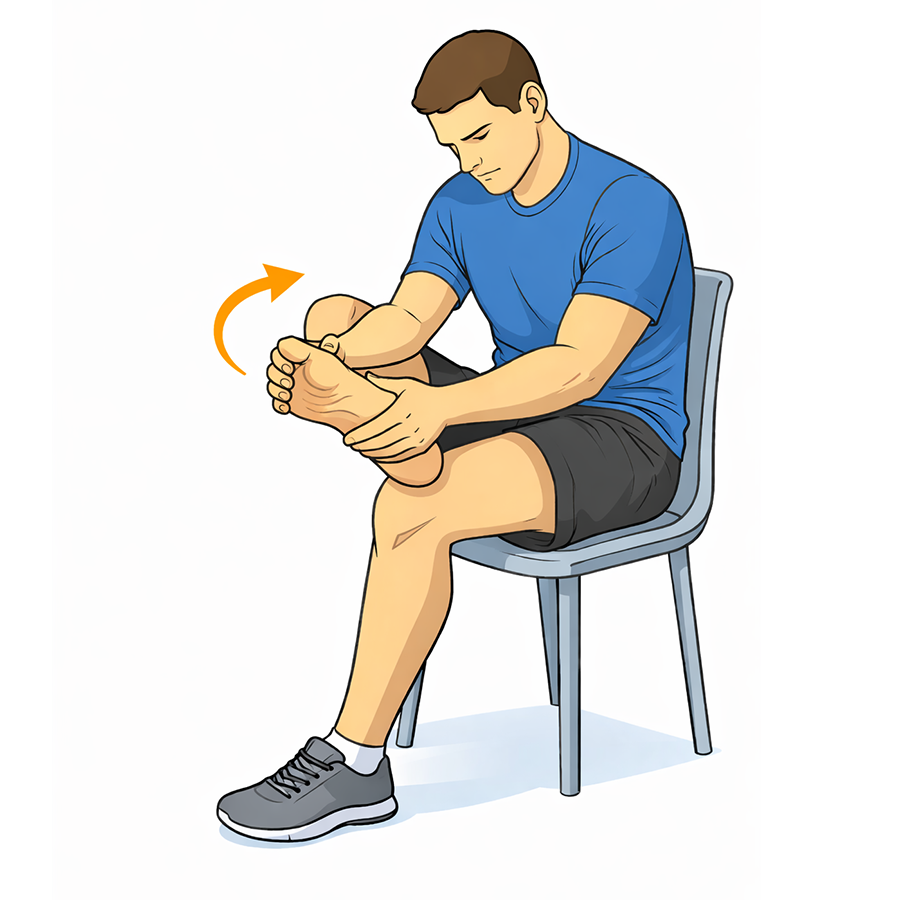
Exercise 1:
Stretching the toes and metatarsals by hand.
Goal: Loosen up the long toe extensor muscles and plantar fascia and relieve stress in the forefoot. Put your feet flat on the floor and sit on a chair. Put one foot on your knee. Grab the toes and hold the heel with the other hand. Pull the toes towards you, as far as you can. Hold for 20 to 30 seconds. Do it three times.
Why is this exercise useful?
When the toes and front of the foot are stiff, the body makes up for it by putting too much weight on the ball of the foot.
This stretch:
Stretches the plantar fascia and the muscles of the forefoot,
Lessens pressure under the metatarsal heads,
Makes it easier for joints to move, which helps the weight disperse more evenly across the foot when walking.
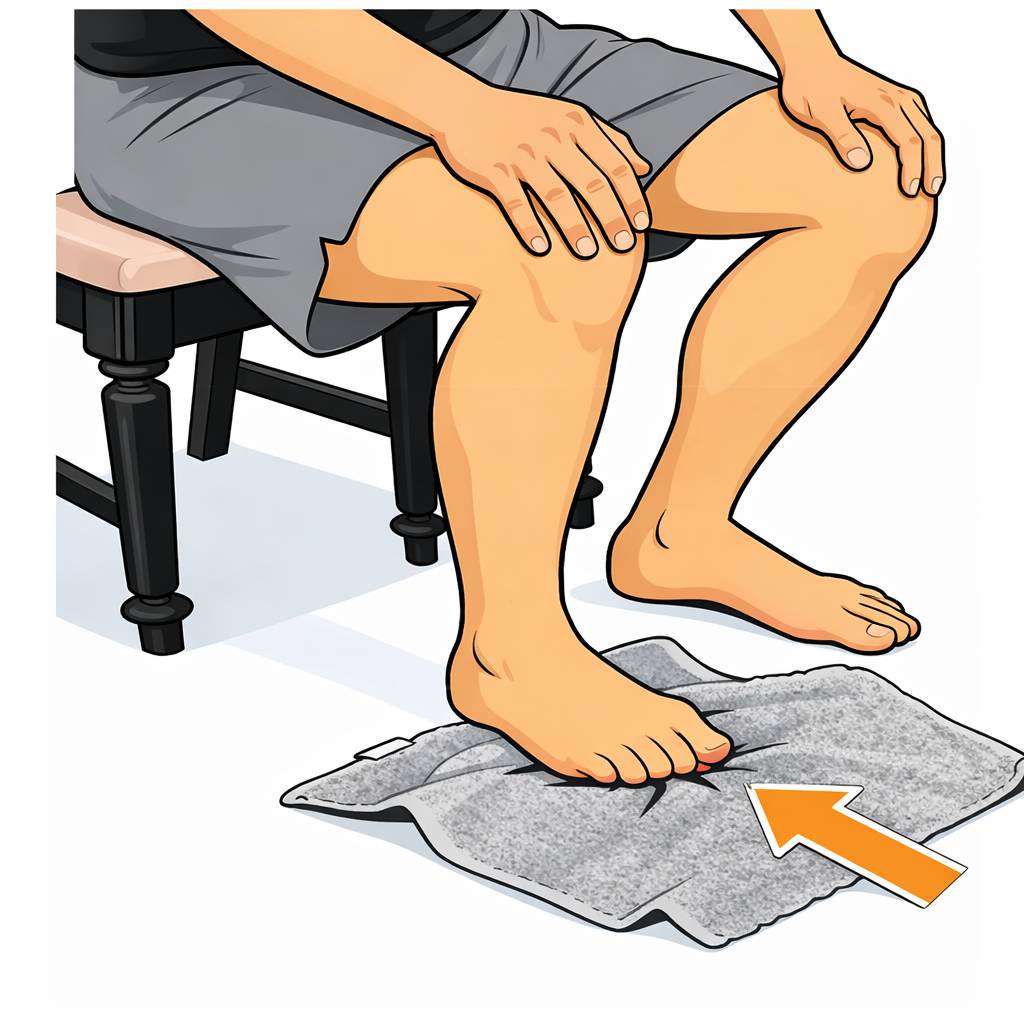
Exercise 2:
Scrunching a towel
Goal: To ‘wake up’ and develop the little muscles in the sole of the foot that support the arch and assist move pressure away from the front of the foot. Sit up straight with a towel under under foot on a smooth floor. Pull the towel toward you with just your toes. Do this 10 to 15 times, 2 to 3 sets for each foot.
Why is this exercise useful?
This exercise works the little muscles on the sole of the foot, which are called the intrinsic foot muscles. Stronger intrinsic muscles assist regulate foot movement and maintain the arch. Better foot control means less pressure on the forefoot. Getting stronger also makes it easier to absorb shocks when you walk or stand.
How long does metatarsalgia take to improve?
Recovery varies considerably.
Mild symptoms associated with footwear or a temporary increase in activity may settle with conservative changes.
More persistent symptoms can take longer, particularly when there are structural foot problems, ongoing occupational demands or an underlying medical condition.
There is no reliable universal recovery timeline.
If pain is worsening, repeatedly returning or not improving with appropriate self-care, seek assessment rather than continuing to exercise through discomfort.
Can metatarsalgia be prevented?
Not every case is preventable, but several habits may reduce unnecessary forefoot stress.
Choose footwear with adequate toe-box width and cushioning, increase training loads gradually and replace athletic shoes when their support or cushioning has deteriorated.
Avoid prolonged use of high heels or shoes that compress the forefoot.
If you regularly stand or walk on hard surfaces, consider whether your footwear provides sufficient comfort and support.
People with recurring symptoms may benefit from a professional assessment of foot mechanics and footwear.
What does scientific research say about metatarsalgia treatment?
Research has investigated orthotic insoles, metatarsal pads, cushioning, footwear modifications and other conservative approaches to forefoot pain.
The evidence is promising for reducing localized plantar pressure, although research quality, orthotic design and patient populations vary.
Research 1: Systematic review of customized orthotics
A systematic review and meta-analysis by Ruiz-Ramos and colleagues, published in the Journal of Orthopaedics, examined the effectiveness of customized orthotic interventions for mechanical metatarsalgia.
The review included five studies involving 158 participants.
The researchers found that customized orthoses reduced plantar pressure beneath the central metatarsal heads compared with no treatment.
However, the review also reported similar pressure-reduction effects with some standardized footwear, prefabricated orthoses and isolated metatarsal domes.
This is important because it suggests that custom-made orthotics are not necessarily superior for every patient.
Research 2: Foot orthoses and forefoot loading
A systematic review of orthotic interventions for forefoot pressure reduction included 12 studies and 456 participants.
Across the included studies, foot orthoses were associated with reductions in measures of forefoot loading.
Interventions using metatarsal pads and soft contoured orthoses showed consistent pressure-reduction findings.
However, the review also identified limitations in the available evidence, including differences in study design and patient populations.
Research 3: Clinical guidance on conservative treatment
The Mayo Clinic recommends several conservative measures for metatarsalgia, including rest, ice, appropriate footwear, arch supports and metatarsal pads.
The recommended treatment depends on the underlying cause and the severity of symptoms.
Read Mayo Clinic’s diagnosis and treatment guidance.
What are the limitations of the research?
An important distinction is that reducing plantar pressure is not identical to demonstrating long-term pain relief.
Pressure measurements provide useful information about how an orthotic changes foot loading, but they do not guarantee symptom improvement.
Research also varies in its definitions of metatarsalgia, the types of orthotics tested and the duration of follow-up.
Larger, high-quality clinical trials are needed to determine which interventions work best for different causes of forefoot pain.
When should you see a healthcare professional?
Seek medical advice if ball of foot pain persists, worsens or repeatedly returns.
Assessment is particularly important if you experience numbness, tingling, significant swelling or difficulty walking.
Seek urgent medical attention for severe pain after injury, inability to bear weight, visible deformity, a hot and swollen foot with systemic illness, or other signs of serious injury or infection.
People with diabetes, reduced sensation or circulation problems should seek advice promptly for new foot pain.
For additional guidance, see the NHS information on ball of foot pain.
Frequently asked questions about metatarsalgia
1. What is the main cause of metatarsalgia?
Metatarsalgia commonly involves excessive or concentrated loading beneath the metatarsal heads. Contributing factors can include footwear, repetitive activity, foot structure and underlying medical conditions. There is no single cause that applies to everyone.
2. What does metatarsalgia feel like?
People commonly describe aching, burning, sharp pain or tenderness beneath the ball of the foot. Some experience the sensation of a pebble inside the shoe. Symptoms often worsen during weight-bearing activities.
3. Can metatarsalgia go away on its own?
Mild cases may improve with reduced aggravating activity, footwear changes and other conservative measures. Persistent symptoms should be assessed to identify any underlying condition requiring treatment.
4. Is metatarsalgia the same as Morton’s neuroma?
No. Metatarsalgia describes pain in the metatarsal region, while Morton’s neuroma involves irritation and thickening of tissue around a nerve. Symptoms can overlap, particularly when burning or tingling is present.
5. Can a stress fracture feel like metatarsalgia?
Yes. A metatarsal stress fracture may produce forefoot pain that resembles mechanical metatarsalgia. Increasing localized bone pain or swelling after repetitive activity should prompt medical assessment.
6. Can high arches cause metatarsalgia?
High arches may contribute to concentrated pressure beneath the metatarsal heads in some individuals. However, not everyone with high arches develops metatarsalgia.
7. Can overpronation contribute to ball of foot pain?
Altered foot mechanics may affect forefoot loading, but excessive pronation is not the universal cause of metatarsalgia. Individual assessment is needed to determine whether it contributes to symptoms.
8. Should I exercise with metatarsalgia?
Gentle, pain-free mobility and strengthening exercises may be appropriate for some people. Avoid running, jumping or exercises that aggravate symptoms, especially if a stress fracture is suspected.
9. Is walking good or bad for metatarsalgia?
Walking may be tolerated when symptoms are mild, but prolonged walking can aggravate forefoot pain. Adjust activity according to symptoms and seek advice if pain persists or worsens.
10. Can orthotic insoles help metatarsalgia?
Appropriately designed orthotics may reduce concentrated pressure beneath the metatarsal heads. Some people also experience improved comfort. Results vary according to the cause of pain, orthotic design and fit.
11. Are metatarsal pads effective?
Metatarsal pads can help redistribute forefoot pressure when correctly positioned. Their effectiveness depends on placement, cushioning, footwear and individual anatomy.
12. How long does metatarsalgia last?
Recovery can range from a relatively short period to prolonged or recurrent symptoms. The duration depends on the cause, activity levels and response to treatment. Persistent pain should be professionally assessed.
Further information and treatment options
Understanding the cause of your ball of foot pain is the first step toward choosing appropriate treatment.
For many people, changes to footwear, activity levels and forefoot support form part of conservative management.
If you’re considering orthotic support, explore our dedicated guide to Footlogics insoles for metatarsalgia and ball of foot pain, which compares different designs for everyday footwear, work shoes and sports.
You may also find these related resources helpful:
Medical disclaimer: This article provides general educational information and is not a substitute for professional diagnosis or treatment. If you have persistent, severe or unexplained forefoot pain, consult a qualified healthcare professional.
