
Best insoles for heel spurs and heel pain
Heel pain can make even the simplest daily activities uncomfortable. Whether you’re walking the dog, standing at work, shopping or enjoying time with your family, persistent discomfort beneath the heel can significantly affect your quality of life.
If an X-ray has revealed a heel spur, you may be wondering whether shoe inserts can help, whether the bony growth will disappear, or whether you need surgery.
The good news is that many people with heel spurs can manage their symptoms without surgical intervention. Appropriately cushioned footwear, supportive orthotic insoles and adjustments to daily activities may help make standing and walking more comfortable.
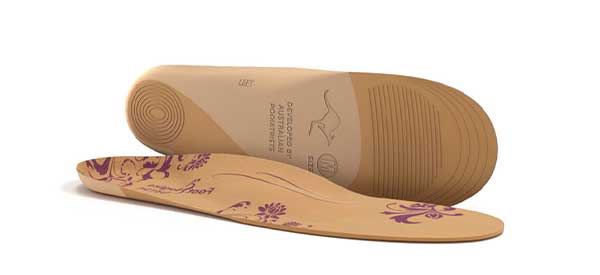
At Footlogics, we develop podiatrist-designed orthotic insoles that combine heel cushioning with contoured foot support, providing practical solutions for everyday heel discomfort.
What are heel spurs?
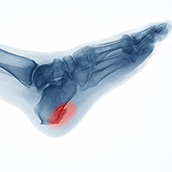
A heel spur, medically known as a calcaneal spur, is a bony projection that develops on the calcaneus, the large bone that forms the heel of your foot.
Heel spurs generally develop gradually over time rather than following a single injury. They can form where tendons, ligaments and other soft tissues attach to the heel bone.
There are two main locations where heel spurs can develop:
Plantar heel spurs
These develop underneath the heel bone, near the attachment of the plantar fascia and other soft tissues. They are frequently discovered when patients undergo imaging for pain beneath the heel.
Posterior heel spurs
These develop at the back of the heel bone, near the attachment of the Achilles tendon. They may occur alongside Achilles tendon problems and discomfort caused by pressure from the back of a shoe.
This guide primarily focuses on plantar heel spurs and shoe inserts designed to improve comfort beneath the heel.
Does a heel spur actually cause heel pain?
One of the biggest misconceptions about heel spurs is that the bony projection necessarily causes the pain.
Many people have heel spurs without experiencing any discomfort. A spur may be discovered incidentally during an X-ray performed for another reason.
According to the American Academy of Orthopaedic Surgeons (AAOS), heel spurs are frequently painless, and their presence does not mean that surgical removal is necessary.
When heel pain occurs alongside a spur, the symptoms may originate from surrounding soft tissues, irritation at attachment sites or other structures beneath the heel.
This distinction is important because effective management depends on identifying the source of the discomfort rather than simply treating an X-ray finding.
Why do heel spurs develop?
Heel spurs are associated with long-term mechanical loading and changes at the attachment sites of soft tissues to the heel bone.
Several factors may contribute to their development:
-
Increasing age and changes in connective tissue.
-
Repeated weight-bearing stress on the heel.
-
Higher body weight.
-
Long-term occupational or recreational loading.
-
Certain mechanical characteristics of the foot.
-
Existing conditions affecting the soft tissues around the heel.
A heel spur is not necessarily a sign that your feet are functioning incorrectly. Some people develop spurs despite having no significant symptoms or limitations.
Similarly, people can experience considerable heel pain without having a heel spur.
Heel spurs versus plantar fasciitis
Although these conditions frequently occur together, they are not the same.
A heel spur is a physical change in the heel bone. Plantar fasciitis is a condition affecting the connective tissue along the underside of the foot.
An X-ray can identify a heel spur, but its presence alone cannot establish the cause of your heel pain.
If your symptoms include pronounced discomfort after getting out of bed or following periods of inactivity, you may have plantar fasciitis.
For detailed information about this condition, including symptoms and diagnosis, read our complete guide to plantar fasciitis.
If you have already been diagnosed with this condition, our guide to the best insoles for plantar fasciitis provides more specific product recommendations.
Understanding pressure beneath the heel
The heel plays a major role in supporting your body during standing and accepting weight when walking.
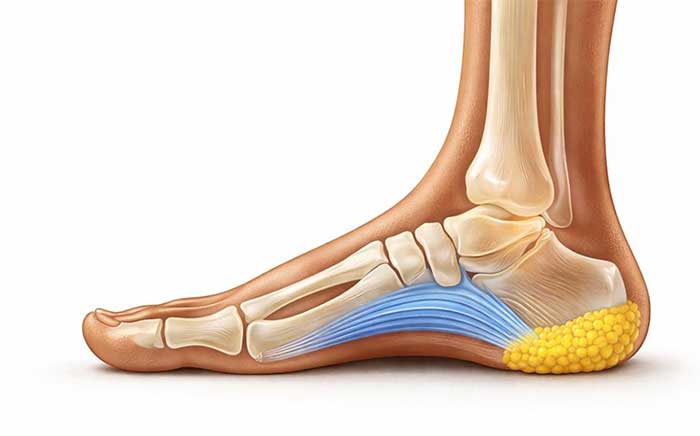
Underneath the calcaneus is a specialized layer of fatty tissue known as the heel fat pad. This natural cushioning structure helps distribute pressure and protect the underlying bone during weight-bearing activities.
The heel fat pad contains compartments of fatty tissue surrounded by connective tissue. Its structure allows it to deform under pressure while providing cushioning beneath the heel.
With increasing age, injury or other tissue changes, this natural cushioning system may become less effective.
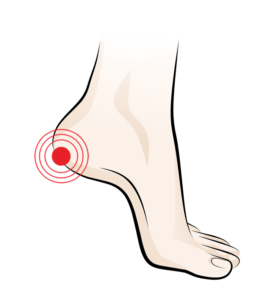
People experiencing discomfort beneath the heel may notice that walking on concrete, tiles or other hard surfaces is particularly uncomfortable. Thin-soled shoes can also make symptoms more noticeable.
Appropriate footwear and cushioned shoe inserts can provide an additional layer of protection between the heel and the ground.
The objective is not to eliminate all pressure beneath the heel, but to make that pressure more comfortable and manageable during daily activities.

How can insoles help with heel spurs?
Orthotic insoles cannot dissolve a heel spur or change its bony structure. However, they may help improve comfort by modifying how the foot interacts with the shoe and how pressure is distributed beneath the heel.
Depending on their design, heel spur insoles can provide several practical benefits.
Localized heel cushioning
A resilient cushioning material beneath the heel can provide a more comfortable surface during standing and walking.
The cushioning should compress sufficiently to accommodate the heel without flattening excessively under body weight.
A contoured heel cup
A heel cup surrounds the rearfoot rather than providing only a flat layer of padding underneath it.
This design may help maintain the position of the heel within the insert and contain the natural fatty tissue beneath the calcaneus.
Pressure redistribution
A contoured footbed increases contact with areas of the foot beyond the heel. This may help distribute loads over a broader surface, depending on the individual foot and insole design.
Improved footwear comfort
An appropriately fitted insert can improve the internal contours of a shoe, particularly when the original factory insole offers minimal cushioning or support.
Together, these features may make everyday weight-bearing activities more comfortable for people experiencing symptoms associated with heel spurs.
Heel cushions, heel cups or full-length orthotic insoles?
People searching for the best shoe inserts for heel spurs will encounter several different product designs.
Each serves a slightly different function.
| Type of insert | Main function | Important consideration |
|---|---|---|
| Flat gel heel cushion | Adds padding beneath the heel | Provides limited heel containment or arch support |
| Contoured heel cup | Cushions and surrounds the heel | Must fit securely inside the shoe |
| Heel-relief insert | May reduce pressure at a selected location | Relief area must align with the sensitive region |
| Three-quarter-length orthotic | Supports the heel and midfoot | Suitable for selected shoes with limited forefoot space |
| Full-length orthotic insole | Combines rearfoot cushioning with broader foot support | Requires sufficient internal shoe space |
A simple heel cushion may be suitable if your main concern is impact-related discomfort and your footwear already provides adequate support.
A contoured heel cup may offer an alternative when you prefer more containment around the heel.
For people who require cushioning together with support across a greater area of the foot, a full-length or three-quarter-length orthotic may be a more practical choice.
There is no single insert design that is universally best for every person with a heel spur.
Are softer heel spur insoles always better?
It is natural to assume that the softest available insert will provide the greatest relief. However, softness alone does not determine how comfortable an insert will be throughout the day.
Very soft materials may flatten significantly under repeated loading. When this happens, their cushioning effect can diminish.
Conversely, an excessively firm insert may be uncomfortable for a sensitive heel.
A useful heel cushioning system should balance several characteristics:
-
Sufficient compression under load.
-
Resilience after repeated compression.
-
Appropriate thickness beneath the heel.
-
Compatibility with the shoe.
-
Comfortable pressure distribution.
Materials such as silicone, gel and resilient foam all have potential applications. Their performance depends on the complete design, thickness and material properties rather than the material name alone.
For heel pain sufferers, the objective is sustained comfort during normal daily use, not simply a soft sensation when pressing an insole with your fingers.
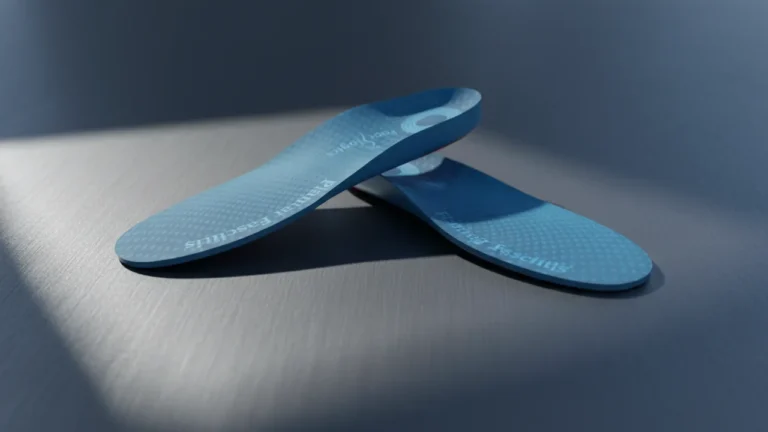
Footlogics orthotic insoles for heel spurs
Footlogics has more than 20 years of experience developing orthotic insoles for everyday footwear and different foot types.
Our orthotics combine contoured support and cushioning to help improve comfort during standing and walking.
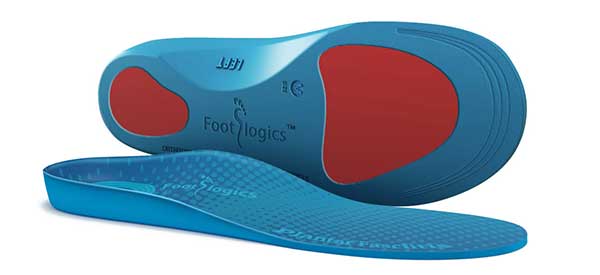
Footlogics PLANTAR FASCIITIS – everyday heel support
Despite its name, this orthotic can also be considered by people experiencing heel discomfort associated with a diagnosed heel spur.
It combines structured foot support with heel cushioning and is intended for everyday use in suitable walking shoes, sneakers and enclosed work shoes.
It is particularly suitable for people with normal-to-low arches.
Shop Footlogics PLANTAR FASCIITIS orthotics
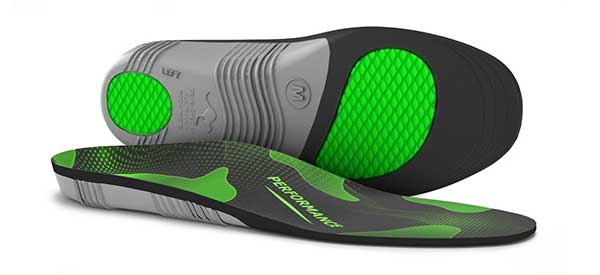
Footlogics PERFORMANCE – support for higher arches
Some people with higher arches experience concentrated pressure beneath the heel during weight-bearing activities.
Footlogics PERFORMANCE features a more pronounced arch contour combined with cushioning, making it an option for individuals who require support suited to a higher-arched foot.
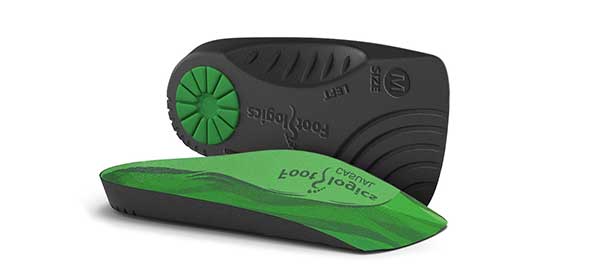
Footlogics CASUAL – heel support for slip-on shoes
For footwear with limited room around the toes, Footlogics CASUAL offers a three-quarter-length design.
This shorter orthotic provides support beneath the rearfoot and midfoot without occupying the entire forefoot area of the shoe.
All Footlogics orthotic insoles come with a 30-day money-back guarantee.
Choosing shoes when you have heel spurs
Your footwear and insoles work together. Even a well-designed heel insert may provide limited benefit when placed inside an unsuitable shoe.
When selecting footwear for painful heels, consider the following features.
Adequate sole thickness
A shoe with a reasonably cushioned midsole provides additional protection against hard walking surfaces.
Very thin soles leave less cushioning material between the heel and the ground.
Secure heel fit
The shoe should hold your rearfoot comfortably without excessive movement or rubbing.
If an orthotic raises your heel too far inside the shoe, you may experience heel slippage or pressure around the shoe collar.
Sufficient internal space
Check that your footwear can accommodate the insert without making the shoe excessively tight.
Shoes with removable factory insoles are often easier to adapt to full-length orthotic inserts.
A well-maintained sole
Shoes that have become unevenly worn or compressed may no longer provide their original level of cushioning.
Inspect the heel and midsole regularly, especially if you spend many hours standing or walking each day.
Managing heel discomfort at work and at home
People with heel pain often find that their symptoms are influenced by the amount of time they spend on their feet and the surfaces they walk on.
Practical changes to your daily environment may help improve comfort.
If you work on hard floors, consider using an anti-fatigue mat at your workstation where this is safe and practical.
Alternate between sitting, standing and walking whenever your occupation allows.
Avoid suddenly increasing the distance or duration of weight-bearing activities when your heel is particularly sensitive.
At home, cushioned and supportive indoor footwear may be more comfortable than walking barefoot on tiles, concrete or timber floors.
These measures can complement the use of orthotic insoles without requiring major changes to your daily routine.
Can heel spurs disappear without surgery?
Established heel spurs generally remain visible on imaging even when symptoms improve.
This means that successful treatment does not necessarily involve making the spur smaller or removing it.
As explained by the Cleveland Clinic, treatment usually focuses on managing the symptoms and associated conditions rather than removing the bony growth.
It is entirely possible for a person to become comfortable again while the heel spur remains present.
Surgical treatment is rarely required solely because an X-ray shows a spur.
When should you see a podiatrist?
If heel discomfort persists, worsens or interferes with normal walking, a professional assessment can help determine the underlying cause.
An assessment may also be appropriate when changing footwear or using shoe inserts does not provide sufficient relief.
Seek prompt medical attention if you experience:
-
Sudden or severe heel pain following an injury.
-
Difficulty bearing weight on the affected foot.
-
Significant swelling, redness or warmth.
-
Persistent numbness or loss of sensation.
-
Heel pain accompanied by fever or an open wound.
People with diabetes, reduced circulation or impaired sensation should seek professional advice before using pressure-relieving inserts for painful areas of the foot.
Enjoy more comfortable walking with Footlogics
A heel spur diagnosis does not necessarily mean you need surgery, expensive custom-made orthotics or permanent restrictions on your daily activities.
Understanding what is causing your discomfort is the first step toward selecting appropriate support.
Combining suitable footwear, effective heel cushioning and practical adjustments to your daily activities may help reduce discomfort associated with weight-bearing.
Footlogics offers podiatrist-designed Plantar Fasciitis insoles to accommodate different foot shapes and footwear requirements.
Frequently asked questions about heel spurs and insoles
What are the best insoles for heel spurs?
The most suitable insoles provide cushioning beneath the heel and fit comfortably inside your footwear. Some people benefit from additional heel containment and contoured foot support, while others may find a simple cushioned heel cup sufficient.
Do insoles get rid of heel spurs?
No. Insoles cannot remove or dissolve an existing bony spur. Their purpose is to improve comfort by cushioning the heel and potentially redistributing pressure during weight-bearing activities.
Can you have a heel spur without heel pain?
Yes. Many heel spurs are asymptomatic and are discovered incidentally during an X-ray. The presence of a spur does not necessarily explain heel discomfort.
Are gel heel cups good for heel spurs?
Gel heel cups may improve comfort by providing cushioning around and beneath the heel. Their suitability depends on the location of your discomfort, the design of the cup and the fit of your footwear.
Are full-length insoles better than heel cushions?
Not necessarily. Full-length insoles provide broader foot support, whereas heel cushions focus primarily on the rearfoot. The appropriate choice depends on your individual symptoms, footwear and support requirements.
Should heel spur inserts have a hole beneath the heel?
Some inserts contain a recess or softer material intended to relieve pressure in a selected area. These designs may help certain individuals, but an incorrectly positioned recess can create uncomfortable pressure around its edges. Professional fitting may be helpful for persistent localized pain.
Can I wear heel spur insoles all day?
Many people can wear appropriately fitted insoles throughout the day. New orthotic insoles may require a gradual adjustment period. Stop using them and seek advice if they increase pain or create persistent pressure points.
Is walking barefoot bad for heel spurs?
Walking barefoot is not inherently harmful simply because you have a heel spur. However, if your heels are sensitive to hard surfaces, cushioned indoor footwear may make walking around the home more comfortable.
Do heel spurs require custom orthotics?
Not everyone with heel spurs requires custom-made orthotics. Prefabricated inserts may provide adequate cushioning and support for many individuals. A podiatrist can advise whether custom devices are appropriate for your particular needs.
Will I need surgery to remove my heel spur?
Most people with heel spurs do not require surgical removal. Healthcare professionals generally focus on the underlying source of discomfort and consider nonsurgical management before discussing surgery.
References and further reading
-
American Academy of Orthopaedic Surgeons (AAOS). Plantar fasciitis and bone spurs.
-
Cleveland Clinic. Heel spurs: symptoms, causes and treatment.
-
Healthdirect Australia. Heel pain: causes and when to seek medical attention.
This article provides general educational information and is not a substitute for individual medical assessment, diagnosis or treatment.
