Orthotic insoles for Morton’s Neuroma
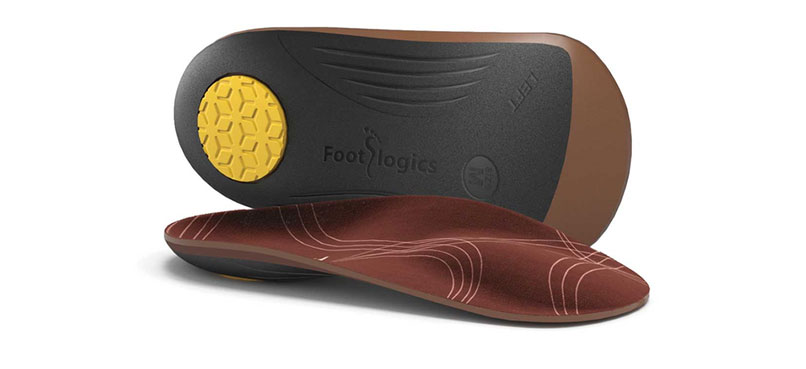
Footlogics Meta Premium ($44.95 USD) is our top-rated podiatrist-designed insole for Morton’s neuroma in everyday lace-up shoes and sneakers, combining a firm nylon support shell, built-in metatarsal dome, and 0.3 inches of forefoot cushioning. For tighter slip-on shoes, choose Footlogics 3/4 Meta Pro ($39.95 USD), or Footlogics Versa ($34.95 USD) for women’s dress shoes. All US orders ship free from our Mississippi warehouse with a 30-day money-back guarantee.
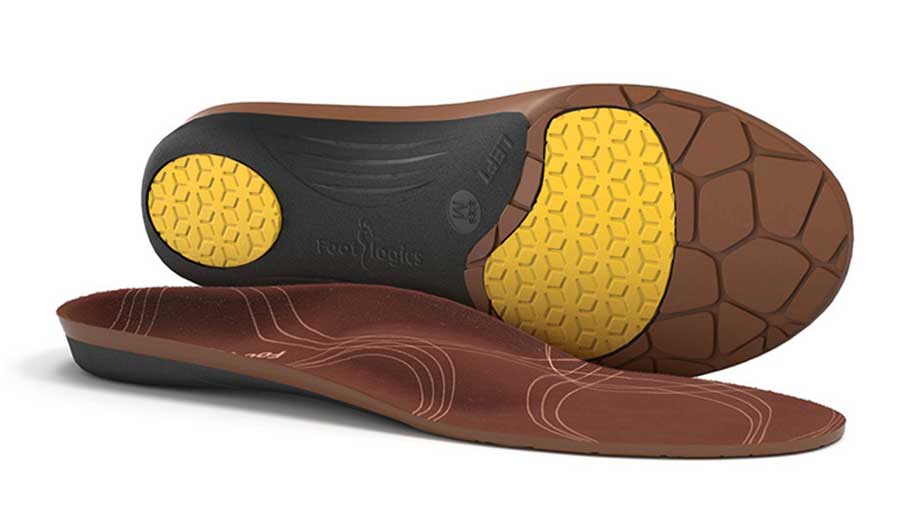
Footlogics META PREMIUM
For regular lace-up shoes. Features 0.5 inches of extra cushioning under the ball of the foot + firm nylon shell for added support and durability.
SHOP NOW
$44.95
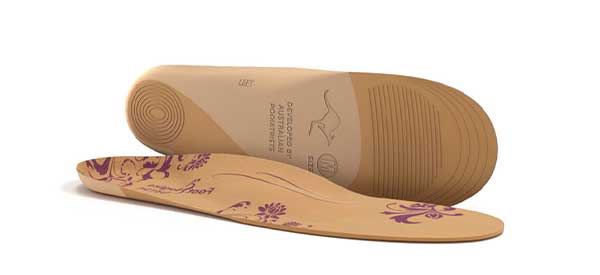
Footlogics 3/4 META PRO
3/4 length premium insole for slip-on shoes. Firm nylon shell for extra support and durability.
SHOP NOW
$39.95
What are the best insoles for Morton's Neuroma?
The best insoles for Morton’s neuroma are generally those that combine metatarsal support, appropriate arch support and forefoot cushioning while allowing enough room inside the shoe for the toes and forefoot.
A well-designed orthotic insole may help reduce pressure beneath the metatarsal heads, redistribute weight across the forefoot and relieve irritation around the affected interdigital nerve.
For people looking for over-the-counter orthotics for Morton’s neuroma, Footlogics offers several options:
-
Footlogics Meta Premium: A full-length orthotic with a supportive shell, metatarsal support and additional forefoot cushioning. A practical choice for everyday lace-up shoes and trainers.
-
Footlogics 3/4 Meta Pro: A shorter orthotic with a firm nylon support shell and built-in metatarsal support. Suitable for footwear that can accommodate a three-quarter-length insert.
-
Footlogics MET Full-Length: A full-length option designed for shoes with removable insoles, including many trainers and work shoes.
-
Footlogics Metatarsalgia: A three-quarter-length orthotic with targeted metatarsal support, intended to help redistribute pressure beneath the ball of the foot.
-
Footlogics Versa: A slimmer orthotic option for certain women’s shoes where a bulkier full-length insole may not fit comfortably.
Our recommendation: For everyday footwear with sufficient space, start by considering a full-length orthotic such as Footlogics Meta Premium. For tighter-fitting footwear, a shorter or lower-profile option may be more appropriate.
The most suitable insole depends on your foot shape, footwear, symptoms and the position of the metatarsal support. Orthotics can help manage symptoms but cannot guarantee relief or cure Morton’s neuroma.
Which Footlogics insoles are best for Morton’s neuroma?
| Footlogics insole | Recommended footwear | Main advantage |
|---|---|---|
| Meta Premium | Trainers, lace-up shoes | Firm nylon shell, metatarsal support and additional forefoot cushioning |
| 3/4 Meta Pro | Slip-on and other suitable shoes | Firm support in a shorter design |
| MET Full-Length | Trainers, work boots, everyday shoes | Full-length support with built-in metatarsal pad |
| Metatarsalgia | Lace-up shoes with sufficient room | Prominent metatarsal pad in a 3/4-length design |
| Versa | Women’s fashion shoes, low-heeled boots | Slimmer design with arch and metatarsal support |
Which should you choose?
For everyday trainers and lace-up shoes, Meta Premium is a good starting point if additional forefoot cushioning is needed. For footwear with less internal space, consider 3/4 Meta Pro or Versa, depending on the shoe.
Remember that a wider toe box is often just as important as the orthotic itself. An insole that makes your shoes tighter may aggravate Morton’s neuroma symptoms.
Why choose Footlogics insoles for Morton’s Neuroma
Footlogics has spent more than 20 years developing orthotic insoles designed to address common foot problems, including forefoot pain, metatarsalgia and Morton’s neuroma.
Our approach focuses on three important design principles:
1. Targeted metatarsal support
Footlogics orthotics feature built-in metatarsal support designed to help redistribute pressure across the forefoot. This may reduce mechanical irritation around the affected nerve and improve walking comfort.
2. Supportive footbed design
Rather than relying on soft cushioning alone, Footlogics combines contoured arch support with metatarsal support and cushioning. The aim is to provide a more supportive foundation for everyday walking and standing.
3. Different designs for different footwear
A single orthotic design will not suit every shoe. Footlogics offers full-length, three-quarter-length and slimmer orthotic options to accommodate different footwear styles.
How we selected these insoles
The Footlogics products recommended on this page were selected according to their metatarsal support, arch support, cushioning characteristics and intended footwear applications.
These recommendations reflect Footlogics’ product-design experience and the principles of conservative forefoot-pressure management. They are not based on clinical trials directly comparing the five Footlogics models.
For further information about Morton’s neuroma, see the American Academy of Orthopaedic Surgeons and the Mayo Clinic.
Important: Morton’s neuroma symptoms vary between individuals. If pain, tingling or numbness persists, consult a podiatrist or other qualified healthcare professional for an assessment.
What is Morton's Neuroma
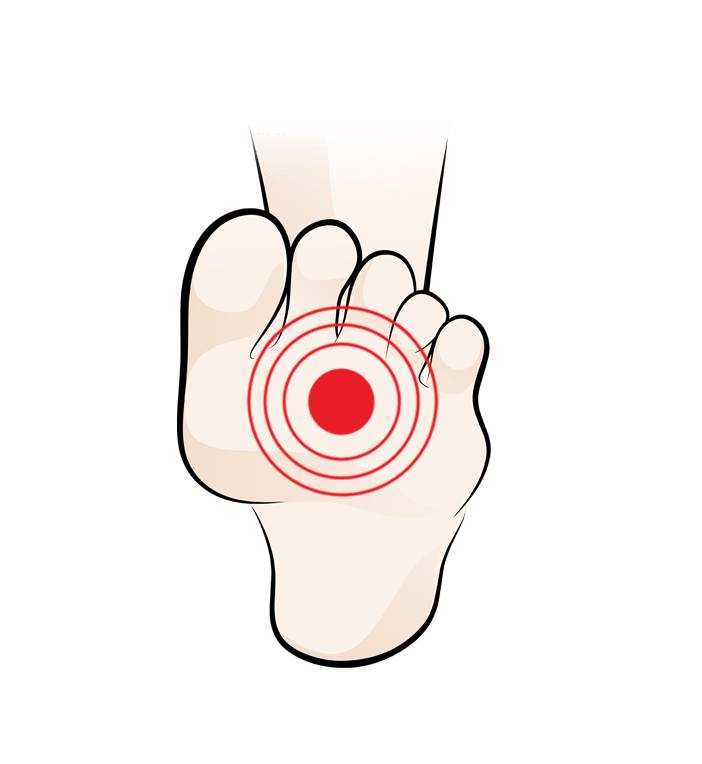
Morton’s Neuroma is a painful foot condition that happens when the nerve between the third and fourth toes gets irritated, thickened, or compressed. A ‘neuroma’ is a minor tumor of a nerve. However, Morton’s Neuroma is not a tumor. It is a benign enlargement of nerve tissue that happens when the forefoot is under a lot of stress or pressure for a long period of time. Thomas Morton first described this condition in the 1800s. It is one of the most common causes of forefoot pain.
Anyone can get a neuroma, but women are more likely to get it than men. Also, people between the ages of 40 and 60 are the most likely to suffer from this condition. Activities that put a lot of stress on the forefoot, like running, dancing, or some work tasks are often to blame.
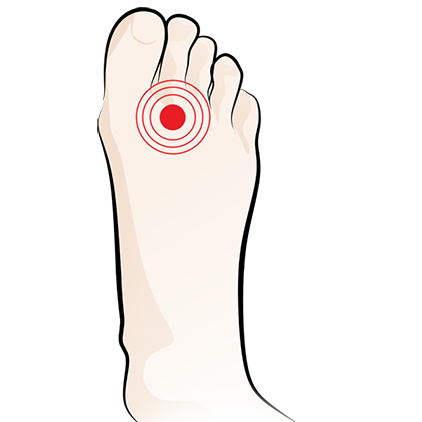
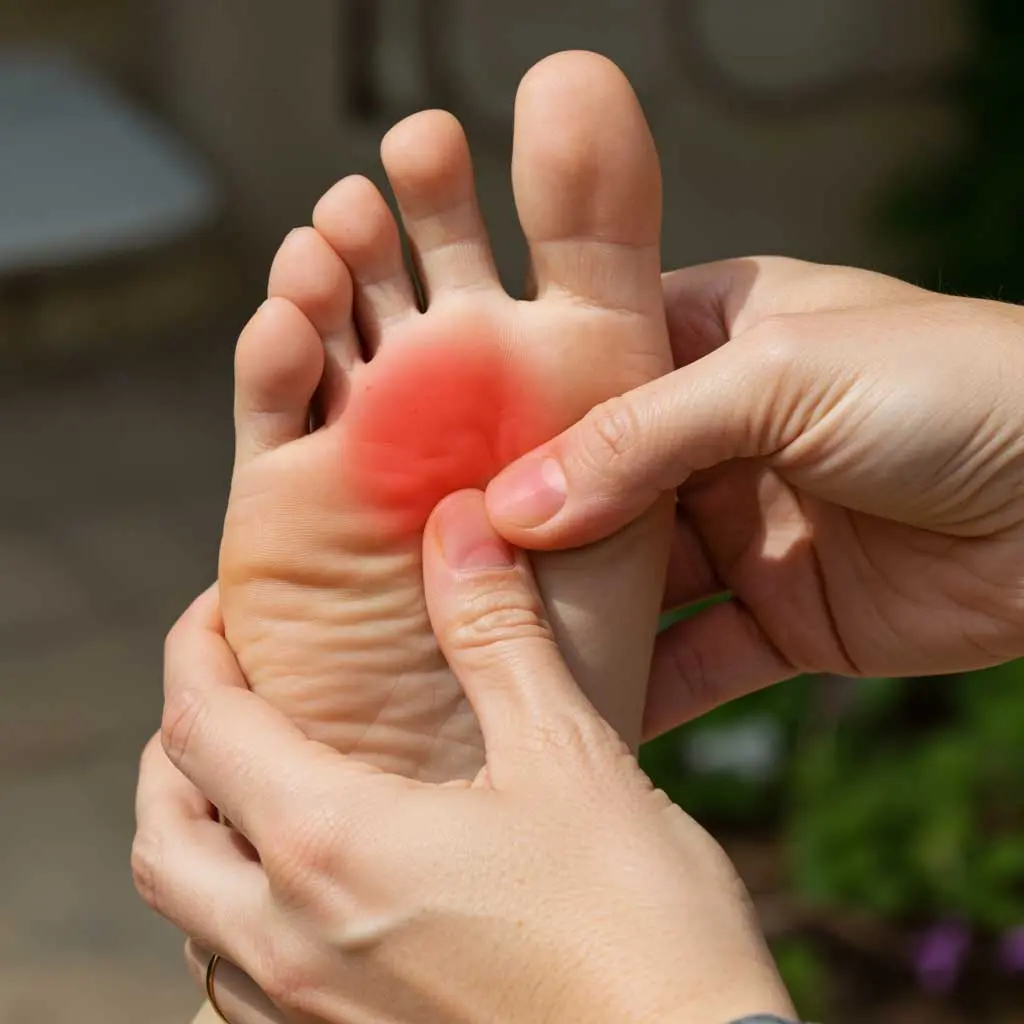
The symptoms of Morton’s Neuroma are:
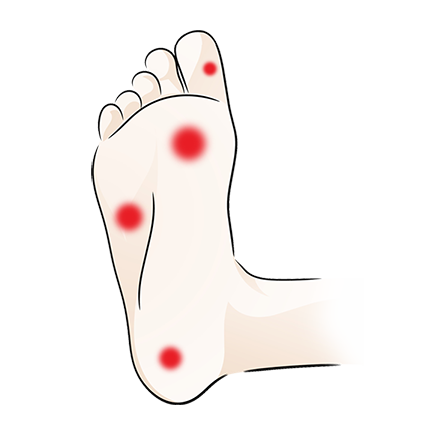
Sharp, burning pain in the ball of the foot that often spreads to the toes
Tingling or numbness in the toes
Stabbing electric shock–like feelings between the toes.
The feeling of walking on a pebble
pain that goes away for a short time when you take off your shoes or rest, but comes back when you move around or wear tight shoes. Read more..
What causes Morton’s Neuroma?
Morton’s Neuroma is very similar to Metatarsalgia in that it’s caused by the same factor: the collapsing of the transverse arch of the foot. When the forefoot collapses – due to age, weight gain, muscle weakness etc – the space between the metatarsal bones disappears, leading to a ‘squeezing’ of the nerve tissue in between the bones. The body ‘reacts’ to this constant excess pressure and the nerve will start to thicken and get irritated, leading to numbness and pain.
Tight, narrow, or high-heeled shoes usually make symptoms worse because they put extra pressure on the metatarsal heads and the nerve. When shoes squeeze the forefoot, they make the space between the metatarsals and the nerve smaller. In addition pressure on the forefoot from high-impact sports or dancing is widely seen as a major cause.
Thirdly, over-pronation (rolling in of the foot & lowering of the arches) can lead to collapsing of the forefoot structure, even if you’ve always worn normal flat shoes. Other causes include deformities of the forefoot or high arches. People with high arches put all their body weight on the heel and forefoot. Last but not least, weight gain puts a lot of excess pressure on the feet, especially on the metatarsal bones.
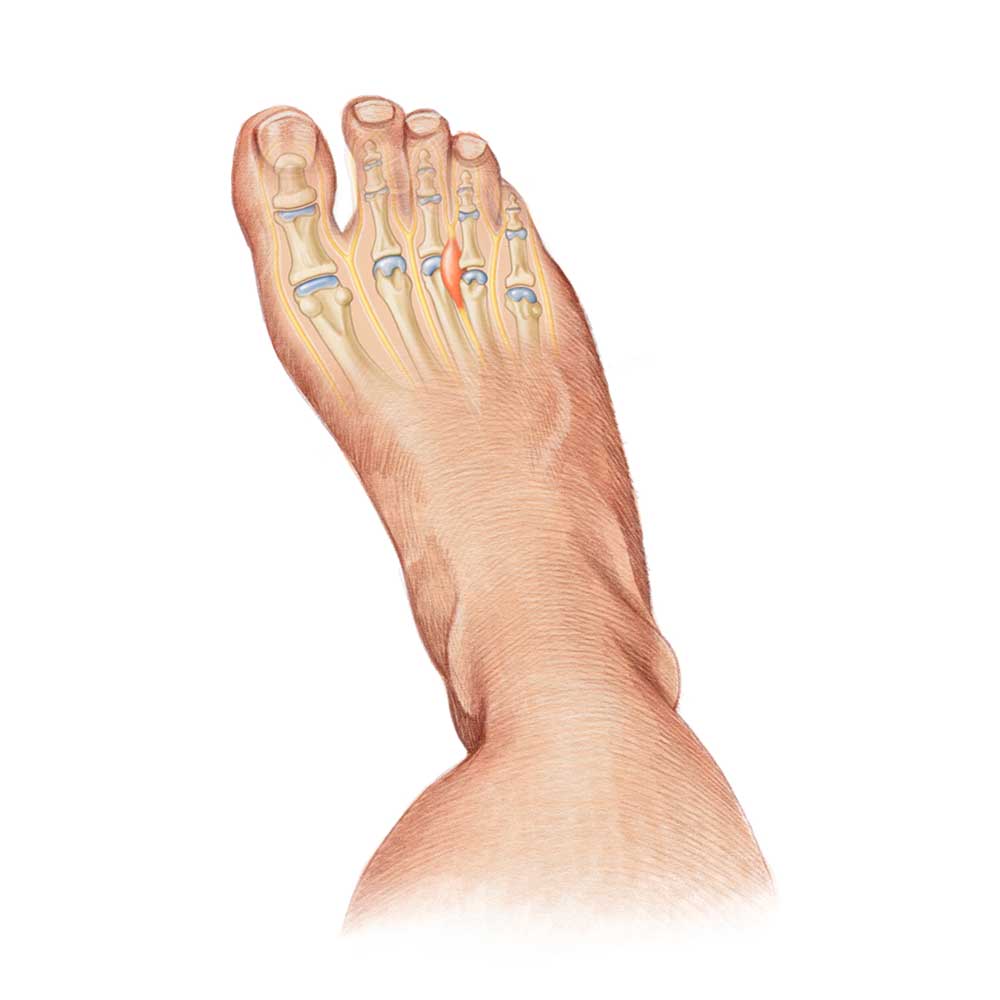
Diagnosis
A clinical exam is usually the first step in diagnosing, and it includes:
A record of symptoms and activities.
A physical exam of the front foot
Reproducing pain through techniques like the “Mulder's click test”
Imaging techniques, including ultrasound or MRI can be employed to visualize nerve swelling and exclude alternative etiologies of forefoot pain
Treatment options for Morton’s Neuroma - including orthotics
There are different ways to treat Morton’s Neuroma, from conservative measures to surgical intervention. A step-by-step approach is often suggested, with a focus on non-invasive methods at first. Furthermore, running, dancing, hiking, and other activities that put excess weight on the forefoot should be completely avoided!
Changing shoes: with a low to flat heel, a wider fitting with big toe box, good cushioning/padding
Ice: put an ice pack on the affected area
Anti-inflammatories like Ibuprofen, Advil etc
Orthotic insoles & metatarsal pads
Cortisone Injection
This is a steroid medication injection that may reduce pain and inflammation. Relief may only last for a short time and repeated injections can cause problems like fat pad atrophy or tendon weakening. Finally, surgery may be an option.
Orthotic insoles for the relief of Morton's Neuroma
Both custom-made or ‘off-the-shelf’ shoe inserts and metatarsal insoles are a very important part of conservative management of Morton’s Neuroma. The goal of the orthotic device is to support the forefoot structure, improve foot biomechanics and thereby reducing the excess forces on the nerve.
What does the research say about insoles for Morton’s neuroma?
A systematic review and meta-analysis published in the Journal of Foot and Ankle Research found that non-surgical treatments, including orthoses with metatarsal padding, have helped many people manage Morton’s Neuroma and related forefoot pain.
The strongest evidence comes from a randomised, double-blind clinical trial published in Clinical Rehabilitation (de Oliveira et al., 2019). Seventy-two people with Morton’s neuroma were given either a customised insole with metatarsal and arch support, or a flat insole made from the same material. Neither the patients nor the assessors knew which insole each person had.
The group wearing the supportive insole reported significantly less pain when walking, along with better scores for foot function, foot health and physical capacity. Pain at rest and tingling or numbness didn’t differ between the two groups. In other words, a well-designed insole appears to help most with pain while you’re on your feet, which is when most people with Morton’s neuroma notice it.
Footlogics offers 5 different options for Morton’s Neuroma:
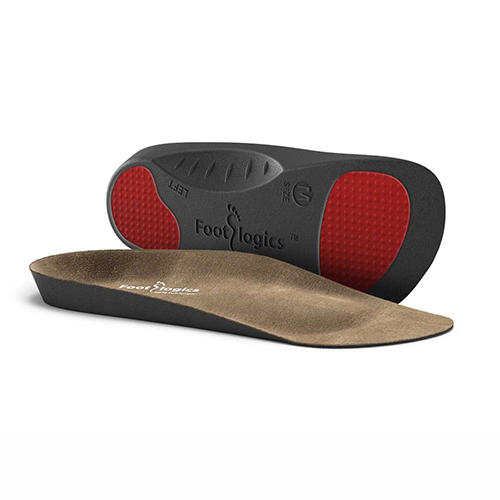
Footlogics Metatarsalgia
This is our best selling insole for Morton’s Neuroma. It features a prominent forefoot pad to support the 5 metatarsal bones in the foot, which in turns ‘opens up’ the metatarsal heads, creating more space for the neuroma. This means less squeezing on the nerve.
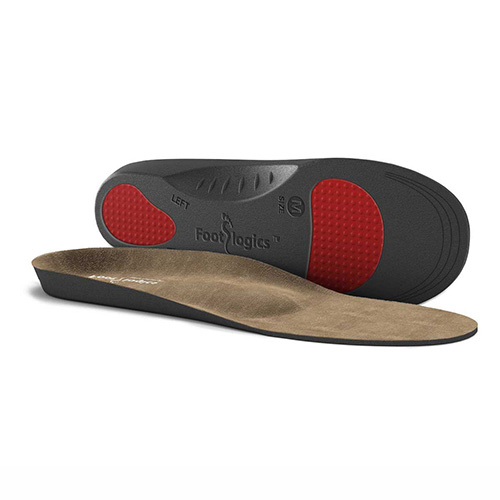
Footlogics Meta Full-length
This is the full-length version of the above mentioned Metatarsalgia insole, designed for lace-up shoes, runners, work boots etc. It features the same metatarsal pad, supporting the transverse arch. In turn, more space is creating for the nerve, resulting in lasting comfort and relief.
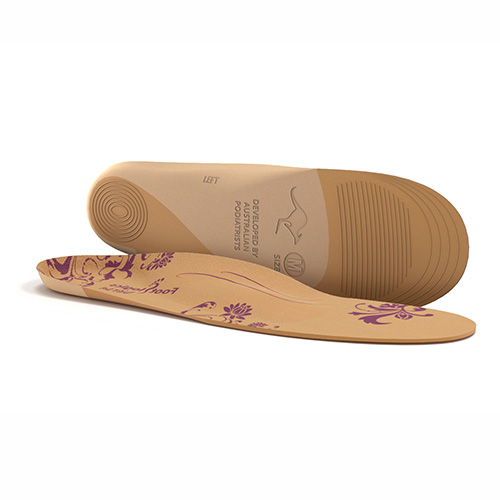
Footlogics Versa
This is the perfect insole for women’s footwear that is narrow and shallow. It can even be used in low-heeled fashion boots. Featuring a strong metatarsal pad and arch support these orthotics will help reduce the symptoms of Morton’s Neuroma.
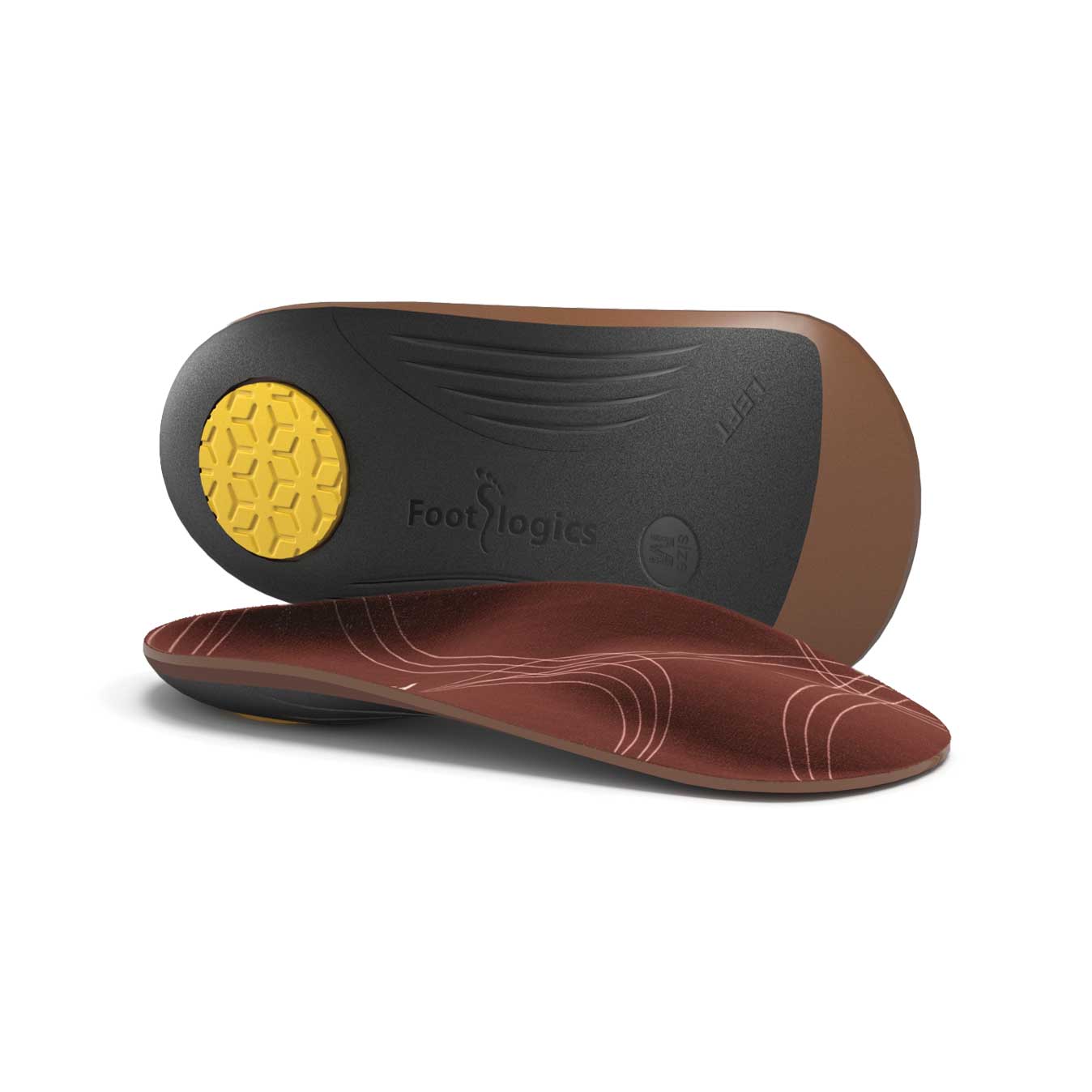
Footlogics 3/4 Meta Pro
A new 3/4-length orthotics for Metarsalgia and Morton’s Neuroma. Stronger arch support, using a firm nylon outer shell. Plus softer more shock-absorbing materials, compared to our Footlogics Metatarsalgia. This shoe insert will last 18-24 months.
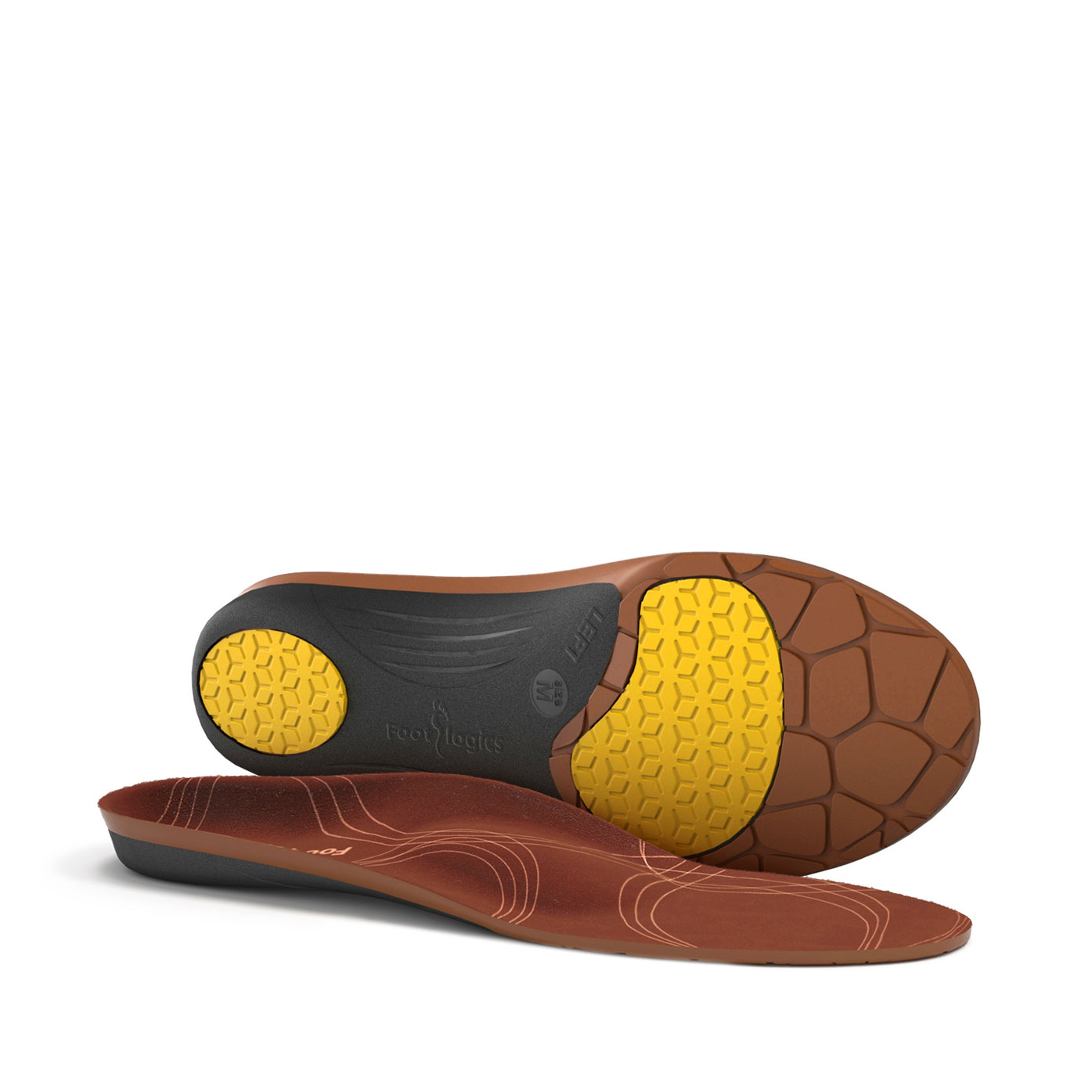
Footlogics Meta Premium
This recently developed insole is the ‘pinnacle’ of Mortons orthotics. Similar in shape to the Meta Full-length, but providing stronger arch support and an 0.3 inches of cushioning under the ball of the foot. This orthotic is built to last 18-24 months, before it needs replacement. Recently we added a Pickleball insole that can be useful for Morton’s Neuroma.
Surgery
Your doctor may suggest surgical removal of the thickened nerve. People usually think about surgery only after all conservative treatments have failed. Neurectomy involves cutting out the part of the nerve that is causing problems. Decompression surgery, like dorsal or plantar inter-metatarsal ligament release, gives the nerve more room.
The benefits of surgery is that it gives the patient the best chance of long-term relief, especially when conservative methods don’t achieve the desired results. On the down-side surgery may cause risks and problems like:
Infection of the wound or nerve
Permanent numbness in the toes (this happens when the entire nerve is taken out)
Scar Tissue
Risk of pain that doesn't go away or comes back
The recovery time can be weeks to months, whereby an after-surgery boot has to be worn as to avoid any pressure on the forefoot. Studies indicate that surgical outcomes are positive in numerous instances, with around 70–85% of patients experiencing substantial or total relief. However, results differ, and some patients continue to feel pain or have changes in their senses. There are also ways to treat Mortons Neuroma without surgery.
Frequently Asked Questions About Morton’s Neuroma Insoles
What are the best over-the-counter insoles for Morton’s neuroma?
The best over-the-counter insoles for Morton’s neuroma combine a contoured arch shell, a built-in metatarsal pad to spread the forefoot bones, and soft forefoot cushioning. Footlogics Meta Premium ($44.95 USD) delivers all three for sneakers and lace-up shoes, while Footlogics Versa ($34.95 USD) fits slim women’s footwear.
Where should the metatarsal pad sit for Morton’s neuroma?
A metatarsal pad should sit just behind the ball of your foot, never directly on the painful nerve. This placement gently lifts and separates the third and fourth metatarsal heads to relieve nerve compression. Footlogics insoles feature built-in pads positioned anatomically so they do not shift like stick-on inserts.
Should I choose full-length or 3/4-length insoles for Morton’s neuroma?
Choose a full-length insole (like Footlogics Meta Full-Length or Meta Premium) for sneakers, work boots, and walking shoes with removable factory liners. Choose a 3/4-length insole (like Footlogics 3/4 Meta Pro) for slip-ons or dress shoes where a full-length insert would crowd the toe box.
Do I need to remove my shoe’s original insole first?
Yes. Always remove the factory liner before inserting full-length orthotics like Footlogics Meta Premium. Stacking insoles reduces toe-box depth, squeezes the metatarsal bones together, and can worsen Morton’s neuroma burning or numbness.
How long do Footlogics Morton’s neuroma insoles take to work and last?
Most wearers feel noticeable forefoot pressure relief within a few days, with full biomechanical adaptation taking 4 to 6 weeks of gradual daily wear. Built with a durable nylon shell, Footlogics Meta Premium and 3/4 Meta Pro last 18 to 24 months before needing replacement.
What type of shoes work best with Morton’s neuroma insoles?
Pair Morton’s neuroma insoles with wide-toe-box sneakers, walking shoes, or orthopedic footwear that allow your toes to splay naturally. Avoid narrow, pointed toes or high heels over 2 inches, which force weight onto the forefoot. For dress shoes or flats, use a slim insert like Footlogics Versa or 3/4 Meta Pro.
Are over-the-counter orthotics as effective as custom orthotics for Morton’s neuroma?
Clinical research shows that properly contoured over-the-counter orthotics with a built-in metatarsal dome can provide comparable pain relief to custom-made devices for mild-to-moderate Morton’s neuroma. Footlogics Meta Premium ($44.95 USD) offers podiatrist-designed biomechanical arch support and forefoot offloading at a fraction of the $400–$600 cost of custom orthotics.
How can I relieve Morton’s neuroma pain faster alongside wearing insoles?
Combine daily wear of metatarsal-support orthotics with wider footwear, calf and plantar fascia stretching, and icing the ball of your foot after prolonged standing. If tingling, burning, or numbness persists after 4 to 6 weeks of consistent insole use, consult a podiatrist to rule out severe nerve thickening.
Conclusion
Morton’s neuroma is a common foot problem that hurts a lot and is caused by irritation of the interdigital nerve. Even though symptoms can be hard to get rid of, many people find relief by changing their shoes, using orthotic devices (especially with metatarsal pads), changing their activities, and getting targeted therapies.
When conservative care doesn’t work, surgery is still a good option, but it comes with risks and things to think about during recovery. If you think you have Morton’s neuroma, seeing a foot health professional early on can help them make a treatment plan that eases your pain and makes you feel better, often without the need for surgery.
SHOP BY FOOT COMPLAINT
common aches & pains
Learn more about different foot conditions and how Footlogics orthotics can help..