Best insoles for Metatarsalgia and Ball of Foot Pain
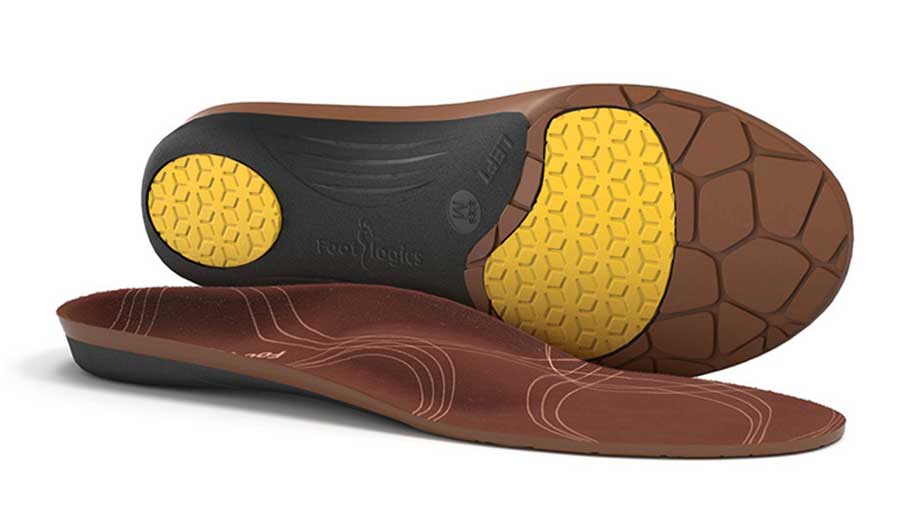
Footlogics META PREMIUM
For regular lace-up shoes. Features 0.5 inches of extra cushioning under the ball of the foot + firm nylon shell for added support and durability.
SHOP NOW
$44.95
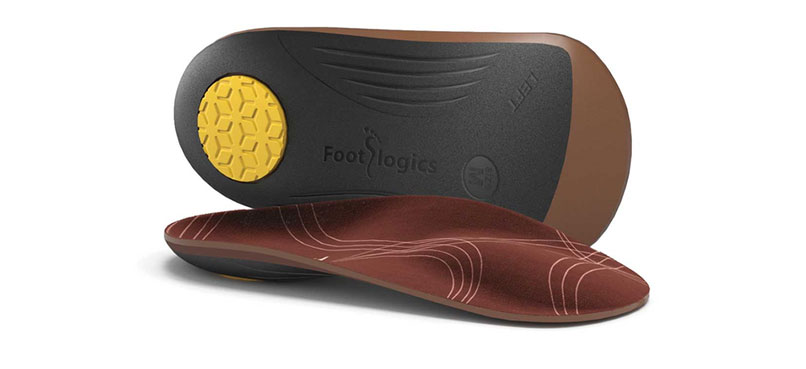
Footlogics 3/4 META PRO
3/4 length premium insole for slip-on shoes. Firm nylon shell for extra support and durability.
SHOP NOW
$39.95
If you experience aching, burning or tenderness beneath the ball of your foot, finding comfortable footwear can be a challenge. Walking, standing for long periods or participating in sports may increase pressure beneath the metatarsal heads, making everyday activities uncomfortable.
The right insoles for metatarsalgia can help redistribute pressure beneath the forefoot, provide targeted metatarsal support and improve cushioning where your feet need it most.
Footlogics offers a range of podiatrist-designed orthotic insoles specifically developed for ball of foot pain. Whether you need a premium full-length orthotic for everyday shoes, a three-quarter-length insole for dress shoes or additional forefoot cushioning for sports, there’s a Footlogics option to consider.
Our metatarsalgia insoles feature carefully contoured support, with selected models incorporating a built-in metatarsal raise designed to redistribute pressure away from sensitive areas beneath the forefoot.
Below, we’ll explain how these insoles work, compare the different Footlogics models and help you choose the most suitable design for your footwear and activities.
Best Footlogics insoles for Metatarsalgia
Footlogics offers several orthotic designs for people experiencing ball of foot discomfort. The main differences involve cushioning, insole length, support structure and footwear compatibility.
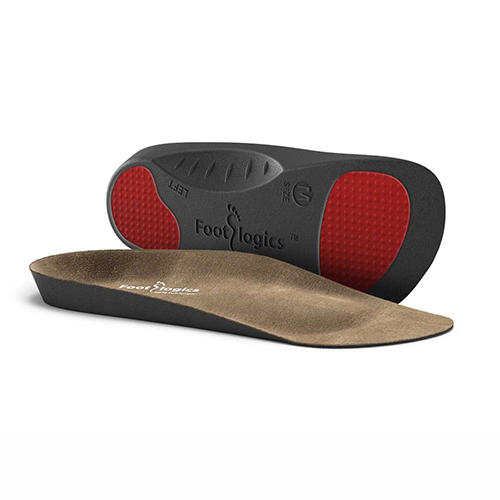
Footlogics Metatarsalgia
Best suited to people who need metatarsal support in shoes with limited forefoot space.
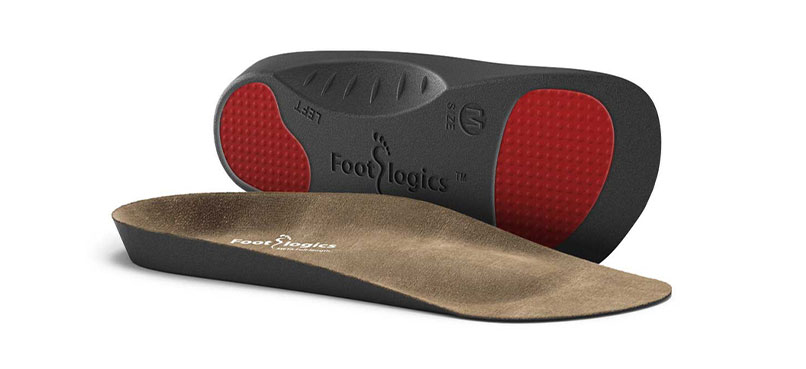
Footlogics METATARSALGIA is a soft-cushioning, three-quarter-length orthotic developed for ball of foot pain and Morton’s neuroma.
Its built-in metatarsal raise provides targeted support behind the metatarsal heads, while the shorter construction allows it to fit into many flat or low-heeled shoes.
The design also includes arch support and a contoured heel cup.
Why choose Footlogics METATARSALGIA?
-
Built-in metatarsal raise.
-
Three-quarter-length design.
-
Cushioned construction.
-
Arch support and heel cup.
-
Suitable for slip-on shoes with limited room in the forefoot
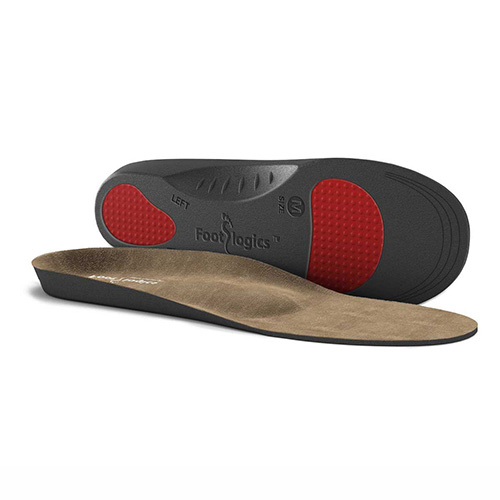
Footlogics Meta Full-length - everyday metatarsal support
Best suited to everyday sneakers, walking shoes and work boots.
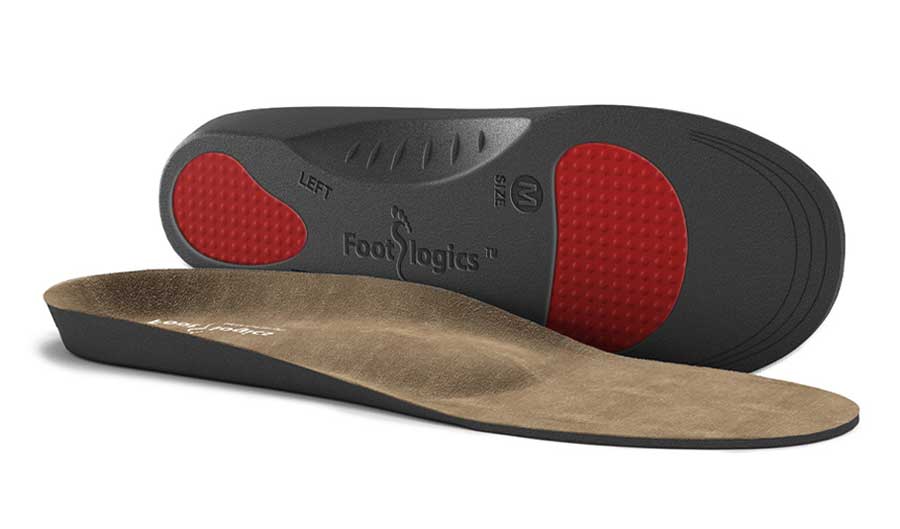
Footlogics META Full-Length is designed specifically for metatarsalgia and Morton’s neuroma.
It features a built-in metatarsal raise, biomechanical arch support and a contoured heel cup.
The insole is made from lightweight EVA foam and includes Podflex cushioning.
Its full-length design is intended for lace-up shoes, including sneakers and work boots.
Why choose META Full-Length?
-
Built-in metatarsal raise.
-
Supportive arch contour.
-
Deep heel cup.
-
Lightweight EVA construction.
-
Additional cushioning for everyday footwear.
Footlogics Meta 3/4 PRO
Best suited to customers who want a premium orthotic without a full-length forefoot section.
Footlogics META 3/4 PRO offers a shorter profile with a firm nylon support shell.
Its three-quarter-length construction makes it a practical option for selected slip-on shoes and other footwear where a full-length insole would take up too much room around the toes.
Why choose META 3/4 PRO?
-
Premium support structure.
-
Firm nylon shell.
-
Three-quarter-length design.
-
Leaves the toe area of the shoe largely unobstructed.
-
Suitable for selected slip-on and lower-volume footwear.
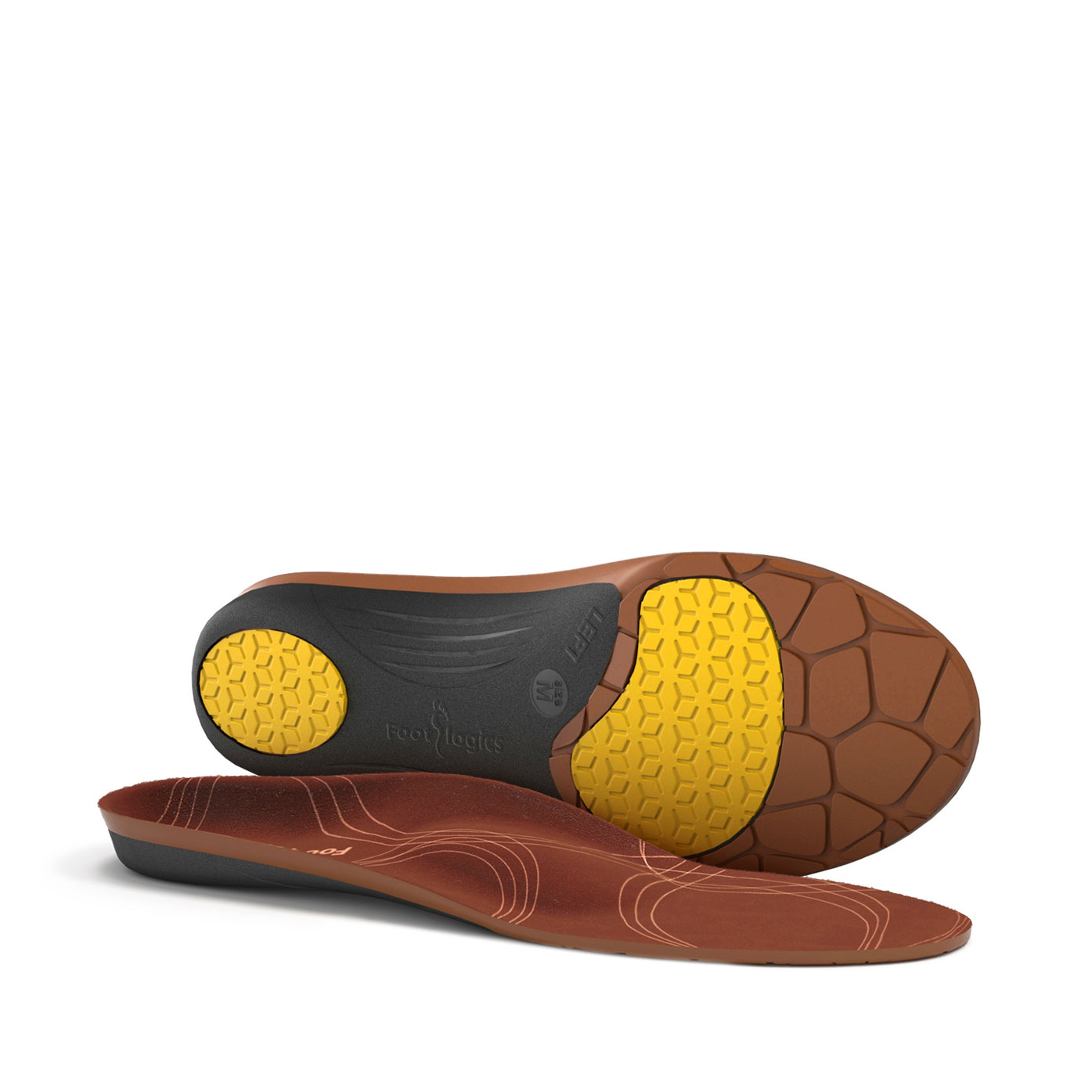
Footlogics Meta Premium
Best suited to customers seeking additional forefoot cushioning and a supportive full-length orthotic.
Footlogics META PREMIUM combines a substantial cushioning layer beneath the ball of the foot with a firm nylon support shell.
The design is intended for regular lace-up shoes, including walking shoes, sneakers and suitable work footwear.
Its combination of cushioning and structured support makes it an option for people who spend long periods standing or walking and want a premium orthotic with additional forefoot comfort.
Why choose META PREMIUM?
- Extra cushioning beneath the ball of the foot.
- Firm nylon support shell.
- Full-length design.
- Suitable for many lace-up shoes with removable factory insoles.
- Designed for people seeking enhanced comfort during everyday activities.
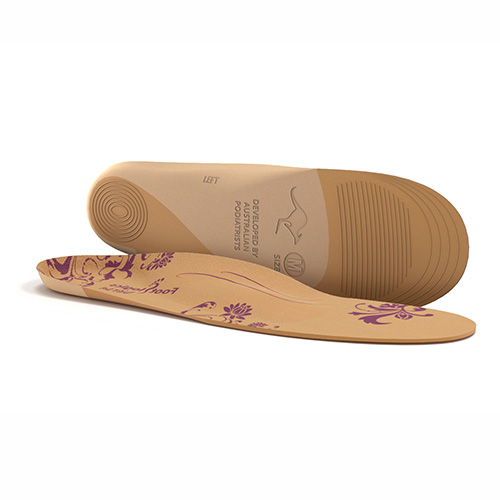
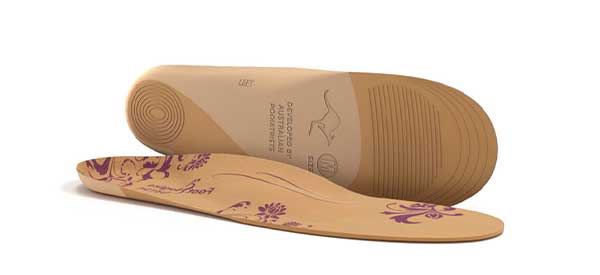
Footlogics Versa - support for women's fashion shoes
Best suited to women’s dress shoes and suitable low-heeled boots.
Footlogics VERSA is designed for footwear where a bulky full-length orthotic may not fit comfortably.
Its slimmer profile makes it an option for selected women’s fashion shoes, while its contoured design provides support beneath the foot.
VERSA may be particularly useful when customers want to improve comfort without changing to athletic footwear.
Always ensure there is enough room inside the shoe and that the insole does not increase pressure around the toes.
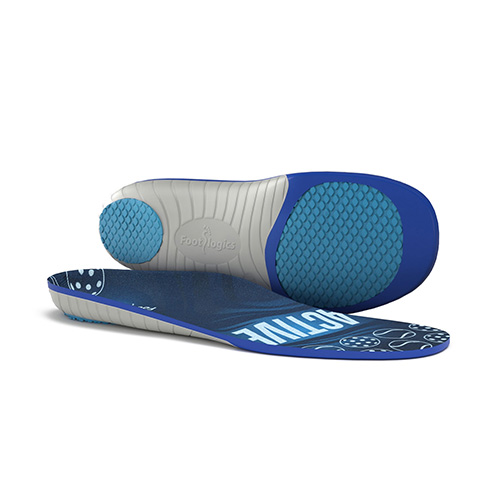
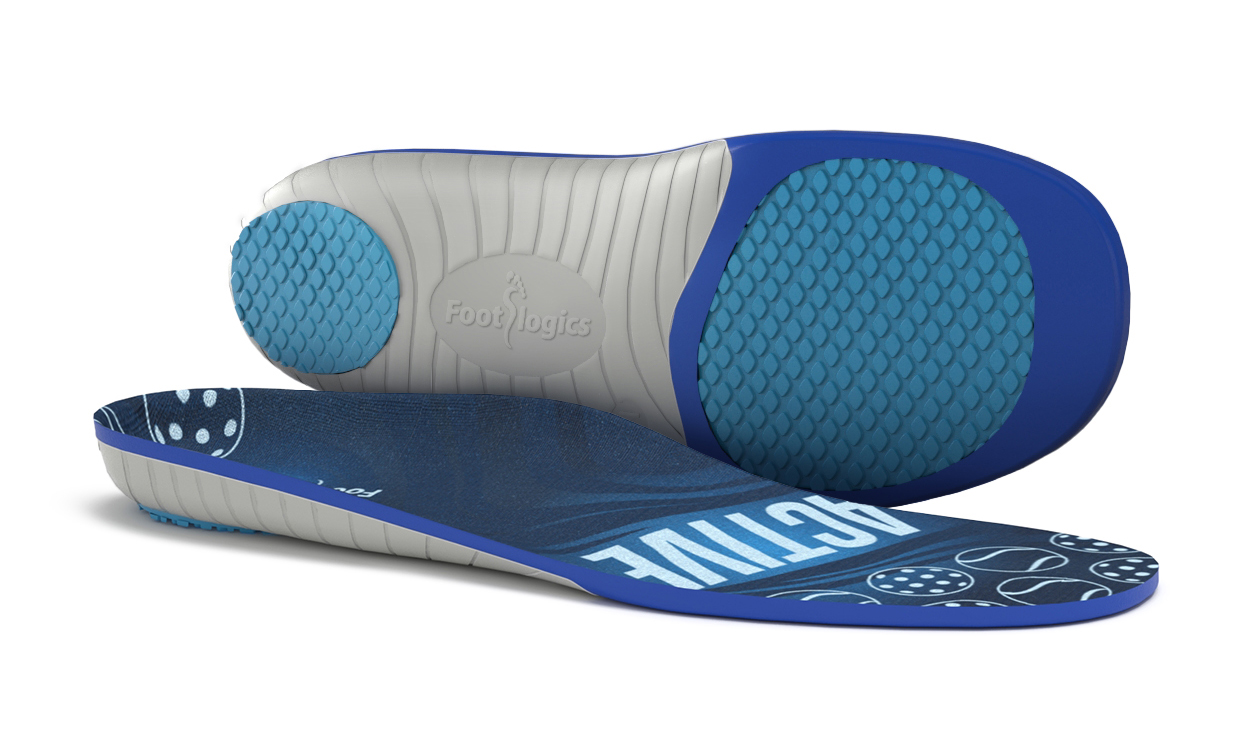
Footlogics Active - cushioning for tennis and pickleball
Best suited to active customers who want support and cushioning during court sports.
Footlogics ACTIVE was developed for sports involving repeated changes of direction, including pickleball and tennis.
It combines a supportive structure with forefoot cushioning and a mild metatarsal raise.
For people experiencing forefoot discomfort during sport, ACTIVE may provide a useful combination of support, cushioning and shoe compatibility.
However, people with persistent ball of foot pain should assess whether their footwear, training load or underlying diagnosis also needs attention.
Which Footlogics metatarsalgia insole should you choose?
The best option depends on your footwear, the level of cushioning you prefer and whether you need a full-length or three-quarter-length orthotic.
| Footlogics model | Main feature | Suitable footwear |
|---|---|---|
| META PREMIUM | Premium forefoot cushioning and nylon shell | Sneakers, lace-up shoes, suitable work shoes |
| META 3/4 PRO | Premium three-quarter-length support | Selected slip-on and lower-volume shoes |
| META Full-Length | Built-in metatarsal raise and EVA cushioning | Walking shoes, sneakers, work boots |
| METATARSALGIA | Cushioned three-quarter-length support | Flat and low-heeled shoes |
| VERSA | Slimmer profile for fashion footwear | Women’s dress shoes and boots |
| ACTIVE | Forefoot cushioning and sports support | Tennis, pickleball and court shoes . |
Our buying advice: If you mainly wear sneakers or work boots, start by comparing META PREMIUM and META Full-Length. If you need support in lower-volume shoes, compare META 3/4 PRO and METATARSALGIA. For court sports, consider ACTIVE.
The most appropriate orthotic is the one that fits your foot and footwear comfortably while addressing your particular pressure points
What is Metatarsalgia?
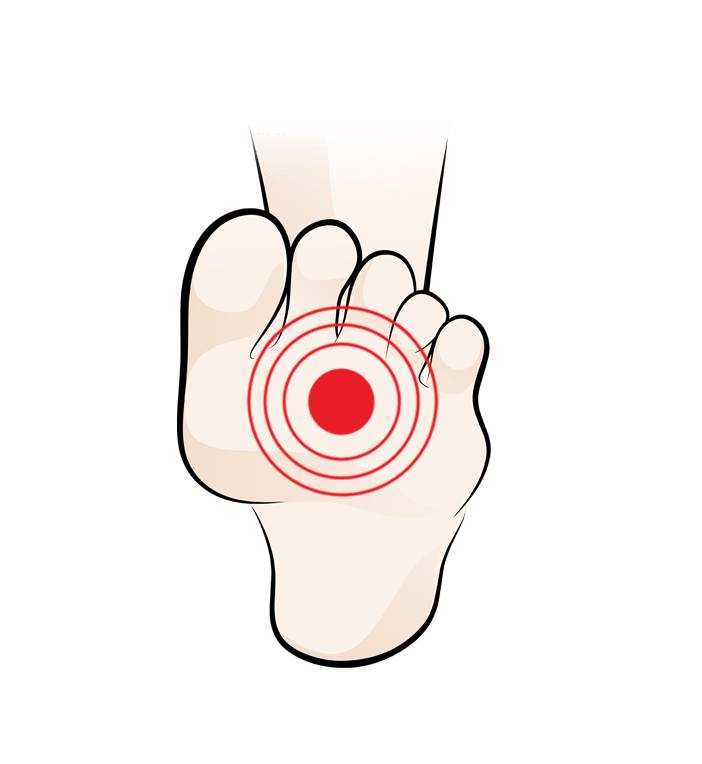
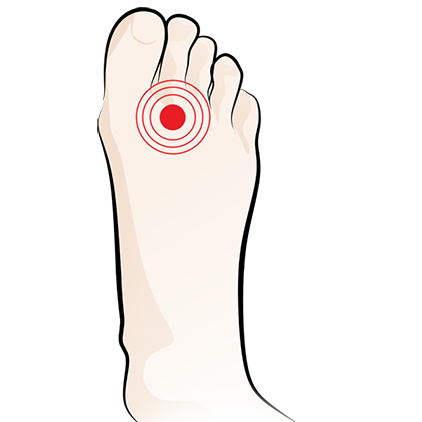
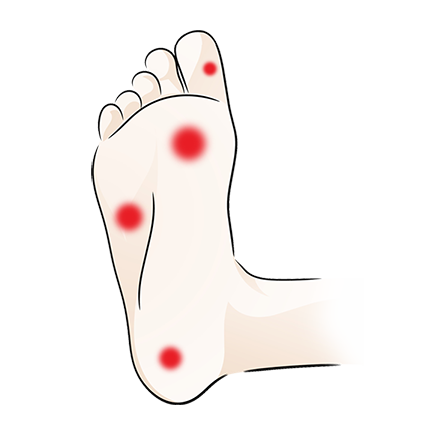
Metatarsalgia is a common foot problem that causes pain and swelling in the ball of the foot, which is the area right beyond the toes where the metatarsal bones support most of the body’s weight. People who have Metatarsalgia typically state that the pain feels like a burning feeling that worsens when they stand for a while, after long walks, or after running. Sometimes, the pain is described as if there is a pebble inside the shoe.
Metatarsalgia is caused by the collapsing of the ‘transverse arch’ of the foot. This arch runs across the forefoot and is formed by the 5 metatarsal bones. They are much like the fingers in your hand. Due to age, being overweight, muscle weakness or tight-fitting shoes with heels the transverse arch lowers substantially (or it will collapse), in turn putting excess pressure on the ball of the foot.
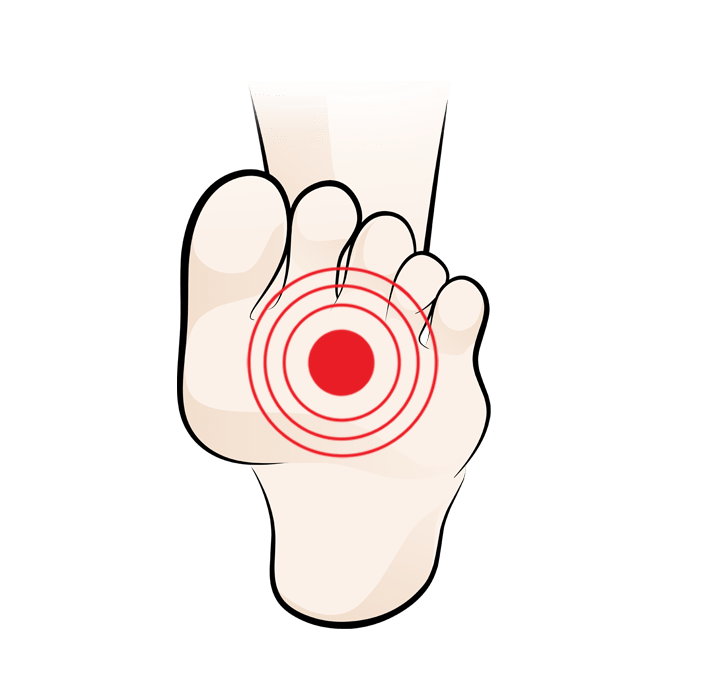
How do insoles help relieve metatarsalgia?
Metatarsalgia is a general term for pain beneath the metatarsal heads, the bones that form the ball of the foot.
For some people, excessive or concentrated pressure in this area contributes to discomfort.
Orthotic insoles may help by modifying how pressure is distributed beneath the foot.
1. Redistributing pressure away from the metatarsal heads
One of the main objectives of metatarsalgia insoles is to reduce concentrated pressure beneath painful areas of the forefoot.
A properly designed orthotic may increase contact in other regions of the foot, helping distribute load more comfortably during walking.
The effectiveness depends on the insole’s design, materials and fit.
2. Providing targeted metatarsal support
Many Footlogics metatarsalgia orthotics feature a built-in metatarsal raise.
This gently contoured support is intended to sit behind the metatarsal heads rather than directly beneath the most sensitive part of the ball of the foot.
Correct positioning is important because a metatarsal raise that presses into the wrong area can increase discomfort.
3. Cushioning the forefoot
Cushioning can improve comfort when walking or standing on hard surfaces.
Soft materials may also help reduce localized pressure beneath the forefoot.
The ideal insole provides an appropriate balance of cushioning and support rather than relying entirely on a rigid structure.
4. Improving comfort during everyday activities
Well-fitting orthotics may make walking, standing and other daily activities more comfortable.
However, insoles cannot resolve every cause of ball of foot pain. Persistent symptoms may require changes to footwear, activity levels or treatment of an underlying medical condition.
Metatarsal pads versus orthotic insoles: what’s the difference?
Metatarsal pads and orthotic insoles are both commonly used to manage forefoot discomfort, but they work somewhat differently.
Metatarsal pads are localized cushions or raised supports positioned near the metatarsal heads. Their purpose is to modify pressure beneath the forefoot.
Orthotic insoles provide support over a larger portion of the foot. Depending on their design, they may combine arch support, heel contouring, forefoot cushioning and a built-in metatarsal raise.
Neither approach is automatically superior.
A correctly positioned metatarsal pad may provide useful pressure relief, while a full-length orthotic may be preferable when the customer also wants broader cushioning and arch support.
Some Footlogics orthotics combine these features in a single device.
How to choose the right insoles for ball of foot pain
Look for appropriate metatarsal support
If your symptoms are associated with concentrated pressure beneath the metatarsal heads, a metatarsal raise may be helpful. The support should feel comfortable and should not create a painful lump directly beneath the ball of the foot.
Consider forefoot cushioning
People who spend long hours standing or walking may appreciate additional cushioning beneath the forefoot. However, thicker cushioning is not always better if it makes the shoe too tight.
Choose the correct insole length
Full-length orthotics are generally suited to sneakers, walking shoes and work boots with removable factory insoles.Three-quarter-length orthotics may fit better in selected slip-on or dress shoes.
Check shoe width and toe-box space
Narrow shoes can compress the forefoot and aggravate discomfort. Look for footwear with adequate room around the toes and metatarsal heads.
Avoid adding an insole that makes an already tight shoe feel even narrower.
Make sure the insole fits correctly
The heel should sit securely within the orthotic, and the arch contour should align comfortably with your foot. For designs incorporating a metatarsal raise, the raised section should sit in the intended position behind the metatarsal heads.
If you experience new pressure points, numbness or increasing discomfort, stop using the insole and reassess the fit.
Are full-length or three-quarter-length insoles better for metatarsalgia?
Both can be effective choices, depending on footwear and individual needs.
Full-length insoles provide a continuous surface beneath the foot and may incorporate cushioning throughout the forefoot. They are often well suited to sneakers, walking shoes and work boots.
Three-quarter-length insoles leave more room beneath the toes and may be easier to fit into selected dress shoes and slip-on footwear.
Neither length is automatically more effective for metatarsalgia. What matters most is the design, fit, comfort and location of the support.
Footlogics offers both styles so customers can choose according to their footwear.
Can metatarsalgia insoles help with Morton’s neuroma?
Metatarsalgia and Morton’s neuroma can both cause discomfort in the ball of the foot, but they are not identical conditions.
Morton’s neuroma involves irritation and thickening of tissue around a nerve between the metatarsal bones, often causing burning, tingling or numbness in the toes.
Metatarsal support and wider footwear may help some people with Morton’s neuroma by reducing pressure around the affected area.
Several Footlogics metatarsalgia insoles are also designed for people experiencing symptoms associated with Morton’s neuroma.
However, persistent nerve-related symptoms should be assessed by a healthcare professional.
For more information, visit our Morton’s neuroma guide.
Do you need custom orthotics for metatarsalgia?
Custom-made orthotics are not always necessary for ball of foot pain.
Some people find suitable prefabricated orthotic insoles comfortable and supportive, particularly when their symptoms are related to footwear or concentrated forefoot loading.
Custom orthotics may be appropriate when a person has complex foot anatomy, significant deformity, persistent symptoms or specific biomechanical requirements.
Research suggests that both prefabricated and customized designs can influence plantar pressure.
The best option depends on individual assessment, footwear compatibility and comfort rather than price alone.
What does research say about orthotic insoles for metatarsalgia?
Clinical research suggests that appropriately designed orthotic insoles and metatarsal supports can help redistribute pressure beneath the ball of the foot, potentially reducing discomfort associated with metatarsalgia.
A randomized controlled trial published in Foot & Ankle International investigated ready-made insoles for lesser metatarsalgia. The findings highlighted the importance of insole design in reducing forefoot pressure and improving symptoms.
A 2024 systematic review and meta-analysis also found that customized orthotic interventions can reduce pressure beneath the central metatarsal heads. However, their effectiveness was comparable to certain prefabricated orthoses, footwear modifications and metatarsal pads.
What does this mean for you?
Choosing an insole with appropriate metatarsal support, forefoot cushioning and a comfortable fit may help reduce pressure on sensitive areas. Individual results vary depending on the underlying cause of pain and the orthotic design.
Footlogics offers several insole designs incorporating these principles, including built-in metatarsal support and targeted cushioning.
These studies investigate orthotic interventions generally and do not establish the clinical effectiveness of specific Footlogics products.
Frequently asked questions about insoles for metatarsalgia
1. What are the best insoles for metatarsalgia?
The best insoles for metatarsalgia generally provide appropriate forefoot cushioning, comfortable support and a secure fit inside your shoes. Some designs also feature a metatarsal raise to redistribute pressure beneath the ball of the foot. Footlogics offers several options, including META PREMIUM, META Full-Length and METATARSALGIA.
2. Do orthotic insoles really help ball of foot pain?
Orthotic insoles may help some people with ball of foot pain by reducing concentrated pressure beneath the metatarsal heads. Their effectiveness depends on the underlying cause of pain, insole design and fit. Persistent symptoms require assessment rather than relying solely on insoles.
3. Should I choose soft or firm insoles for metatarsalgia?
Neither soft nor firm insoles are universally better. Many people benefit from a combination of cushioning and appropriately positioned support. An excessively firm metatarsal raise can create discomfort, while a very soft insert may not provide the desired pressure redistribution.
4. Are metatarsal pads better than full-length orthotics?
Not necessarily. Metatarsal pads can provide localized pressure redistribution, while full-length orthotics may combine metatarsal support with broader cushioning and arch support. The best choice depends on your symptoms and footwear.
5. Where should the metatarsal raise sit?
A metatarsal raise is generally positioned just behind the metatarsal heads rather than directly beneath the most painful area. Correct placement varies with the design and individual foot anatomy. If the raised section creates pain or numbness, the fit should be reassessed.
6. Are three-quarter-length insoles suitable for metatarsalgia?
Yes. Three-quarter-length orthotics can be useful when the shoe does not have enough room for a full-length insole. Footlogics METATARSALGIA and META 3/4 PRO are options to consider for suitable footwear.
7. Can I wear metatarsalgia insoles in running shoes?
Yes, provided the insoles fit securely and do not crowd the forefoot. Full-length designs may be particularly convenient in running shoes with removable factory insoles. Runners with persistent forefoot pain should also review training loads and footwear.
8. What insoles are best for metatarsalgia in work boots?
Full-length orthotics with suitable cushioning and metatarsal support may be useful in work boots. Footlogics META PREMIUM and META Full-Length are options worth considering, provided the boots have enough internal space.
9. Can metatarsalgia insoles help with Morton’s neuroma?
Some people with Morton’s neuroma benefit from wider footwear and appropriately positioned metatarsal support. However, Morton’s neuroma involves a nerve and may require additional treatment. Persistent burning, tingling or numbness should be assessed.
10. How long does it take for metatarsalgia insoles to work?
Some people notice improved comfort relatively quickly, while others need time to adjust to new insoles. There is no reliable universal timeline for symptom relief. If discomfort worsens or fails to improve, reassess the insole fit and seek professional advice.
11. Can I trim Footlogics metatarsalgia insoles?
Selected full-length Footlogics insoles may be trimmed at the toe according to the product instructions. Do not cut into the heel cup, support shell or built-in metatarsal raise. Three-quarter-length orthotics generally do not require toe trimming.
12. Do I need custom orthotics for metatarsalgia?
Not always. Suitable prefabricated insoles may provide adequate support and cushioning for some people. Custom orthotics may be appropriate for complex foot structures, persistent symptoms or individualized treatment needs.
13. Can insoles help metatarsalgia caused by high arches?
Some people with high arches experience concentrated pressure beneath the metatarsal heads. An appropriately contoured orthotic may help redistribute this pressure. The correct design depends on arch shape, flexibility and comfort.
14. Can I use the same insoles for metatarsalgia and plantar fasciitis?
Some orthotic designs provide both arch support and metatarsal cushioning, potentially helping with comfort in both areas. However, the two conditions have different causes, and an insole should be selected according to your particular symptoms.
15. When should I see a podiatrist about ball of foot pain?
Seek professional assessment if pain is persistent, worsening or interfering with walking. Sudden severe pain, marked swelling, inability to bear weight, numbness or pain concentrated over a specific bone should be evaluated promptly. A stress fracture or another condition may require treatment beyond orthotic support.
Learn more about metatarsalgia and ball of foot pain
Metatarsalgia can be associated with several factors, including footwear, repetitive forefoot loading, foot structure and underlying medical conditions.
Orthotic insoles may improve comfort, but understanding the cause of your symptoms is important when choosing the most appropriate treatment.
For general information about causes, symptoms, diagnosis, physical therapy and exercises, visit our Metatarsalgia Guide. A dedicated metatarsalgia treatment guide will be available as we expand this educational section.
If you’re looking for supportive orthotics, explore the Footlogics metatarsalgia models above and choose the design that best matches your footwear and needs.
Medical disclaimer: This article provides general educational information and does not replace professional diagnosis or treatment. Persistent or severe forefoot pain should be assessed by a qualified healthcare professional.
What our Customers say
REAL RELIEF. REAL RESULTS.
Proven support, trusted by millions.
“Amazing product, improved my walking immediately!”
Doug D.
WHAT MAKES FOOTLOGICS DIFFERENT?
Footlogics orthotics are designed to deliver medical-grade support and relief — without the cost or wait time of custom orthotics.

TGA-Approved Medical Device
Meets strict medical standards

Developed by Podiatrists
Created for real foot conditions, not generic comfort

Trusted by Health Professionals
Recommended by doctors and physical therapists worldwide
Over 2 Million Pairs Sold
Proven support for everyday life, work, and sport

Available in 20+ countries
Trusted by customers across the globe
Australia’s #1 Orthotic Insole
Leading podiatrist-designed support brand
SHOP BY FOOT COMPLAINT
common aches & pains
Learn more about different foot conditions and how Footlogics orthotics can help..